Friday, July 19, 2013

Ramadan 2013 – Day 9, Malaysian Ramadan Bazaar


So I slept in so that I wouldn’t have to have a nap today and hopefully get my sleep schedule back on track. Shortly after the noon prayer was finished my friend Murat called and wanted to meet at a hotel just to chat and while away the time. Like me he prefers not being home since tempting food is within reach so we meet somewhere with good air conditioning where we can sit around. This time we went to the St. Regis Hotel.


We hung out for a couple of hours then I had to go as I wanted to go to the Malaysian Ramadan Bazaar.

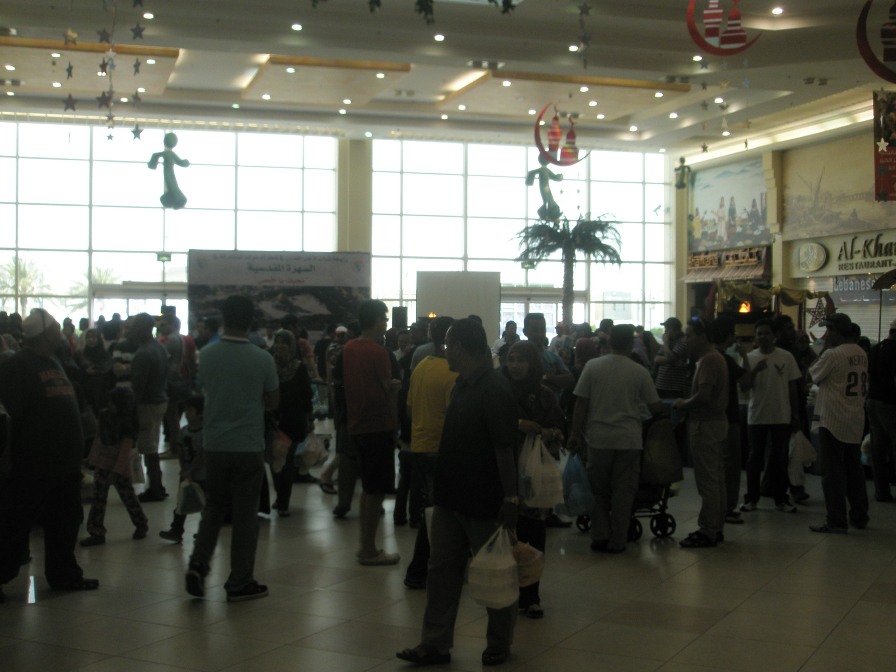
Every year during Ramadan the Malaysian Embassy would host a bazaar on the embassy grounds. About 20 tables would be set up by Malays selling home-cooked food. The bazaar is always a great place to stock up on some international food. This year I've not heard any information about it so I asked the Malaysian colleague about the bazaar and she told me it would be today but not at the embassy (maybe because it's too hot outside). This year it would be held at the food court of Hyatt Plaza Mall from 2:30-5:30 and would be held on two Fridays, July 19th and July 26th. So off I went to Hyatt Plaza.

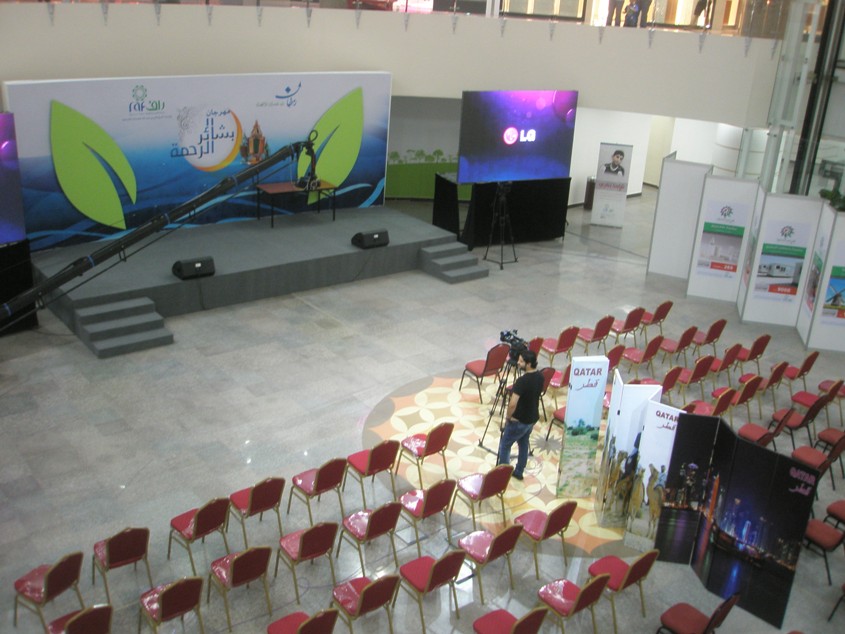
When I got to the food court there was a pretty big crowd:


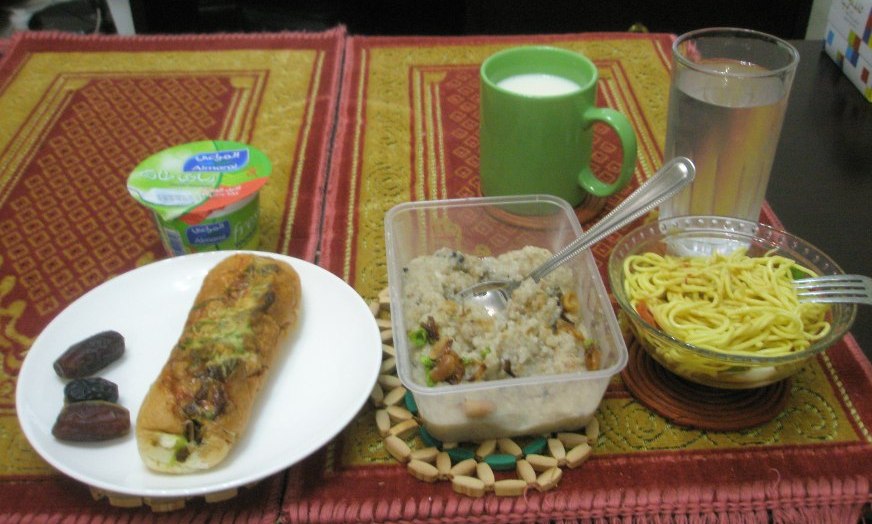
I wandered around, scanning the tables to see what was on offer. One table had a lineup of about 15 people getting what looked like a chicken curry and rice dish. I didn't want to wait -- I might try that one next week. Otherwise I picked up some food from various tables: what looked like a small beef minisub, some type of rice porridge with some spices in it, and noodle dish with a chicken curry sauce (no I have no idea what the Malaysian names of these dishes were, sorry, I've always been bad with names anyway).

So I took it all home and had a Malaysian iftar:


All told the food was QR 25 ($6.75) which I think is a pretty good deal.

If you missed it today you can go next Friday. I probably will.

Ramadan 2013 - Day 8, Sleep Problems


Over the course of Ramadan my sleep schedule has been getting more and more skewed. A typical workday schedule was going like this:

6:15am wake up
7:15am-12:30pm work
2:30pm-4:30ish have a nap
6:30pm iftar
Around 12:30am go to bed
3:00am briefly wake up for sohour

By the time the afternoon rolled around I was very tired and so would fall asleep right away when I had my nap. Because of this, I was usually well rested through the evening and going to bed at night became more difficult, which made me more tired during the day, which made the nap longer, which made it more difficult to fall asleep at night, and so on. I call it “sleep drift”.

The naps have become longer and longer and now are at least three hours. Last night I went to bed at 2:45am, and was still not sleepy. I don't think I actually fell asleep until sometime after 4am! At this rate the evening is going to be the nap and I'll be sleeping most of the day.

Thankfully it's now the weekend so I can try to get this back on track. I woke up this morning around 10:45am and today I'm not going to have a nap at all, I will just have to somehow keep myself occupied all day so I don't sleep. Hopefully that will help reset things, otherwise next week at work is going to be a nightmare.

Wednesday, July 17, 2013

Ramadan 2013 – Day 7, the Qur'an and the Prophet Nuh (Noah)


As part of my Ramadan Qur’an readings I decided to continue on the Prophets topic and look up what the Qur’an had to say about Noah.

Before I begin I want to briefly discuss the length of the two Scriptures. The Qur’an is actually much shorter than the Bible, I did an Internet search on the number of words in the two Scriptures and while estimates varied (especially for the Bible as it would depend on which version you are using) the word count is roughly:

Qur’an 78,000 words
Bible: 775,000 words

So in terms of the length the Bible is around 10 times as long as the Qur’an. I guess that's why we don't have people memorizing the entire Bible, or reciting the entire text over a specific period. During Ramadan one should recite or listen to a reading of the entire Qur’an, if one did it at the same pace as a standard recitation of the Qur’an (30 days) reciting the Bible would take almost an entire year.

This means the Qur’an does not contain the detailed, lengthy stories that the Bible has. As we will see with Noah, the various Prophets are mentioned in the Qur’an, as are key events such as the flood, but not to the level of detail as found in the Bible.

Now the differences in length is a bit misleading because the Islamic world also has an extensive body of literature, such as the Hadiths, which provide guidance as to how a Muslim should conduct himself, whereas in Christianity the Bible is essentially an all-in-one book. If you combined the Hadiths with the Qur’an the body of literature would be as large or larger than the Bible.

So, onto Noah, most of the verses regarding the flood are found in Surah 11, verses 25-48, below are a few select ones:

11:25 And indeed We sent Nuh (Noah) to his people (and he said): "I have come to you as a plain warner."

11:26 “That you worship none but Allah; surely, I fear for you the torment of the painful Day."

But the people didn’t believe him, so . . .

11:36 And it was revealed to Nuh (Noah): "None of your people will believe except those who have believed already. So be not sad because of what they used to do.”

11:37 "And construct the ship under Our Eyes and with Our Revelation, and call not upon Me on behalf of those who did wrong; they are surely, to be drowned."

11:38 And as he was constructing the ship, whenever the chiefs of his people passed by him, they mocked at him. He said: "if you mock at us, so do we mock at you likewise for your mocking.”

11:39 "And you will know who it is on whom will come a torment that will cover him with disgrace and on whom will fall a lasting torment."

11:40 (So it was) till when Our Command came and the oven gushed forth (water like fountains from the earth). We said: "Embarks therein, of each kind two (male and female), and your family -- except him against whom the Word has already gone forth -- and those who believe. And none believed with him, except a few.


11:42 So it (the ship) sailed with them amidst waves like mountains, and Noah called out to his son, who had separated himself (apart): "O my son! Embark with us and be not with the disbelievers."

11:43 (The son) replied: "I will betake myself to some mountain; it will save me from the water." Noah said: "This day there is no saviour from the Decree of Allah except him on whom He has mercy." And waves came in between them, so he (the son) was among the drowned.

11:44 And it was said: "O earth! Swallow up your water, and O sky! Withhold (your rain)." And the water was made to subside and the Decree (of Allah) was fulfilled (i.e. the destruction of the people of Noah). And it (the ship) rested on (Mount) Judi, and it was said: "Away with the people who are Zalimun (polytheists and wrong-doers)!"

(Note that the location of the Ark is not necessarily Mount Ararat, there is debate in the Islamic world as to which mountain it might have been, with some stating that the Qur’an is not specific on this point as “Judi” can mean hill or a high place so might not be a specific name of a place.)

That one of his sons died in the Flood is something not mentioned in the Bible. Even more surprising you find out in a different Surah that Noah’s wife was not a nice person either:

66:10 Allah sets forth an example for those who disbelieve: the wife of Noah and the wife of Lut (Lot). They were under two of our righteous slaves, but they both betrayed them (their husbands by rejecting their doctrine). So they [Noah and Lut (Lot)] availed them (their respective wives) not against Allah and it was said: "Enter the Fire along with those who enter!"

So that’s the key parts of the Great Flood as told in the Qur’an. It lacks a lot of the specifics such as the size of the Ark, the length of the flood, any mention of the dove, etc. A shorter version of the story is retold in Surahs 23: 23-30 and 26: 105-120 as examples of Allah sending Prophets to spread His Word (and what may happen if you do not listen to them). This theme of warning repeats in other sections of the Qur’an:

29:40 So We punished each (of them) for his sins; of them were some on whom We sent Hasib (a violent wind with shower of stones) [as on the people of Lut (Lot)], and of them were some who were overtaken by As-Saihah [torment - awful cry. (as Thamud or Shu'aib's people)], and of them were some whom We caused the earth to swallow [as Qarun (Korah)], and of them were some whom We drowned [as the people of Noah, or Fir'aun (Pharaoh) and his people]. It was not Allah Who wronged them, but they wronged themselves.

There is also an entire Surah named after Noah, Surah 71. The Surah contains 28 fairly-short verses, with most of them describing Noah’s attempts to convince the people to follow Allah, rather than focusing on the Flood itself, such as:

71:5 He said: "Oh my Lord! Verily, I have called to my people night and day.

71:6 But all my calling added nothing to their flight (from the truth).

71:7 And verily, every time I called unto them that You might forgive them, they thrust their fingers into their ears, covered themselves up with their garments, and persisted, and magnified themselves in pride.

71:8 Then verily, I called to them openly.

71:9 Then verily, I proclaimed to them in public, and I've appealed to them in private.”

But there’s one section that I found interesting:

71:26 And Noah said: "My Lord! Leave not one of the disbelievers on the earth!

71:27 If You leave them, they will mislead Your slaves, and they will beget none but wicked disbelievers.”

So in the Qur’an Noah asked Allah to rid the world of the sinners, I believe in the Bible Noah was simply doing the will of God by preparing for the Flood, but did not ask God for it to happen.


Ultimately the story of Noah has some similarities and some differences between the Qur’an and the Bible, though not as different as the discussion of the Prophet Isa (Jesus) that I covered in my last post. The fundamental story of the Great Flood is there, but the circumstances and details differ.

Monday, July 15, 2013

Ramadan 2013 – Day 5, the Quran and the Prophet Isa (Jesus)


Islam is an Abrahamic religion, and many of the people mentioned in the Bible are also mentioned in the Qur’an. I think many Christians in the West fail to understand that so are surprised to hear that the Qur’an discusses Moses (Musa in Arabic), Noah (Nuah), Abraham (Ibrahim) and so forth. And yes, there is a lot of discussion of the Prophet Isa, known in Christianity as Jesus.

Of course when it comes to the Prophet Isa there are some similarities to the Bible and some significant differences.

In Islam the Prophet Isa is a Messenger, like the Prophet Mohammed, who received the word of God. Like the other Prophets he was not divine, a key theological difference from Christianity. The concept of the Trinity is specifically refuted in the Qur’an:

4:159 And there is none of the people of the Scripture (Jews and Christians) but must believe in him ['Îsa, son of Maryam (Mary), as only a Messenger of Allah and a human being] before his ['Îsa’s, or a Jew's or a Christian's] death (at the time of the appearance of the angel of death). And on the Day of Resurrection, he ['Îsa] will be a witness against them.

4:171 O people of the Scripture (Christians)! Do not exceed the limits in your religion, nor say of Allah aught but the truth. The Messiah 'Îsa, son of Maryam (Mary), was (no more than) a Messenger of Allah and His Word, which He bestowed on Maryam (Mary) and a spirit (Ruh ) created by Him; so believe in Allah and His Messengers. Say not: "Three (trinity)!" Cease! (it is) better for you. For Allah is (the only) One Ilah (God), glory be to Him (Far Exalted is He) above having a son. To Him belongs all that is in the heavens and all that is in the earth. And Allah is All-Sufficient as a Disposer of affairs.

5:75 The Messiah ['Îsa (Jesus)], son of Maryam (Mary), was no more than a Messenger; many were the Messengers that passed away before him. His mother [Maryam (Mary)] was a Siddiqah [i.e. she believed in the Words of Allah and His Books]. They both used to eat food (as any other human being, while Allah does not eat).


Because Isa is not divine he should not be worshipped

19:36 ['Îsa said]: "And verily Allah is my Lord and your Lord. So worship Him (Alone). That is the Straight Path. (Allah's religion of Islamic Monotheism which He did ordain for all of His Prophets)."


However, Islam does believe in the virgin birth.

3:47 She said: "O my Lord! How shall I have a son when no man has touched me." He said: "So (it will be) for Allah creates what He wills. When He has decreed something, He says to it only: "Be!” -- and it is.

3:49 And I will make him (Isa) a Messenger to the Children of Israel . . .


Similar verses are repeated in Surah 19 (19-23).


It then continues to list some of the miracles of the Prophet Isa, some of which will be familiar.

. . . saying, "I have come to you with a sign from your Lord, that I design for you out of clay, a figure like that of a bird, and breathe into it, and it becomes a bird by Allah's Leave; and I heal him who was born blind, and the leper, and I bring the dead to life by Allah's Leave. And I inform you of what you eat, and what you store in your houses. Surely, therein is a sign for you, if you believe.”

A key difference here is that the miracles are performed with the will of Allah. My understanding is that Muslims believe the Prophet Isa did not perform these miracles by his own ability but by beseeching God to make it occur. Surah 5:112-115 also gives an example where people ask Isa for the Lord to produce food for them as proof and Allah decides to do so.


What of the crucifixion? This is the most significant split from Christian belief:

4:157 And because of their saying (in boast), "We killed Messiah 'Îsa, son of Maryam (Mary), the Messenger of Allah," - but they killed him not, nor crucified him, but the resemblance of 'Îsa was put over another man (and they killed that man), and those who differ therein are full of doubts. They have no (certain) knowledge, they follow nothing but conjecture. For surely; they killed him not

4:158 But Allah raised him ['Îsa] up (with his body and soul) unto Himself (and he is in the heavens). And Allah is ever All-Powerful, All-Wise.


Yep, according to the Qur’an Jesus was not crucified. Instead Allah took him to Heaven before the crucifixion occurred.


An interesting thing about Isa was that he was able to talk as soon as he was born.

19:23 And the pains of childbirth drove her to the trunk of a date-palm. She said: "Would that I had died before this, and had been forgotten and out of sight!"

19:24 Then [the babe 'Îsa (Jesus) or Jibril (Gabriel)] cried unto her from below her, saying: "Grieve not: your Lord has provided a water stream under you. . . .

19:30 "He ['Îsa] said: "Verily I am a slave of Allah, He has given me the Scripture and made me a Prophet; "


And while it is only touched on here and there, Isa will return during the Day of Judgment. The lecture I attended on the Antichrist noted that the Prophet Isa would fight the Antichrist during the Final Days, similar to what is said in the Bible.

43:61 And he ['Îsa, son of Maryam (Mary)] shall be a known sign for (the coming of) the Hour (Day of Resurrection) [i.e. 'Isa's (Jesus) descent on the earth]. Therefore have no doubt concerning it (i.e. the Day of Resurrection). And follow Me (Allah)! This is the Straight Path (of Islamic Monotheism, leading to Allah and to His Paradise).

That’s the bulk of what is said in the Qur’an on Jesus. While certainly nowhere near as extensive as what is mentioned in the Bible there are some surprising similarities and differences in the life of Jesus when comparing the Bible to the Qur’an.

Sunday, July 14, 2013

Ramadan 2013 - Day 4, Ezdan Mall and Sohour at Katara


So after another weekend morning in the office to while away the time, I had my usual afternoon nap then cooked an iftar at home. I'd agreed to meet a friend at Tim Hortons after the evening prayers, around 10:30pm, so I went earlier in the evening to Ezdan Mall to wander around to see what’s open, as well as spend some time studying some Arabic with a (decaffeinated) coffee.

Out of the malls I've seen recently Ezdan Mall seems to have taken the Ramadan theme more seriously than the others. They had laid out some majlis-style seating throughout the mall:


Had trays with dates for people to snack on. Bottled water was also available.


TV screens were showing video clips accompanied by readings from the Qu’ran


And posters with hadiths were on the walls.


They even had a small stand at the food court with Qatari food (sorry, no pictures of the stand, it was being managed by numerous ladies in abayas and it's considered impolite to take pictures of them)


There was also a charity activity center being set up with singing and games to entertain children. It started around 10pm!


For those of you still wondering what's new at the mall, there were only two more stores open (Collezione and New Yorker) and a couple of things in the food court look close to opening.


After chatting with my friend and leaving the mall I received a text from another friend that he and a couple of other guys were having sohour at Sukar Pasha at Katara. As it was “only” 11:45pm I headed over to Katara. Despite it being almost midnight the traffic around the mall was very congested and it took me around a half hour to get to Katara.

Katara had a nice outdoor display of lights.


Sukar Pasha, the Turkish restaurant at Katara, had expanded for Ramadan by setting up a huge enclosed area, probably seating around 150 people. It was packed full of Qataris all enjoying meals and/or shisha (I’d say mostly shisha as the place was pretty smoky). I met up with my friends and ate a small plate of mixed mezzahs, and we left around 2am. Despite the late hour there were still people at about half the tables by the time we left, despite the fact that fasting would begin in a little over an hour.

Needless to say it's a little weird going to sleep at 2:30am and getting up at 6:30 to go to work. It looks like nowadays I'm getting more sleep during the day than I am in the evening!

Okay, no more about malls. To get this back to a more religious theme next post I'll tell you about Islam and the Prophet Isa (Jesus).

Friday, July 12, 2013

Ramadan 2013 – Day 3, Everyone Staying Up Late


Because it was the weekend I slept in. Most people try to sleep as much as they can during the day since it makes it easier to fast.

In truth it's more difficult fasting on the weekends than during a weekday. Work is a helpful distraction and keeps you occupied during the day. Once the weekend rolls around it becomes more difficult to distract yourself. I dislike staying at home (food is always within reach) but there's not a lot to do outside (too hot to walk around, shops and stores are closed). Can't exercise either because you can't drink any water. So to get out of the apartment I went to the office to do some work.

Later my Turkish friend Murat called me, he and his wife were leaving the mosque after the Dhuhr (noon) prayer. They were in the same situation: too early to have a nap, didn't want to stay at home and be tempted by food, and it's too hot to walk around. So we agreed to meet at the Hilton Hotel for a while and chat. I went to the Hilton and we sat in the lobby by the coffee shop (which was closed) and just chatted for a while to pass the time. That was pretty much all I did on Friday afternoon. A little after 2pm we left and I went back home, napped for over 2 hours, then prepared for iftar.

In my last blog post I briefly mentioned how Qatar was at its most active in the evening. I'm not sure to what extent people who haven't lived in this region really understand how things shift into the evening so tonight I went to the mall and took some pictures:


During Ramadan the mall is open until 1am


Want to do some banking at 10:45pm? Sure!


It's shortly after 11pm -- time for the family to get something to eat at the food court.


Lots of people shopping for groceries –- at 11:30pm


By the way during Ramadan the Government will fix the prices of many goods to prevent gouging. Shops have to display the mandated prices.


11:45pm and still lots of people in the mall


In fact there’s still a lot of traffic outside of the mall!


During Ramadan in Qatar it is really not unusual to have entire families roaming around the mall at midnight. At least it's the summer so there's no school, otherwise I'm not sure how school-age children would manage staying up so late then going to school the next day.


Ramadan 2013 – Day 2, the Ramadan Cannon


Fasting is going fine, a few bumps here and there. The most challenging time is around noon as my stomach is used to that time being lunch time so it starts growling, expecting lunch. By about 1:30 or 2:00 it settles down.

I had an external meeting that morning which required me to drive about a half hour into the city. Things like that become a bit of a challenge as you sit in a hot car for a while, driving in 40+ degree heat, but you can’t drink water all day. That evening I wound up with a bit of a headache, which may be due to dehydration from driving around in the morning and going out to the Ramadan Cannon. I took an aspirin and was fine after that.

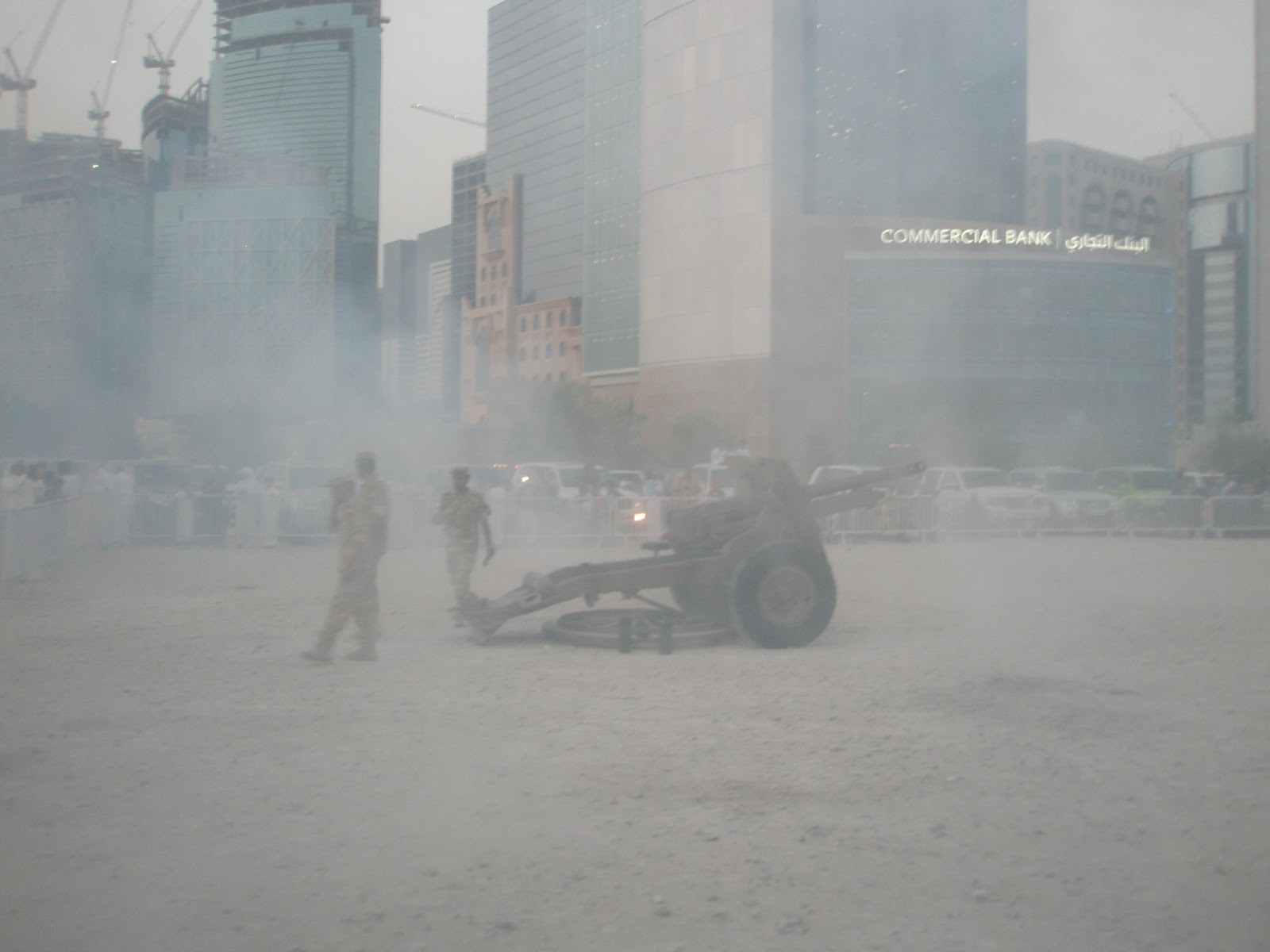
Yes, I went to visit the Ramadan Cannon. For those of you who don't know the military park an artillery gun in the empty lot between the post office and Commercial Bank tower, which they fire to signify when the sun has set (and you can start your Iftar dinner).

By the time I got there was already a lot of cars.


And of course kids were climbing all over the gun. The soldiers don't mind, at one point one of them was lifting kids onto the barrel.


As time approached more soldiers arrived and moved the crowd away from the cannon.


After that it was just a matter of preparing the cannon and firing a shell to signify that the sun had set and everyone could eat. I had packed a bottle of water and some dates and snacks into my car so once the cannon fired I went back to my car and broke my fast.


Later that evening I went to the Aspire Zone to meet a friend at the gym for a workout in air-conditioned comfort. Because of Ramadan most things stay open much later and I didn't start exercising until 10:15pm.


Afterward I went to a nearby mall to pick up a couple of things. Even though it was close to midnight entire families were still in the mall shopping, even kids. Why not - the shops didn’t close until midnight. Peak hours in Qatar during Ramadan are from around 9:00pm to after midnight since everyone is fasting during the day.


Wednesday, July 10, 2013

Ramadan 2013 – Day 1


So my alarm went off at 3 AM so that I could eat my sohour snack that I keep on the nightstand. As this is my fourth year I've gotten used to this and can do it without turning on the light -- sit up and just reach towards the bowls and glasses, eat the food, drink the drinks, then lean right back into bed. Unlike Muslims I don't have to get up to do prayers.

Then I got up at my usual time for work and when I left home and nicest thing happened . . .

Traffic was fantastic!

I'm talking there was almost no one on the roads. I didn't stop at any roundabout and I managed to catch a green light at every intersection. I was at the office in under eight minutes -- normally it takes 20 to 25. I'm pretty sure that's a record for commuting to the office. Parking was easy too.

The morning commute is usually lighter during Ramadan but this was something else. I later found out that the Government Ministries decided to change working hours to 9 to 2 (in previous years they started earlier). Since the banks are also on similar hours, as are most offices, there is no one on the roads at 7am.

Later I read an article on Dohanews about the key times that traffic is bad (check out the picture). No gridlock for me!

So after work I got home, did a couple of chores, and then napped for a little over two hours. Probably because I was fasting falling asleep was easy too. When I woke up I had about an hour to get ready for iftar.

Here’s what I made, soup and some snacks like dates, olives and a bit of cheese:


It doesn't look like much but in truth it turned out to be too much and it was difficult for me to even finish it. Around this time of year doctors warn people about overeating after you’ve been fasting and I think I was getting close to that. Tomorrow I will cut it back a bit.

I was planning to go see the artillery cannon to signify when you can start eating but because I slept in I decided to catch it on TV instead.


It's kind of nice, at the same time the artillery cannon goes off all the mosques near my apartment start with the calls to indicate that the sun has set.

After that it was time to go out and do some errands. Traffic was still pretty good around 9pm but it started getting busier when I returned at 10:30.

I wanted to do some grocery shopping to pick up a few odds and ends. Today I was talking with a Qatari colleague about the sohour meal (many Muslims find it interesting that I fast during Ramadan so are always willing to share their fasting tips) and she suggested that I include a banana as they are apparently good at helping you fast through the day. So I made sure I got some bananas at the grocery store and will include it with my sohour tonight.

One of my Qatari friends mentioned playing squash sometime this week but we will have to start sometime after 10:30. I expected that, during Ramadan, Qatar doesn't even really start happening until 10.

I forgot to start reading the Qur'an, something people do every day during Ramadan. I'll do that tomorrow.

Tuesday, July 09, 2013

Ramadan Kareem!


Ramadan has officially been announced!

Tomorrow the fasting begins. I drank nothing but decaf today so I should be all right in terms of caffeine withdrawal. From my recollection the first couple of days are always the most challenging in terms of not eating food or drinking anything so we'll see how it goes.

Tonight I was driving towards West Bay and happened to be driving by the artillery cannon when it went off to signal that Ramadan had started. Needless to say that scared the living *@#^ out of me and I nearly veered off the road. I thought one of my tires had exploded or something.

I’ve downloaded a prayer schedule here. Looks like Fajr prayer is around 3:20am and Maghrib prayer starts around 6:28pm so that’s 15 hours of fasting every day. Luckily work will be on reduced hours (during Ramadan banks, government offices, and other offices typically work five or six hours a day) so I can nap in the afternoon.

As usual I hope to post a lot about what's happening during the Holy Month so check frequently for updates.

Sunday, July 07, 2013

Ramadan Preparation


Ramadan 2013 is almost upon us. I will of course be fasting again this year but this time it's almost crept up upon me -- it will likely be tomorrow night! I have some things prepared but I will need to shop for some more things so that I’ve got planned meals ready. I've got dates, some nuts, and I've been weaning myself off the caffeine. A friend of mine plans to go to the gym every evening around 10 (after tanawih prayer) so I might join him. Beats stuffing yourself at a sohour buffet.

This is my fourth year of fasting, and like other years I will try to blog about my experiences during this Holy Month.

Friday, July 05, 2013

Qatar Airways vs Pegasus Airlines


So I've been invited to my friend’s place in Turkey for the upcoming Eid holiday, which is an invitation I’ll rarely turn down (Turkey is a great place). That meant booking a flight to Istanbul at one of the busiest times of the year in the Middle East.

Thankfully there’s now two options for direct flights: 5-star airline Qatar Airways and no-frills carrier Pegasus Airlines.

Living in Qatar I of course use Qatar Airways frequently. It is a good airline: their food is great, the entertainment system fantastic, and I like their membership program. I'm always reminded of this fact when I fly any North American airline on a domestic flight -- the difference between them and Qatar Airways is like night and day.

Naturally you expect a high-quality airline to be more expensive than a no-frills flight so if there was a reasonable difference in price I’d pay extra for Qatar Airways. So what was a return flight to Istanbul (less than 4 hour flight)?

Qatar Airways ~QAR 4000 ($1,100)
Pegasus Airlines ~QAR 1400 ($380)

So, um, Qatar Airways is almost TRIPLE the price!! Are you serious?!

I noted in my blog in the past that Middle Eastern carriers charge more money for people who live in the home city (i.e. gouge) but this is ridiculous.

As for Pegasus Airlines, that price is less than what I typically pay to fly between Calgary and Vancouver, and that is only an 80 minute flight.

Since I have not had a lobotomy recently I immediately booked with Pegasus Airlines.

Qatar Airways - you've got to be more reasonable towards domestic customers. I’d have paid more to fly with you but not triple.

Saturday, June 29, 2013

A New Emir – the First Changes


With His Highness Sheikh Tamim having now become Emir first item of business was to change the Council of Ministers. Most of the Ministers under the previous Emir have been changed and the papers provided the full list of the new Ministers. That the Prime Minister resigned was expected, even UK newspapers were reporting on his impending resignation a few weeks ago, instead speculation was around some of the other high-profile Ministries.

The Minister of Finance is now Mr. Ali Shareef Al-Emadi. He's the only new Minister whose name I immediately recognized as he is the CEO of Qatar National Bank, easily the largest bank in Qatar (and recently awarded by Bloomberg as something like the safest large bank in the world). I guess if you're going to appoint someone as your Minister of Finance appointing someone who's taken a large bank to such greatness is a pretty good choice. A Qatari also told me that he's the son-in-law of the former Minister of Finance but I haven't been able to verify that online.

The Minister of Energy kept his post though, one of the few who has not been changed.

But the post getting the most attention is the new Prime Minister (and Minister of Interior), Sheikh Abdullah bin Nasser bin Khalifa Al Thani. There've been some press articles looking more closely at this gentleman to see if there'll be any significant changes in foreign policy under his watch. Initial discussions indicate that the likely not be any significant policy shifts in the near future.

If you recall my post on Qatari names, and compare the names of the new Emir and Prime Minister:

Sheikh Tamim bin Hamad bin Khalifa Al Thani
Sheikh Abdullah bin Nasser bin Khalifa Al Thani

It looks like they might share the same grandfather, in which case they would be cousins. In fact I just assumed that they were but I decided to double check. Surprisingly according to Wikipedia, Shekih Tamim’s grandfather, Sheikh Khalifa, did not have a son named Nasser. This means the Khalifa in the Prime Minister's name refers to a different Khalifa so the Emir and Prime Minister could not be cousins.

Anyway, overall Qataris have no issue with the change in power to the new Emir, though most expressed sadness that His Highness Sheikh Hamad abdicated as he oversaw incredible change in Qatar and the life of your average Qatari improved dramatically. No one expects much to change in terms of Government policy in the near-term but I'm sure there will be a few things here and there -- Sheikh Hamad abdicated so that his son could provide fresh, innovative ideas, and what would be the point of that if nothing were to then change?

Tuesday, June 25, 2013

The Transition of Power


So today His Highness Sheikh Hamad, the former Emir, gave a speech announcing his abdication in favour of his son Sheikh Tamim. A translation of his speech can be found on Al Jazeera's website or dohanews.co, but the main reason was his desire to transfer power to the younger generation who would have innovative ideas and be able to move the country forward. It is encompassed by a saying by the 4th Caliph, Ali bin Ali Taleb, which Sheikh Hamad quoted as part of his speech:

“Teach your children other than that what you were taught; as they are created for a time other than yours.”

With his announcement that he will be abdicating Sheikh Tamim essentially became the Emir. Apparently Sheikh Tamim has to make a vow to serve his nation but once that is done he can be considered the Emir. I'm guessing that has occurred already.

And that was that. Qatar does not have crowns or other symbols of office that have to be bestowed to symbolize the handling over of power so there was no need for any formal ceremony. Sheikh Tamim is now the Emir of Qatar.

Today the streets were quiet except for the area near my place as it is close to the Diwan (essentially the main Government palace). Around the Diwan there were plenty of police and security on hand as hundreds and hundreds of Qatari men came to the Diwan to pay their respects to Sheikh Hamad and give their congratulations and pledges of support to the new Emir. Qatar TV showed lots of footage of Qatari men in bishts one after the other shaking Sheikh Hamad’s hand then Sheikh Tamim’s hand, sometimes kissing it, and sometimes doing other forms of Arab greeting (like touching noses).

I met with some Qatari friends today and not surprisingly it was the main topic of conversation. One had already been to the Diwan and others were planning to go. I did learn some interesting things during the discussion:

I asked if there was an equivalent ceremony for ladies, where ladies would go to give their congratulations to the new Emir’s wives. No, there is no separate meeting for women.

My previous post noted how rare it is for abdications to occur but that was incorrect. While abdicating in favour of the Heir Apparent is rare in the rest of the Gulf it is not uncommon for the Al Thani rulers. It has happened at least twice before in recent times, for example His Highness Sheikh Abdullah bin Jassim Al Thani abdicated in 1949, and His Highness Sheikh Ali bin Abdullah Al Thani abdicated in 1960 to give power to his son.

All agreed that there will not be any major sudden changes in policy, with the exception of a cabinet reshuffle, as Sheikh Tamim had already been making many of the decisions in the last few years so he was already involved with much of what is planned for the future.

Monday, June 24, 2013

A New Emir!


Rumors were swirling, articles had come out earlier in Western papers, and it looks like it's all come true -- His Highness the Emir will abdicate power to his son Sheikh Tamim. Apparently he met today with members of the Royal Family to announce the decision, and tomorrow has been declared a National Holiday.

I had gotten wind of big changes coming to the hierarchy from some of the Qataris I know, and today everyone had been talking about an impending meeting His Highness was having as all assumed it was an announcement he would transfer power. For this region it is pretty uncommon, possibly unique, for there to be a smooth transition of power in this manner, typically rulers in the Gulf stay in power for their rest of their lives. Even more unique, not only will the new Emir’s father be around, but his grandfather, former Emir Sheikh Khalifa, is still alive as well (though Sheikh Khalifa’s transfer of power was not smooth -- he was deposed by his son, the current and soon-to-be-retiring Emir, in 1995). Three generations of rulers will be living in Qatar during Sheikh Tamim’s reign.

Once Sheikh Tamim becomes the Emir (or maybe he has already, I don't think Qataris have grand formal coronation ceremonies like they do in Britain), I wonder who will be the Crown Prince? Sheikh Tamim’s children are very young, he’s only 33 himself, but I asked a couple of Qataris and apparently they do not do what many European monarchies do and nominate regents to assist the now-too-young Crown Prince in case he becomes ruler due to early death of the monarch. I assume then the Crown Prince will be one of Sheikh Tamim’s younger brothers until such time as one of his sons is old enough to assume the role. Anything is possible though, it could be a half-brother or even one of his uncles.

Also unlike most European monarchies the Al Thani family does not automatically pass rule to the eldest son. Sheikh Tamim is (I think) the Emir’s 4th eldest son, not the oldest. It appears the Al-Thani family looks closely at who becomes Crown Prince, perhaps because without a strong ruler their position as the ruling clan may be in jeopardy. In any event the eldest son is not automatically entitled to become the Emir. Older brothers or half-brothers have held the position of Crown Prince in the past but eventually had to step down to give it to another. Sheikh Tamim has been Crown Prince since 2003.

Everyone I've spoken to does not expect a lot of change. Many Qataris have told me that Sheikh Tamim was already overseeing large parts of the country as his father was giving him more and more responsibility over the years. Numerous policies were likely developed by Sheikh Tamim himself, and some have said that he was practically running everything now anyway, so the secession should be without a lot of problems.

So why the abdication? I can only speculate (maybe more detail will come forth when the Emir gives a speech to the people tomorrow), but I think there’s two reasons. Firstly, ensure a smooth succession -- the previous two sessions were due to coups from within the Al Thani family, and I think this father-son team will have no issue hanging onto power.

Secondly, maybe His Highness knows that in this day and age it's better that someone younger lead the way. The Emir himself took over when he was in his early 40s, and went on to transform Qatar in astounding ways. I think some newspaper reports have shown the economy has increased seven-fold in the 18 years he has ruled. Heck, I occasionally wax poetic on this blog about the amount of change that has occurred here in just the last seven years! Perhaps he recognizes that he too yearned to take the country in a new direction when he was still relatively young, and that his son would as well. It's an incredibly bold, and likely wise, move from His Highness to ensure that Qatar stays dynamic rather than stagnating.

Like I said, this transition is probably unique in the Arab world. In some ways it's unbelievable to think that His Highness would abdicate at 61 to a new generation.

Congratulations to the new Emir, Sheikh Tamim.


Thursday, June 13, 2013

Kuwait Turns a Critical Eye to Expats


It looks like the move by Kuwait to reduce the number of expats is heating up. Thousands have been deported so far and the goal is to reduce the number of expat visas by 100,000 a year for the next 10 years -- not a small number given the total population of the country (expats and citizens) is around 3 million:

http://www.arabianbusiness.com/kuwait-minister-defends-right-cut-expat-numbers-504151.html

And Kuwait’s new policy of Kuwati-only mornings at hospitals has been rolled-out at one hospital where it will be tested for six months before possibly being expanding to the entire country, further seen as a sign that Kuwait is discouraging expats:

http://www.expatriatehealthcare.com/News/Worldwide_Medical_Insurance_News_Expat_hospital_segregation_begins_in_Kuwait771/


So what’s been driving these measures? Well if you read the news most people point to a large number of illegal workers in the country, a lack of employment opportunities for Kuwaitis as expats are taking most of the good jobs, and crowding at hospitals and other facilities because of all the expats.

As for the number of illegals I have one Kuwaiti friend who did tell me once that illegals are a problem there, some Kuwatis run visa-schemes where people from South Asia pay a sum of money to a Kuwaiti and in return he sponsors them to come to Kuwait, telling the Government about fake jobs that they will supposedly be working, at which point they arrive and roam around doing whatever work they can, likely in the underground economy, to earn money. A recent article in Arabian Business stated the Indian Embassy estimates there are likely 20,000 illegal Indians in Kuwait. There’s probably a similar number of illegal Pakistanis. I’m not sure if that is the only problem, there may be a lot of people from other troubled countries in the region like Iraq, Syria, or Egypt who had made their way into Kuwait as well.

As for the employment I think the Government is starting to get concerned. The country has a large youth population that will be looking for work soon, so the Government is taking measures to try to ensure job opportunities go to citizens.

But I suspect there is another driver, finances. Take a look at these two paragraphs from a recent IMF report on Kuwait:

http://www.imf.org/external/np/ms/2012/043012.htm

16. Nonetheless, rising public sector wage and pension costs and rapid population growth are expected to exert pressures on public finances. The average real and nominal growth rate of the public sector wage bill has more than doubled in the last six years (2006/07–2011/12), to 8 percent and 13 percent, respectively (Figure 8). The continuation of such a trend could put significant pressures on government finances—via higher wage payments, government pension contributions, and an increase in the unfunded liabilities of the pension system—and would be difficult to reverse if oil prices were to decline significantly in the future. The cost to the pension system is onerous for Kuwait, particularly given its low retirement age (see Annex 1) and generous benefits.18 Finally, rapid population and labor force growth—about 60 percent of the Kuwaiti population is under 24 years—is likely to put increasing pressures on public sector employment and the provision of public services going forward.

17. Fiscal consolidation is therefore needed in the medium term if current spending trends continue. The mission estimates that government expenditure will exhaust all oil revenues by 2017, which means that the government will not be able to save any portion of these revenues for future generations (Figure 9). In this context, medium-term benchmarks for government expenditure can help the government determine its fiscal envelope in order to target intergenerational equity in the distribution of oil resources. Kuwait’s nonoil primary deficit is already above the estimated baseline benchmarks (based on the permanent income hypothesis), and some fiscal consolidation would be needed in the medium to long term (Figure 10, upper panel). In this context, an adjustment of at least 12 percentage points of the nonoil primary deficit to GDP (or KD 7 billion against a projected expenditure of around KD 25 billion in 2017) would be needed by 2017 to ensure long-term fiscal sustainability. The need for fiscal consolidation is larger and more urgent in a scenario of lower oil prices.


Paragraph 17 is pretty shocking -- despite all of their oil wealth the IMF estimates that, if oil prices remain relatively stable, the Kuwaiti Government’s spending will still exceed the revenue earned from oil by 2017. If oil prices drop this could happen even sooner.

Kuwait appears to be under pressure to either earn more revenue or start spending less. Since so many things are subsidized (medical, water, power etc.) one way to save some money is to reduce the population, thus reducing amount of money spent subsidizing many services. Combine that with concerns about upcoming youth employment (60% of Kuwaitis are 24 and younger!), and on the face of it reducing the number of expats looks like a "two birds with one stone" kind of solution. I also suspect it could help reduce inflation, especially with rental prices, driving down real estate prices as the overall population shrinks. This will reduce pressure on the Government to have to increase housing allowances and other subsidies to keep up with spiraling rents.

Is raising revenue also possible? You’ll see further along that they’ve already been increasing oil output over the last number of years so I don’t think the solution lies there. Taxation? I saw it mentioned in the health article but that is the first time I've heard of the issue being discussed so I'm not sure if Kuwait is seriously thinking about that route. Large-scale tax regimes can be costly to implement so in a country of 3 million one would have to weigh the costs with the revenue that would be collected.

There’s also the question of how much oil Kuwait has left. British Petroleum does a great report every year on world energy reserves:


Proven oil reserves by country are listed on page 6. One problem with OPEC producers is the only source of information you have is what the individual countries themselves disclose. So what kind of reserves does Kuwait have?

1991: 96.5 billion barrels
2001: 96.5 billion barrels
2010: 101.5 billion barrels
2011: 101.5 billion barrels

Kuwait’s oil reserves have not decreased from the 1991 figure. In fact that 96.5b figure was established in 1985! There's not been any decrease to their reserves for the oil they have produced and sold, nor for the Iraqi invasion (when the Iraqis lit many of the wells as they were leaving, causing an estimated loss of 1 to 1.5 billion barrels). The official figure can’t be correct.

Page 8 of the report lists the production, in thousands of barrels per day. I’ll give the last 5 years in terms of barrels per year:

2007: 966m barrels
2008: 1,007m barrels
2009: 904m barrels
2010: 919m barrels
2011: 1,046m barrels

Now production is higher than it has been in the past but if we assume an average production of 850m barrels a year since 1985 it equals production of 24.2 billion barrels since the “96.5b” figure was originally created.

If the 96.5b figure was correct then Kuwait has around 72b left (around 65-70 years of production) but that’s only if those “proven reserves” were actually proven. There are some doubts. For example if you google around there is some mention of a leaked memo purported to be from Kuwait’s Ministry of Oil from 2001 which noted that the real reserves were far lower. Unfortunately there was no way to verify whether the memo was authentic, and if it was, then Kuwait could have as little as 15-20 years at current rates of production.

While I think the current stated reserves are overinflated I also suspect that unless that leaked memo can be verified as authentic I don't think 15-20 years is likely either or the Kuwaiti Government would have been acting far sooner to reduce expenses. I think it's something in between, possibly 25-30 years. In the meantime Kuwait is also facing potentially having to spend more than it makes on oil just to maintain its current system. The Kuwaiti Government may have realized that it needs to start doing something or else 25 to 30 years down the road it will find itself financially in a very bad position. Given that, I can't see the situation for expats changing there.

Thursday, June 06, 2013

Ezdan Mall Update – June 6th

[the most up-to-date information I have on Ezdan Mall is from August 21st and can be found here]

I haven’t been at Ezdan Mall for 2 weeks and surprisingly not a lot has changed.

The Carrefour is definitely open but for some inexplicable reason Forever 21 was closed [update: it opened the next day, June 7th].


For food and beverage only one more café has opened


That means your options are two cafés, Tim Hortons, KFC, and MotiMahal. The only proper restaurant that looks close to opening is Royal Tandoor.

Otherwise here's the other stores that are now open:


And a couple that are getting ready


Wednesday, June 05, 2013

Italian Vacation


I was just in Milan for around six hours so I wandered around the La Scala (Opera House) before heading back to the Duomo. For a fee you can wander around the roof which was more impressive than I thought it would be, there was a lot of decoration and work that went into the roof of the Cathedral.


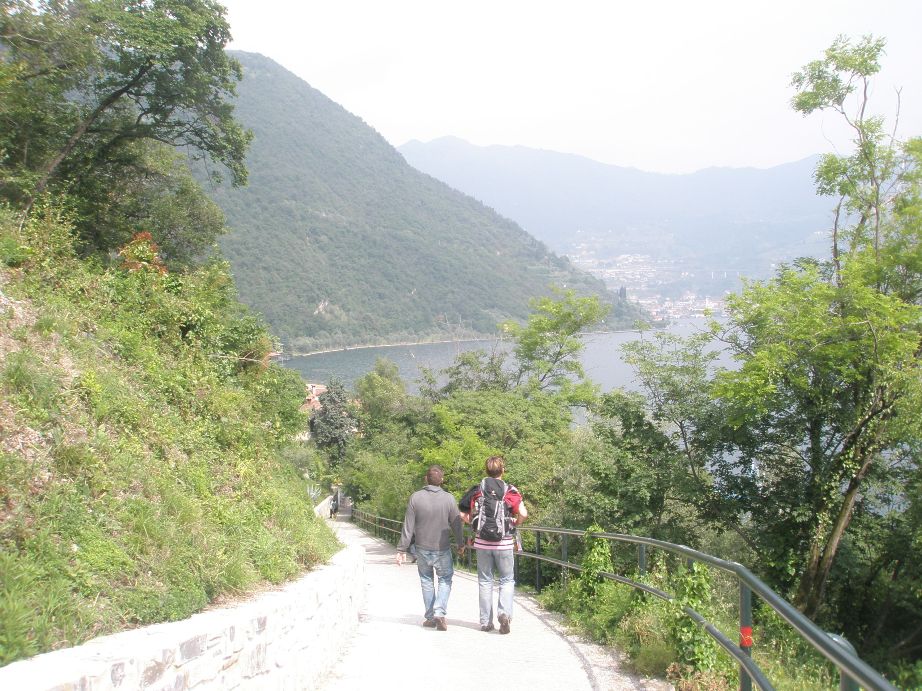
Later I met up with some friends in front of the Duomo and we drove to the island of Monte Isola in Lake Iseo. I had been there a couple of years ago and really enjoyed my time there. We even stayed at the same hotel on the southern tip of the island.


The next day we wandered around the island


said hi to some people


and met up for lunch with a friend of one of my friends who lives in a small village on the island.


From there we wandered back to the ferry and crossed back to the lakeshore to get our car.


From there it was off to Verona for the evening. We chilled out in the square


And wandered around looking at the cool buildings, such as this Roman-era Coliseum that is still being used for concerts.


The next day I said bye to my friends as they dropped me off at the train station and I headed off to Venice.


Venice has to be one of the coolest cities to just hang around in. Happened to stumble upon some sort of Catholic ceremony in San Marco Square.


I really have no idea what was going on but there appeared to be some ceremony led by the Archbishop (maybe Cardinal?) with some holy object or another and then they all filed into St Mark’s Basilica.


I’ve been to Venice before so I knew some decent restaurants to eat at and basically spent the time just wandering around the city. Next day I took the ferry to the airport.


I can't believe I did all that traveling in Switzerland and Italy in just six days. I now need another vacation just to recover from this one :)