Back when the PISA 2009 results came out one commenter pointed out that while Qatar's marks were still low they had made significant improvements from 2006, which indicates that the reform measures taken by the Supreme Council of Education are making an impact. I'll reserve judgment on that until we analyze marks from a number of countries. The test changes from year to year so if countries at the bottom improved then it could indicate that the test was easier than the previous one. If all the countries improved than the test was definitely easier.
Unfortunately not a lot of countries in the bottom range had taken the test in 2000 or 2003, and some aspects of the test changed over the period, so I will only take the 2006 and 2009 results:
(Sorry about the mess, the table formatting didn't carry forward, the last number in the line is the change from 2006 to 2009)
Reading: 2006 2009 difference
Canada 527 524 -3
Japan 498 520 22
UK 495 494 -1
USA na 500 na
OECD avg 492 493 1
Portugal 472 489 17
Mexico 410 425 15
Tunisia 380 404 24
Uruguay 413 426 13
Qatar 312 372 60
Kyrgystan 285 314 29
Math: 2006 2009 difference
Canada 527 527 0
Japan 523 529 6
UK 495 492 -3
USA 474 487 13
OECD avg 499 496 -3
Portugal 466 487 21
Mexico 406 419 13
Tunisia 365 371 6
Uruguay 427 427 0
Qatar 318 368 50
Kyrgystan 311 331 20
Science: 2006 2009 difference
Canada 534 529 -5
Japan 531 539 8
UK 515 514 -1
USA 489 502 13
OECD avg 500 501 1
Portugal 474 493 19
Mexico 410 416 6
Tunisia 386 401 15
Uruguay 428 427 -1
Qatar 349 379 30
Kyrgystan 322 330 8
The results definitely support the view of the commentator, Qatar had easily the best improvements of the countries selected, in all three categories. Even countries near Qatar in terms of 2006 results had mixed improvements, although all of the bottom six improved to some degree in almost all categories.
Qatar still has a long way to go though. Scores below 400 are pretty bad, and as I noted in my previous post Qatar had a number of good performing schools which means there were a lot of schools performing even below the low-300s.
If you're not sure what exactly a score means I recommend you take a couple of the sample questions, which can be found here:
http://www.oecd.org/document/31/0,3746,en_32252351_32236191_41942687_1_1_1_1,00.html
Science question 12.2 was pretty enlightening, and one of the worst results for Qatar. (Summary the question: in an experiment on corn scientists chose 200 different fields to have the experiment in, why did they use so many fields?). 74% of 15-year-olds in the OECD got the question right, in Qatar it was 30%. Yet the question was multiple-choice with only four different answers, so even by random guessing you'd expect 25% to get it right. Yikes.
Friday, March 25, 2011


Sunday, March 20, 2011
Qatar and the PISA test
Less than a week ago Qatar held a ceremony to recognize the schools that did the best on the recent PISA test. That in and of itself was nice as it publicly announced those schools whose students did well on the test but even more impressively at the website for the Supreme Council of Education they actually reported the scores that those schools had on the test.
So before we take a look at that lets recap some of the scores from the PISA results:
Reading:
Shanghai 556
Korea 539
Finland 536
Hong Kong 533
...
United States 500
...
OECD average 493
...
Qatar 372
Mathematics:
Shanghai 600
Singapore 562
Hong Kong 555
Korea 546
...
OECD average 496
...
United States 487
...
Qatar 368
Science:
Shanghai 575
Finland 554
Hong Kong 549
Singapore 542
...
United States 502
OECD average 501
...
Qatar 379
Ready for how some of the local schools did?
In first place was Al-Khur International School (Indian stream, they also have a British stream)
Reading 603.77, Mathematics 591.73, Science 565.98
Take a look at those scores again, and compare them to the country averages.
Wow!! Those are some very impressive scores! The reading score absolutely destroyed any country average.
The reading and math score was what propelled the school to the top of the Qatar chart, believe it or not despite their great science score there were a few schools that scored better than they did in science with the best of them, Birla Public-School, scoring 586.
Ultimately 14 schools in Qatar had scores that exceeded the OECD average, for which they were honored in the ceremony. Another 16 schools were also given certificates for high achievement. A number of the schools in the top 14 were Indian or South Asian. I wish that India and other countries in that region would also sign up to do the PISA test as it would be interesting to see what the overall country scores in that region would be.
It is great that the Supreme Council for Education is really embracing the PISA test and not trying to hide what are clearly difficult results in terms of country average. Hopefully they will continue to implement reforms in order to improve education for students.
Now for the tough question: according to the article students in 153 schools were tested and the average for all categories was in the 360 to 380 range, which is a pretty poor score (search for PISA on this blog to get an idea of what countries were below that score). If Qatar has a number of schools that perform really well on this test, what does that say about the state of education in many of the other schools who participated? By the time you got to the 30th school the scores were still in the mid-400 range yet the average was a lot lower. This means there are a lot of schools who likely scored in the high 200s-low 300s, and if the SCE is not asking what the heck kids in those schools are learning during their time there -- they should. Children are either:
1) Not be getting an adequate education; or
2) there is some significant external factors affecting the scores (language difficulties?)
In either event a thorough investigation is needed.
No, I don't want to hear any excuses about how some of them are religious schools that focus on Islam, that does not excuse abysmal scores in reading and mathematics, especially reading. In fact one would think a religious school would score pretty high in reading given the focus on the Qur’an, Sunnahs and Hadiths. No, those schools are in need of significant reform of some sort and I hope the SCE are looking at these schools carefully.
In my next blog post we will compare how Qatar has scored in the 2009 test with the previous tests that it wrote to see if there have been any improvements. I recall a couple of comments on this blog pointing out that Qatar had improved, but had it improved significantly compared to its peers?
For the article and the list of schools please go to the link below:
http://www.english.education.gov.qa/content/resources/detail/13217
So before we take a look at that lets recap some of the scores from the PISA results:
Reading:
Shanghai 556
Korea 539
Finland 536
Hong Kong 533
...
United States 500
...
OECD average 493
...
Qatar 372
Mathematics:
Shanghai 600
Singapore 562
Hong Kong 555
Korea 546
...
OECD average 496
...
United States 487
...
Qatar 368
Science:
Shanghai 575
Finland 554
Hong Kong 549
Singapore 542
...
United States 502
OECD average 501
...
Qatar 379
Ready for how some of the local schools did?
In first place was Al-Khur International School (Indian stream, they also have a British stream)
Reading 603.77, Mathematics 591.73, Science 565.98
Take a look at those scores again, and compare them to the country averages.
Wow!! Those are some very impressive scores! The reading score absolutely destroyed any country average.
The reading and math score was what propelled the school to the top of the Qatar chart, believe it or not despite their great science score there were a few schools that scored better than they did in science with the best of them, Birla Public-School, scoring 586.
Ultimately 14 schools in Qatar had scores that exceeded the OECD average, for which they were honored in the ceremony. Another 16 schools were also given certificates for high achievement. A number of the schools in the top 14 were Indian or South Asian. I wish that India and other countries in that region would also sign up to do the PISA test as it would be interesting to see what the overall country scores in that region would be.
It is great that the Supreme Council for Education is really embracing the PISA test and not trying to hide what are clearly difficult results in terms of country average. Hopefully they will continue to implement reforms in order to improve education for students.
Now for the tough question: according to the article students in 153 schools were tested and the average for all categories was in the 360 to 380 range, which is a pretty poor score (search for PISA on this blog to get an idea of what countries were below that score). If Qatar has a number of schools that perform really well on this test, what does that say about the state of education in many of the other schools who participated? By the time you got to the 30th school the scores were still in the mid-400 range yet the average was a lot lower. This means there are a lot of schools who likely scored in the high 200s-low 300s, and if the SCE is not asking what the heck kids in those schools are learning during their time there -- they should. Children are either:
1) Not be getting an adequate education; or
2) there is some significant external factors affecting the scores (language difficulties?)
In either event a thorough investigation is needed.
No, I don't want to hear any excuses about how some of them are religious schools that focus on Islam, that does not excuse abysmal scores in reading and mathematics, especially reading. In fact one would think a religious school would score pretty high in reading given the focus on the Qur’an, Sunnahs and Hadiths. No, those schools are in need of significant reform of some sort and I hope the SCE are looking at these schools carefully.
In my next blog post we will compare how Qatar has scored in the 2009 test with the previous tests that it wrote to see if there have been any improvements. I recall a couple of comments on this blog pointing out that Qatar had improved, but had it improved significantly compared to its peers?
For the article and the list of schools please go to the link below:
http://www.english.education.gov.qa/content/resources/detail/13217
Tuesday, March 15, 2011
Bahrain unrest – what about Qatar?
It appears that things are starting to get more out of control in Bahrain. Saudi Arabia has sent troops in, and possibly the UAE as well. The protesters say this amounts to an “invasion”. Al Jazeera reports hundreds have been injured in clashes and at least two people have died (one protester, one Saudi soldier).
I was at a conference today in Qatar. Many people planning to attend from Bahrain could not make it, and at least one person I know who lives in Bahrain left early to go back to help his family. There is talk of some companies moving their staff out of Bahrain, and travel warnings have been issued by some governments.
I will reiterate from an earlier post -- there has been no unrest in Qatar, nor will there be (see my post from a couple of weeks ago for why). Despite their close proximity they are two very different countries and the Qatari population does not have the kinds of problems with poverty, unemployment, and sectarian discrimination that one finds in Bahrain. There is no widespread discontent in Qatar with the ruling family.
While Bahrain was in the midst of unrest I was having a nice buffet lunch at a hotel with insurance executives from around the GCC and Europe. Yesterday the Minister of Finance himself was at the conference giving a speech. There was no extra police or security, and no metal detectors suddenly installed at the door of the hotel. En route to the conference we drove past the Emiri Diwan (where the Ministers and foreign dignitaries meet with His Highness) and there were no police cordons or extra security. Traffic at the airport is on schedule. Everything’s cool here.
Don't worry about me, don't worry about Qatar.
I was at a conference today in Qatar. Many people planning to attend from Bahrain could not make it, and at least one person I know who lives in Bahrain left early to go back to help his family. There is talk of some companies moving their staff out of Bahrain, and travel warnings have been issued by some governments.
I will reiterate from an earlier post -- there has been no unrest in Qatar, nor will there be (see my post from a couple of weeks ago for why). Despite their close proximity they are two very different countries and the Qatari population does not have the kinds of problems with poverty, unemployment, and sectarian discrimination that one finds in Bahrain. There is no widespread discontent in Qatar with the ruling family.
While Bahrain was in the midst of unrest I was having a nice buffet lunch at a hotel with insurance executives from around the GCC and Europe. Yesterday the Minister of Finance himself was at the conference giving a speech. There was no extra police or security, and no metal detectors suddenly installed at the door of the hotel. En route to the conference we drove past the Emiri Diwan (where the Ministers and foreign dignitaries meet with His Highness) and there were no police cordons or extra security. Traffic at the airport is on schedule. Everything’s cool here.
Don't worry about me, don't worry about Qatar.
Sunday, March 13, 2011
Happiness amidst tragedy -- traditional Japanese entertainments
A while ago the Japanese embassy here in Qatar announced an evening that featured traditional Japanese performance art, to be held at the Museum of Islamic art this evening. I definitely signed up because while I am a bit familiar with some types of Japanese performances (Noh, Kabuki, tea ceremonies, etc) I had not heard of either of the types that would be performed this evening. With the current tragedy of the earthquake and tsunami in Japan there was talk of canceling the event but in the end the Japanese ambassador decided that it should go on. In his opening speech he pointed out that the purpose of these entertainments was to entertain and bring laughter, something that was sorely needed in these sad times. We did observe a minute of silence for the victims of the disaster.
There were three performers, doing two different types of traditional Japanese art:
Two of the performers demonstrated Rakugo (Japanese comedic storytelling). The storyteller sits on a small stage and tells a long comedic tale with many characters, using changes in facial expression and voice to switch from character to character. Traditionally he is only allowed two props -- a fan and a small piece of cloth. The first performer, Shumptei Shoumatsu, gave a demonstration of Rakugo, the props, the basics of the art, and then performed a dance doing first a male and then a female dancer, putting the small cloth on his head to represent the switch to the female dancer. You didn't really need the cloth the change in the dance style and his moves clearly indicated the gender. The second Rakugo performer, Sanshotei Charaku, told a tale of a boatman, who is not very good at his craft, taking two passengers across a river. The story was in English and he was quite good. We were surprised at the end when during a Q&A we found out he didn't know much English at all. He had memorized the story in English for the performance!
If you would like to see a Rakugo performance just search for it on YouTube, I believe there are a few videos including some performances done in English.
The other performance was Japanese paper-cutting, called kamikiri. The performer takes a sheet of paper and cuts intricate designs and characters out of the paper while chatting to entertain the crowd. It is common to do requests (various animals, etc) and the kamikiri artist performing for us, Mr Hayashiya Imamaru, could also do portraits of people and detailed scenes. Every time the final product typically took a minute or less yet the intricacy of a lot of the shapes were astounding. Some people in the audience were gasping at what he managed to cut out of a piece of paper so quickly (e.g. three men drinking sake under a cherry tree). He had also previously cut out a number of smaller figures which he handed out to children in the audience. There also were examples of his work outside the performance hall, these were more intricate and done with many different colors of paper. Some of them looked like Japanese paintings.
The Internet is a wonderful thing and I was able to find a video of a kamikiri performance, and it turned out to be Mr. Imamaru! Watch and enjoy:
http://www.japanstyle.info/06/entry6885.html
There were three performers, doing two different types of traditional Japanese art:
Two of the performers demonstrated Rakugo (Japanese comedic storytelling). The storyteller sits on a small stage and tells a long comedic tale with many characters, using changes in facial expression and voice to switch from character to character. Traditionally he is only allowed two props -- a fan and a small piece of cloth. The first performer, Shumptei Shoumatsu, gave a demonstration of Rakugo, the props, the basics of the art, and then performed a dance doing first a male and then a female dancer, putting the small cloth on his head to represent the switch to the female dancer. You didn't really need the cloth the change in the dance style and his moves clearly indicated the gender. The second Rakugo performer, Sanshotei Charaku, told a tale of a boatman, who is not very good at his craft, taking two passengers across a river. The story was in English and he was quite good. We were surprised at the end when during a Q&A we found out he didn't know much English at all. He had memorized the story in English for the performance!
If you would like to see a Rakugo performance just search for it on YouTube, I believe there are a few videos including some performances done in English.
The other performance was Japanese paper-cutting, called kamikiri. The performer takes a sheet of paper and cuts intricate designs and characters out of the paper while chatting to entertain the crowd. It is common to do requests (various animals, etc) and the kamikiri artist performing for us, Mr Hayashiya Imamaru, could also do portraits of people and detailed scenes. Every time the final product typically took a minute or less yet the intricacy of a lot of the shapes were astounding. Some people in the audience were gasping at what he managed to cut out of a piece of paper so quickly (e.g. three men drinking sake under a cherry tree). He had also previously cut out a number of smaller figures which he handed out to children in the audience. There also were examples of his work outside the performance hall, these were more intricate and done with many different colors of paper. Some of them looked like Japanese paintings.
The Internet is a wonderful thing and I was able to find a video of a kamikiri performance, and it turned out to be Mr. Imamaru! Watch and enjoy:
http://www.japanstyle.info/06/entry6885.html
Monday, March 07, 2011
Moving Apartments
So last week the main thing taking up my time was that I moved apartments. For the past year I've been living in an expensive part of town (West Bay) and I found that it wasn't all it was cracked up to be. For one thing that neighborhood is very sterile; nothing but skyscrapers surrounded by parking lots and one mall. Your whole neighborhood life pretty much revolved around going to the mall, or possibly one of the really expensive hotels where you can have an overpriced drink. You didn't have lots of people milling around, small businesses, cheap little restaurants, just skyscrapers. I needed to move somewhere that had more soul.
But one of the issues that had me move last year to West Bay, near to the office, was the traffic. Traffic in Doha can be pretty bad at times and for a while there the morning commute was getting to be 45 minutes. It was pretty annoying given on a weekend you could do the same commute in 15 minutes. So I needed a balance, a place in the neighborhood with a bit more soul but with a short commute.
Thankfully a friend of mine was living in an apartment complex in the neighborhood near the Diwan (essentially the palace where the Emir works from). He and his wife had a one-bedroom apartment and since I'd been there before realized that it was more spacious than the one I was living in. They said there weren't any real issues with maintenance or anything like that, and the building had a gym and a small pool. It was in the neighborhood with a bit more life, and since it was on the edge of the city close to West Bay the commute is only been 15 minutes, which was a big selling point to me. That and being about half the price of what I was paying didn't hurt either. Thankfully an apartment was available so I took it.
Now price wasn't a huge issue as prices have really started to come down in West Bay. In the past year I've seen prices in some buildings go down over 30%. Looks like supply and demand finally caught up to that neighborhood. Since a couple more apartment towers are opening up in that neighborhood I expect prices to go down even more. If anyone is looking to move to West Bay I really suggest looking at all the towers to see what prices they offer -- it's a renters market now.
I didn't have much stuff to move but in 2010 I purchased a couple of bookcases. Thankfully I knew someone with a truck who was willing to help me move and a couple of other buddies pitched in with moving boxes. One trip with the truck and a couple with my car and I was done.
I've nearly finished unpacking now I have to get maintenance up your to work on a few things, and I need to sort out how I'm going to juggle the lack of plugs. There seemed to be an adequate number in the living room and bedroom but I never bothered to look at the kitchen -- there is only one plug there! So one plug has to do for the microwave, kettle, and all other small appliances. Weird.
Anyway I've been settling in okay, I think I like it here.
But one of the issues that had me move last year to West Bay, near to the office, was the traffic. Traffic in Doha can be pretty bad at times and for a while there the morning commute was getting to be 45 minutes. It was pretty annoying given on a weekend you could do the same commute in 15 minutes. So I needed a balance, a place in the neighborhood with a bit more soul but with a short commute.
Thankfully a friend of mine was living in an apartment complex in the neighborhood near the Diwan (essentially the palace where the Emir works from). He and his wife had a one-bedroom apartment and since I'd been there before realized that it was more spacious than the one I was living in. They said there weren't any real issues with maintenance or anything like that, and the building had a gym and a small pool. It was in the neighborhood with a bit more life, and since it was on the edge of the city close to West Bay the commute is only been 15 minutes, which was a big selling point to me. That and being about half the price of what I was paying didn't hurt either. Thankfully an apartment was available so I took it.
Now price wasn't a huge issue as prices have really started to come down in West Bay. In the past year I've seen prices in some buildings go down over 30%. Looks like supply and demand finally caught up to that neighborhood. Since a couple more apartment towers are opening up in that neighborhood I expect prices to go down even more. If anyone is looking to move to West Bay I really suggest looking at all the towers to see what prices they offer -- it's a renters market now.
I didn't have much stuff to move but in 2010 I purchased a couple of bookcases. Thankfully I knew someone with a truck who was willing to help me move and a couple of other buddies pitched in with moving boxes. One trip with the truck and a couple with my car and I was done.
I've nearly finished unpacking now I have to get maintenance up your to work on a few things, and I need to sort out how I'm going to juggle the lack of plugs. There seemed to be an adequate number in the living room and bedroom but I never bothered to look at the kitchen -- there is only one plug there! So one plug has to do for the microwave, kettle, and all other small appliances. Weird.
Anyway I've been settling in okay, I think I like it here.
Friday, February 25, 2011
A Tale of Two Countries -- Qatar and Bahrain
While I was away on vacation there was a lot of action in the Middle East with protests against governments in many countries -- Egypt, Tunisia, Libya, and Bahrain. These protests were very disruptive to their respective countries and in most cases there were battles with police or the army, and a number of deaths. I've already been asked by a few people that since Qatar is so close to Bahrain whether Qatar is at risk for any kind of protest or strife?
I highly doubt it.
Despite their close proximity, their shared history, and close ties (many Qataris have relatives in Bahrain and a number of tribes have a presence in both countries) the two countries have significant differences, and these differences mean that while one country has unrest the other is fine. So what are the differences? Here are some that I know of:
1) Wealth
Bahrain was one of the earliest of the Gulf countries to utilize its petroleum reserves and this brought it significant wealth, it also gained a lot of the regional financial services industry back in the 70s during the unrest in other parts of the region and Lebanon. Unfortunately it is a small country and it wasn't long before it had used up most of its oil. Meanwhile other countries in the region gained prominence and attracted away many of the companies (at first Kuwait, then after the Iraqi invasion of Kuwait the UAE became the major hub). Bahrain today is not as wealthy as many of its neighbors, and many Bahrainis have issues with poverty, finding affordable housing, and simply making a living. For example I believe all of the taxi drivers in the country are Bahraini.
By contrast Qatar has significant reserves of oil and gas and only in the last decade really begun to tap those reserves. Its reserves in comparison to its size and population are massive, this has allowed Qatar to have the highest per capita GDP in the world. The Qatari government is also utilizing a lot of that money into benefits for its citizens: free healthcare, free education (even paying for university abroad), monthly allowances when you get married and have children, a generous pension plan for government workers, assistance with building your first home, subsidized water and electricity, and I'm sure there are many more benefits. There are no significant issues with unemployment and Qataris tend to be employed in the government, large energy companies or banks, or running their own businesses. No Qatari works as a taxi driver.
2) Sunnis and Shi’as
There are two main groups in Islam: Shia (this is the main form of Islam in Iran), and Sunni (predominate in most of the rest of the Islamic world, including Saudi Arabia). The schism that created the two occurred early in the history of Islam and ever since there have been times of peace and times of strife between the two groups. An analogy for Westerners would be the problems that occurred between Protestants and Catholics since the Reformation. Things have been relatively peaceful between Protestants and Catholics now, with the possible exception of Northern Ireland, but for centuries there have been wars, purges, and violence on one or the other group. Sectarian violence between Shia and Sunnis still tends to flare up every now and then, with Iraq and Lebanon being good examples. This is one of the main reasons why much of the Islamic world has tensions with Iran. I suggest viewing the recent Wikileaks diplomatic cables regarding Iran, Saudi Arabia, and the UAE if you want to see examples of the mistrust.
In Bahrain the majority of the citizens are Shi’a (I believe around 60%) yet the Royal Family and most of the people in power are Sunni, so you essentially have a Sunni minority ruling over a Shi’a majority. This has caused problems -- Shi’as accuse the ruling Sunnis of discrimination and limiting access to good jobs and housing. I can't tell you to what extent this is true or not but such accusations have existed for years. Protests in Bahrain by the Shi’a majority tend to occur every couple of years or so and many Shia clerics and other leaders have been imprisoned or have had to flee the country. The recent chaos in Tunisia and Egypt has really lit a fire under the Shi’a citizens who immediately began mass demonstrations in Bahrain, much bigger than in the past.
In Qatar however the majority of citizens are Sunni, well over 90%, so you do not have the level of sectarian tension that exists in Bahrain. While I'm not sure if there is any discrimination in Qatar against Shi’a I've never heard of any. I do know that some of the wealthiest businessmen in the country are Shi’a so I don't think there is any kind of "glass ceiling" in terms of being allowed to be successful, though that may or may not be the same in government. There have certainly never been any mass protests by Shi’a in the time that I have been here. Qatar also maintains reasonable relations with Iran, and had invited them to the last GCC summit that was held in Qatar.
3) Qatar won the 2022 World Cup bid
Thanks to the successful 2022 World Cup bid Qatar is in the midst of a wave of nationalistic pride. In about 15 years His Highness the Emir has taken this country from obscurity to the international spotlight, managing a feat that a couple of years ago even I highly doubted would ever happen. If there were such things as popularity polls here in Qatar I'm sure right now His Highness would be enjoying the strongest results of his entire reign.
So why do I not think there'll be any problems in Qatar? A wealthy country whose citizens are comparatively well-off, a government that has been using some of that wealth for the benefit of its citizens, a demographic that minimizes sectarian tensions, and the pride that comes from hosting the World Cup.
Other Middle East rulers may be having some sleepless nights. There won't be any problems here.
I highly doubt it.
Despite their close proximity, their shared history, and close ties (many Qataris have relatives in Bahrain and a number of tribes have a presence in both countries) the two countries have significant differences, and these differences mean that while one country has unrest the other is fine. So what are the differences? Here are some that I know of:
1) Wealth
Bahrain was one of the earliest of the Gulf countries to utilize its petroleum reserves and this brought it significant wealth, it also gained a lot of the regional financial services industry back in the 70s during the unrest in other parts of the region and Lebanon. Unfortunately it is a small country and it wasn't long before it had used up most of its oil. Meanwhile other countries in the region gained prominence and attracted away many of the companies (at first Kuwait, then after the Iraqi invasion of Kuwait the UAE became the major hub). Bahrain today is not as wealthy as many of its neighbors, and many Bahrainis have issues with poverty, finding affordable housing, and simply making a living. For example I believe all of the taxi drivers in the country are Bahraini.
By contrast Qatar has significant reserves of oil and gas and only in the last decade really begun to tap those reserves. Its reserves in comparison to its size and population are massive, this has allowed Qatar to have the highest per capita GDP in the world. The Qatari government is also utilizing a lot of that money into benefits for its citizens: free healthcare, free education (even paying for university abroad), monthly allowances when you get married and have children, a generous pension plan for government workers, assistance with building your first home, subsidized water and electricity, and I'm sure there are many more benefits. There are no significant issues with unemployment and Qataris tend to be employed in the government, large energy companies or banks, or running their own businesses. No Qatari works as a taxi driver.
2) Sunnis and Shi’as
There are two main groups in Islam: Shia (this is the main form of Islam in Iran), and Sunni (predominate in most of the rest of the Islamic world, including Saudi Arabia). The schism that created the two occurred early in the history of Islam and ever since there have been times of peace and times of strife between the two groups. An analogy for Westerners would be the problems that occurred between Protestants and Catholics since the Reformation. Things have been relatively peaceful between Protestants and Catholics now, with the possible exception of Northern Ireland, but for centuries there have been wars, purges, and violence on one or the other group. Sectarian violence between Shia and Sunnis still tends to flare up every now and then, with Iraq and Lebanon being good examples. This is one of the main reasons why much of the Islamic world has tensions with Iran. I suggest viewing the recent Wikileaks diplomatic cables regarding Iran, Saudi Arabia, and the UAE if you want to see examples of the mistrust.
In Bahrain the majority of the citizens are Shi’a (I believe around 60%) yet the Royal Family and most of the people in power are Sunni, so you essentially have a Sunni minority ruling over a Shi’a majority. This has caused problems -- Shi’as accuse the ruling Sunnis of discrimination and limiting access to good jobs and housing. I can't tell you to what extent this is true or not but such accusations have existed for years. Protests in Bahrain by the Shi’a majority tend to occur every couple of years or so and many Shia clerics and other leaders have been imprisoned or have had to flee the country. The recent chaos in Tunisia and Egypt has really lit a fire under the Shi’a citizens who immediately began mass demonstrations in Bahrain, much bigger than in the past.
In Qatar however the majority of citizens are Sunni, well over 90%, so you do not have the level of sectarian tension that exists in Bahrain. While I'm not sure if there is any discrimination in Qatar against Shi’a I've never heard of any. I do know that some of the wealthiest businessmen in the country are Shi’a so I don't think there is any kind of "glass ceiling" in terms of being allowed to be successful, though that may or may not be the same in government. There have certainly never been any mass protests by Shi’a in the time that I have been here. Qatar also maintains reasonable relations with Iran, and had invited them to the last GCC summit that was held in Qatar.
3) Qatar won the 2022 World Cup bid
Thanks to the successful 2022 World Cup bid Qatar is in the midst of a wave of nationalistic pride. In about 15 years His Highness the Emir has taken this country from obscurity to the international spotlight, managing a feat that a couple of years ago even I highly doubted would ever happen. If there were such things as popularity polls here in Qatar I'm sure right now His Highness would be enjoying the strongest results of his entire reign.
So why do I not think there'll be any problems in Qatar? A wealthy country whose citizens are comparatively well-off, a government that has been using some of that wealth for the benefit of its citizens, a demographic that minimizes sectarian tensions, and the pride that comes from hosting the World Cup.
Other Middle East rulers may be having some sleepless nights. There won't be any problems here.
Friday, February 11, 2011
On vacation
Sorry, forgot to mention I'm away for the next two weeks in Canada. I'll see about doing a post or two while I'm here.
Saturday, February 05, 2011
Gas prices
For the first time since I've arrived in Doha almost 5 years ago the Government has raised the gas prices. It was a massive increase, around 30 to 40%! Oh well I guess the government-subsidized cheap gas wasn't going to last forever.
It's really brutal now, supreme is now $0.27 a litre! I at least take some small consolation that I usually use premium at $0.23 a litre. Even then though it costs at least $9 for me to fill my car.
:-)
It's really brutal now, supreme is now $0.27 a litre! I at least take some small consolation that I usually use premium at $0.23 a litre. Even then though it costs at least $9 for me to fill my car.
:-)
Friday, January 28, 2011
Qatar and road safety
So did anyone see that semifinals thrashing of Uzbekistan by Australia 6-0. I was there, thanks to a ticket provided by an Australian friend. What a blow-out that was, the score should have been even higher. Needless to say the Australians were happy.
Moving on to road fatalities in Qatar the papers recently had the statistics for the number of road fatalities in 2009. Thankfully they also included the number of cars on the road, which allowed me to make a rough estimate of the number of deaths per 10,000 vehicles, a standard measure of road safety.
Before I continue I discussed this issue back in 6 October 2007 on this blog, here is what I had to say back then:
The newspapers recently reported that last year Qatar had 207 road fatalities, which works out to approximately 6.9 deaths per 10,000 vehicles on the road. For comparison this webpage has the deaths per 10,000 cars rate for most countries in the world for 1996, in the US the rate was 2.0, Canada's was 1.8. Thus 6.9 is pretty bad. The Government has just passed tougher laws and installed more speed cameras in an attempt to crack down but people are skeptical as to whether it will be enforced. Time will tell. I think the problem is not the laws, it is just that enforcing those laws, and punishing reckless drivers, is weak at best.
So three years later, what's the results:
http://www.thepeninsulaqatar.com/qatar/140532-road-accidents-claimed-226-lives-last-year.html
226 deaths divided by the average number of vehicles on the roads (755,000-688,000 / 2 = 721,500) equals a death rate per 10,000 vehicles of 3.13, which is a substantial improvement.
But wait . . . I think something might be wrong with my original 2006 calculations. The newspaper article mentions the 2006 death rate was 270, not 207, and for the death rate to be 6.9 there would have to be only 300,000 vehicles in Qatar in 2006. I highly doubt the number of vehicles on the road has gone from 300,000 to 755,000 in four years. Time to recalculate the 2006 rate.
I could not find statistics from the traffic department for the number of vehicles on the road in 2006. If we take the percentage growth mentioned in the news article over 2010 and apply that rate back to 2006 (which I think might be a bit generous because growth stalled up a bit during the financial crisis in 2008-9) leaves the average number of vehicles during 2006 at about 497,000. That would equate to a death rate per 10,000 vehicles of 5.43, much lower than my 6.9 calculation earlier but still way higher than Western countries.
So in three years the death rate per 10,000 vehicles has gone from 5.43 to 3.13! That is excellent news and it would appear that the measures the Government was putting in place to try to reduce traffic deaths are working. Still have a ways to go though, after this article was printed an Irish colleague looked up similar statistics for Ireland and we determined its rate was 1.32. If the Qatari government could get the death rate that low it would have saved 130 lives in 2010.
Moving on to road fatalities in Qatar the papers recently had the statistics for the number of road fatalities in 2009. Thankfully they also included the number of cars on the road, which allowed me to make a rough estimate of the number of deaths per 10,000 vehicles, a standard measure of road safety.
Before I continue I discussed this issue back in 6 October 2007 on this blog, here is what I had to say back then:
The newspapers recently reported that last year Qatar had 207 road fatalities, which works out to approximately 6.9 deaths per 10,000 vehicles on the road. For comparison this webpage has the deaths per 10,000 cars rate for most countries in the world for 1996, in the US the rate was 2.0, Canada's was 1.8. Thus 6.9 is pretty bad. The Government has just passed tougher laws and installed more speed cameras in an attempt to crack down but people are skeptical as to whether it will be enforced. Time will tell. I think the problem is not the laws, it is just that enforcing those laws, and punishing reckless drivers, is weak at best.
So three years later, what's the results:
http://www.thepeninsulaqatar.com/qatar/140532-road-accidents-claimed-226-lives-last-year.html
226 deaths divided by the average number of vehicles on the roads (755,000-688,000 / 2 = 721,500) equals a death rate per 10,000 vehicles of 3.13, which is a substantial improvement.
But wait . . . I think something might be wrong with my original 2006 calculations. The newspaper article mentions the 2006 death rate was 270, not 207, and for the death rate to be 6.9 there would have to be only 300,000 vehicles in Qatar in 2006. I highly doubt the number of vehicles on the road has gone from 300,000 to 755,000 in four years. Time to recalculate the 2006 rate.
I could not find statistics from the traffic department for the number of vehicles on the road in 2006. If we take the percentage growth mentioned in the news article over 2010 and apply that rate back to 2006 (which I think might be a bit generous because growth stalled up a bit during the financial crisis in 2008-9) leaves the average number of vehicles during 2006 at about 497,000. That would equate to a death rate per 10,000 vehicles of 5.43, much lower than my 6.9 calculation earlier but still way higher than Western countries.
So in three years the death rate per 10,000 vehicles has gone from 5.43 to 3.13! That is excellent news and it would appear that the measures the Government was putting in place to try to reduce traffic deaths are working. Still have a ways to go though, after this article was printed an Irish colleague looked up similar statistics for Ireland and we determined its rate was 1.32. If the Qatari government could get the death rate that low it would have saved 130 lives in 2010.
Saturday, January 22, 2011
Asian Cup 2011
The last few weeks has seen the Asian Cup 2011 here in Doha which allowed me the opportunity to take in a few games to see some first-rate teams. I'm actually going to one this afternoon. Once I took a look at the schedule there was one game I definitely wanted to see -- Iran versus North Korea. An ‘Axis of Evil’ matchup! I told a couple Americans they should show up and bring an American flag, or maybe pictures of George Bush, that would be amusing. No, there was no way I was going to do it myself, I'm a friendly Canadian. I also wanted to see if, like the recent World Cup in South Africa, North Korea was going to fly in a couple hundred of obedient citizens to be flag-waving fans. A Qatari friend of mine went with me as he wanted to see them too. Sure enough when I got to the stadium outside were a couple of hundred North Korean men (no women) all in line who were then marched in to the stadium in groups. They had North Korean flags and some of them had pins with a picture of ‘Dear Leader’.  They also had a leader who would direct them on cheers. A British guy was trying to get them to trade a flag or a pin but I don't think they understood English and even if they did I doubt they would've done it. It turned out that my seats were only about five rows away so I was pretty close to them and could record a video (the cheerleader is in the middle of the video): North Korea lost 1-0 and eventually did not make it to the elimination round of the tournament. So I guess they flew all of the citizens back home. I wonder what they thought of Doha, given that it is clean, modern, and has electricity that works 24 hours a day (unlike North Korea)? I wonder where they stayed? I doubt it was in one of the nice five-star hotels. Did the visit maybe shake any misconceptions they might have about life outside of North Korea? Somehow I doubt it. It is highly unlikely they would have been allowed to come along if they were not Triple-A Grade devotees to Dear Leader and most of them looked to be in their 40s or 50s so they may have been former military personnel. Off to Australia versus Iraq now, thus I will have seen all three ‘Axis of Evil’ teams.
 They also had a leader who would direct them on cheers. A British guy was trying to get them to trade a flag or a pin but I don't think they understood English and even if they did I doubt they would've done it. It turned out that my seats were only about five rows away so I was pretty close to them and could record a video (the cheerleader is in the middle of the video): North Korea lost 1-0 and eventually did not make it to the elimination round of the tournament. So I guess they flew all of the citizens back home. I wonder what they thought of Doha, given that it is clean, modern, and has electricity that works 24 hours a day (unlike North Korea)? I wonder where they stayed? I doubt it was in one of the nice five-star hotels. Did the visit maybe shake any misconceptions they might have about life outside of North Korea? Somehow I doubt it. It is highly unlikely they would have been allowed to come along if they were not Triple-A Grade devotees to Dear Leader and most of them looked to be in their 40s or 50s so they may have been former military personnel. Off to Australia versus Iraq now, thus I will have seen all three ‘Axis of Evil’ teams.
Monday, January 10, 2011
Qatar and Chores
The last couple of days I've had a bad cold which means just lounging around the house going through tissues. The sore throat affected my voice so much I couldn't even use my speech recognition software that well. Seems to be abating now though which is a good thing -- I hate being sick.
We'll keep this entry short. There was a recent article in the newspaper surveying Qataris regarding domestic chores. Most of it is pretty much what you'd expect from a conservative society, lots of “women should do the household chores and men shouldn't”. However, I found one interesting difference from what we would consider a "traditional" Western view:
Some 43.5 percent of the respondents said couples should do shopping for the household, while 27.8 percent said the onus should be on the head of the family. Another 22.4 percent said wives must do the shopping alone.
More stated that the husband should be the one doing the household shopping, not the wife. I don't think this was ever the prevailing view in the West, that would land squarely as part of the wife's work.
So why is that? It may have to do with the view that the person making the money should be the one who has the decision on spending it. Could also be in part due to views that women should not go around unescorted (now that I think about it how would the wife do her shopping alone if she expected to have a male relative along?)
Anyway from my experience you do not see many Qatari women doing the grocery shopping on their own, usually it is with their husbands. I never thought about that many Qataris feel that the husband should be the one doing the shopping. I have seen many Qatari men on their own doing grocery shopping but never thought they were routinely doing the grocery shopping for the household.
I will try to keep my eyes peeled for that to see just how prevalent it is.
We'll keep this entry short. There was a recent article in the newspaper surveying Qataris regarding domestic chores. Most of it is pretty much what you'd expect from a conservative society, lots of “women should do the household chores and men shouldn't”. However, I found one interesting difference from what we would consider a "traditional" Western view:
Some 43.5 percent of the respondents said couples should do shopping for the household, while 27.8 percent said the onus should be on the head of the family. Another 22.4 percent said wives must do the shopping alone.
More stated that the husband should be the one doing the household shopping, not the wife. I don't think this was ever the prevailing view in the West, that would land squarely as part of the wife's work.
So why is that? It may have to do with the view that the person making the money should be the one who has the decision on spending it. Could also be in part due to views that women should not go around unescorted (now that I think about it how would the wife do her shopping alone if she expected to have a male relative along?)
Anyway from my experience you do not see many Qatari women doing the grocery shopping on their own, usually it is with their husbands. I never thought about that many Qataris feel that the husband should be the one doing the shopping. I have seen many Qatari men on their own doing grocery shopping but never thought they were routinely doing the grocery shopping for the household.
I will try to keep my eyes peeled for that to see just how prevalent it is.
Friday, December 31, 2010
2010
So the year has come and gone. Think I'll reflect a bit on what happened this year by going through the photo albums:
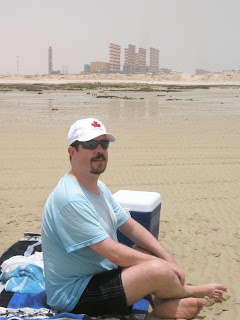
chilling at the beach, Qatar
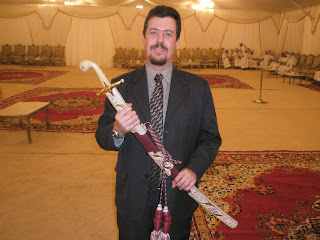
with a ceremonial sword at a Qatari wedding, Wakra, Qatar

at an Olympic hockey game, Vancouver

taking a break during a London Walk of Kensington

Boh tea plantation, Malaysia
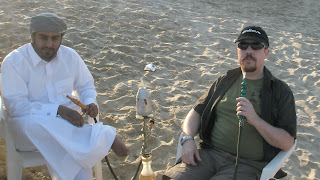
chilling out with a shisha, near the Inland Sea, Qatar

with my nephew Aiden (I couldn't find a picture of me with my niece Karis though ?!?), McKay family Christmas, Calgary
a picture of a picture taking a picture of me taking a picture of the picture, Victoria and Albert Museum, London
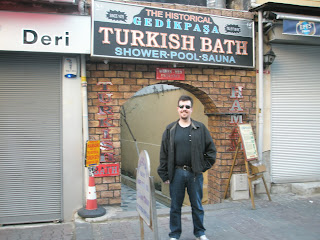
a centuries-old hammam (Turkish bath), Istanbul

getting sophisticated with a cocktail, Vancouver

At the Jet d’Eau, Lake Geneva

Me with a durian (smells bad, tastes good), Kuala Lumpur

Hitting a few balls at the driving range with my friend Tyson, Vancouver
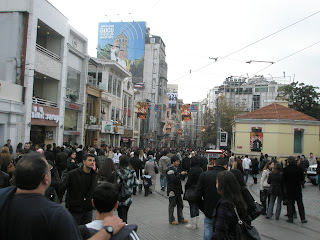
My friend Serdar showing his son the Istaklal Cadessi, Istanbul
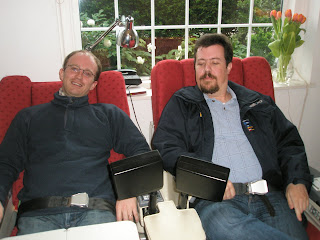
flying business class with my friend David, East Putney, England
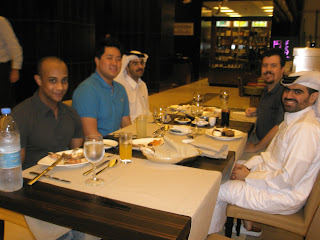
Iftar dinner at the Cigale Hotel, Doha

Banff, Alberta

With my sister Karen during the Winter Olympics, Vancouver
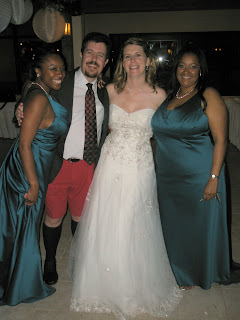
At the wedding of my former housemate Janel, in Bermuda.

At the CERN particle accelerator, Geneva
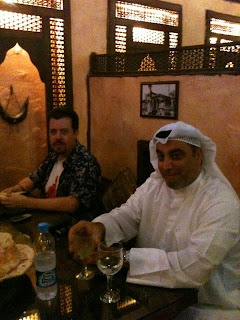
Iftar dinner at an Iraqi restaurant, Souq Waqif, Doha

At an NHL game, Calgary
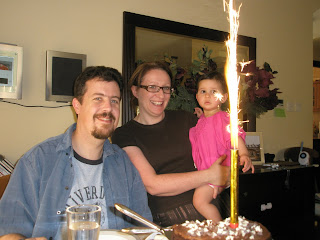
At a surprise birthday dinner (for me) hosted by some friends, Doha
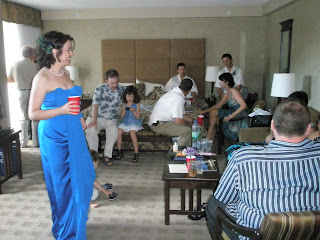
the families and the wedding party relax after my sister's wedding, Penticton, British Columbia
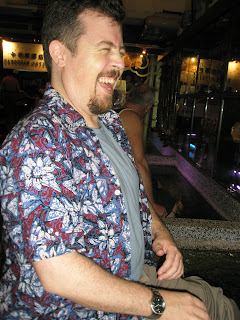
at a fish spa, Kuala Lumpur (it really tickles!)

In front of Abbey Road Studios, London
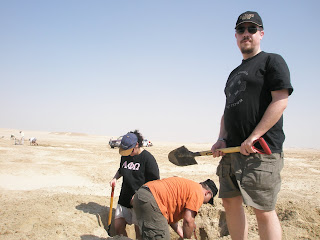
Digging for desert roses with my friend Serdar and his family, Qatar's southern desert

I'm happy. Vancouver.
Happy New Year everyone!

chilling at the beach, Qatar

with a ceremonial sword at a Qatari wedding, Wakra, Qatar

at an Olympic hockey game, Vancouver

taking a break during a London Walk of Kensington

Boh tea plantation, Malaysia

chilling out with a shisha, near the Inland Sea, Qatar

with my nephew Aiden (I couldn't find a picture of me with my niece Karis though ?!?), McKay family Christmas, Calgary

a picture of a picture taking a picture of me taking a picture of the picture, Victoria and Albert Museum, London

a centuries-old hammam (Turkish bath), Istanbul

getting sophisticated with a cocktail, Vancouver

At the Jet d’Eau, Lake Geneva

Me with a durian (smells bad, tastes good), Kuala Lumpur

Hitting a few balls at the driving range with my friend Tyson, Vancouver

My friend Serdar showing his son the Istaklal Cadessi, Istanbul

flying business class with my friend David, East Putney, England

Iftar dinner at the Cigale Hotel, Doha

Banff, Alberta

With my sister Karen during the Winter Olympics, Vancouver

At the wedding of my former housemate Janel, in Bermuda.

At the CERN particle accelerator, Geneva

Iftar dinner at an Iraqi restaurant, Souq Waqif, Doha

At an NHL game, Calgary

At a surprise birthday dinner (for me) hosted by some friends, Doha

the families and the wedding party relax after my sister's wedding, Penticton, British Columbia

at a fish spa, Kuala Lumpur (it really tickles!)

In front of Abbey Road Studios, London

Digging for desert roses with my friend Serdar and his family, Qatar's southern desert

I'm happy. Vancouver.
Happy New Year everyone!
Thursday, December 30, 2010
Qatari Wedding (Arab Wedding)
Okay, I've got a lot of blogging to catch up on. My Qatari friend is back from his honeymoon and gave me some photos from the wedding! Looking back through the blog I realized I hadn't told everyone what happened at the wedding (see what I mean about backlog).
I met up with a group of friends and we all went to the Sheraton hotel where the wedding was being held after the evening prayer in one of the large conference rooms.
Having the wedding in the hotel rather than a tent definitely makes it a touch more upscale, and expensive. But I don't think this was a typical wedding -- that day another Qatari colleague came to me to show me a full page ad in a local newspaper about my friend's wedding and congratulating him. A full page! My first question was, does the ad mention where the wedding is going to be held? Thankfully the answer was no, or else half of Qatar might have shown up.
When we got there I estimate there was about 100 men there already, and over the course of the evening I estimate that well over 800 people were there at some point or another. My friend (the groom) was at the far end of the room with two other men all wearing black bishts, his father and the bride's father. We immediately went over to shake hands with all three and congratulate them, then got out of the way as there was a lineup. We had an opportunity later to meet up with the groom again to have pictures.

We then spent most of the time chatting amongst ourselves and eating the appetizers provided by various waiters wandering around the crowd. Other colleagues and friends came in and we would chat with them after they had greeted the groom. We also briefly met a couple of ambassadors who had attended the function. It turns out many ambassadors were there. A few other men had shown up also wearing bishts, which meant they were likely VIPs (I found out later that some Ministers from the government attended). No chance that His Highness would be showing up though -- he was in Europe working on last-day efforts to win the 2022 World Cup bid, which as we now know succeeded.
After a while dinner was served in the banquet room next door. Like the previous wedding the main dish was lamb on rice on a platter, with a variety of mezzah in small bowls around the table. The difference in this case from the previous wedding I attended was that all of the food was served on tables and everyone had cutlery. Some Arabs stuck with tradition and used their hands anyway. There was also a dessert buffet.
It was during dinner that we noticed there was a woman eating at the head table, which I found odd because I didn't think women went to the men's wedding. She was Caucasian and not wearing an abaya so she definitely was not a family member. Someone speculated that she was likely an ambassador and so as a representative of a nation be allowed at the men's wedding (I found out later that she was the German ambassador).
After the dinner many returned to the main room where they continued to chat with the groom and occasionally did sword dancing when a group of singers started performing.

Eventually the groom joined them at which point most of the men were dancing.


I don't know this kid but he's dressed to the nines. :-)
The wedding was over by about 10 and I returned home. In the next coming weeks some of the local Arabic newspapers had full page or in one case two-page spreads with photos from the wedding. Looks like the wedding hit the society pages.
A great time was had by all.
I met up with a group of friends and we all went to the Sheraton hotel where the wedding was being held after the evening prayer in one of the large conference rooms.
Having the wedding in the hotel rather than a tent definitely makes it a touch more upscale, and expensive. But I don't think this was a typical wedding -- that day another Qatari colleague came to me to show me a full page ad in a local newspaper about my friend's wedding and congratulating him. A full page! My first question was, does the ad mention where the wedding is going to be held? Thankfully the answer was no, or else half of Qatar might have shown up.
When we got there I estimate there was about 100 men there already, and over the course of the evening I estimate that well over 800 people were there at some point or another. My friend (the groom) was at the far end of the room with two other men all wearing black bishts, his father and the bride's father. We immediately went over to shake hands with all three and congratulate them, then got out of the way as there was a lineup. We had an opportunity later to meet up with the groom again to have pictures.

We then spent most of the time chatting amongst ourselves and eating the appetizers provided by various waiters wandering around the crowd. Other colleagues and friends came in and we would chat with them after they had greeted the groom. We also briefly met a couple of ambassadors who had attended the function. It turns out many ambassadors were there. A few other men had shown up also wearing bishts, which meant they were likely VIPs (I found out later that some Ministers from the government attended). No chance that His Highness would be showing up though -- he was in Europe working on last-day efforts to win the 2022 World Cup bid, which as we now know succeeded.
After a while dinner was served in the banquet room next door. Like the previous wedding the main dish was lamb on rice on a platter, with a variety of mezzah in small bowls around the table. The difference in this case from the previous wedding I attended was that all of the food was served on tables and everyone had cutlery. Some Arabs stuck with tradition and used their hands anyway. There was also a dessert buffet.
It was during dinner that we noticed there was a woman eating at the head table, which I found odd because I didn't think women went to the men's wedding. She was Caucasian and not wearing an abaya so she definitely was not a family member. Someone speculated that she was likely an ambassador and so as a representative of a nation be allowed at the men's wedding (I found out later that she was the German ambassador).
After the dinner many returned to the main room where they continued to chat with the groom and occasionally did sword dancing when a group of singers started performing.

Eventually the groom joined them at which point most of the men were dancing.


I don't know this kid but he's dressed to the nines. :-)
The wedding was over by about 10 and I returned home. In the next coming weeks some of the local Arabic newspapers had full page or in one case two-page spreads with photos from the wedding. Looks like the wedding hit the society pages.
A great time was had by all.
Friday, December 24, 2010
Syria
I'm back from my latest journey – Damascus. Qatar's national day gave me a long weekend so I looked at a map for somewhere I had not been yet and recalled an English friend of mine saying how he had a really good time in Syria, so I took the long weekend in Damascus to see the Old City.
Now to my knowledge Damascus is one of the oldest continuously-inhabited cities in the world, if not the oldest. I think it's been here for over 3500 years, and for at least the last 2000 was never completely razed or destroyed by some invading army. There's even a few ruins from the Roman days still in the city.
And it was one of the best trips I’ve ever had!
The Old City is a massive place of busy souqs, beautiful mosques, museums, palaces, hammams, and labyrinthine alleyways full of mystery. Exploring the city was really cool, almost an adventure, and in the three days I think I explored almost every inch of it. From the outside most of the buildings looked decayed and decrepit, but peek through a doorway or turn the corner and suddenly you could find yourself in a beautiful Square, by an upscale store, near a millennia old church, a small shrine, an old barber shop, children playing soccer in an alley, or even a mosque. Most importantly, and anyone who's been to Egypt will appreciate this, no one bothers you. No one. In the three days I was there one shopkeeper did the whole "Hi, where are you from? Really, I have a cousin in Canada. Come into my store . . .”. That was it. I explored the Old (and new) City undisturbed. That made it very enjoyable. No, no beggers either. No, no honking taxi drivers trying to get you in their cab. You get hassled a lot more walking around Vancouver.
My presence was relatively ignored. People went about their day shopping, attending mosques or churches, chatting in cafés, and just generally living their lives, not caring about the tourist with the camera. And there weren’t many tourists there, December is the slow season and even on the main tourist streets of the Old City I would maybe see a tourist every three or four minutes.
Here's a few pictures:

In a restaurant in the Old City, which had a band of a guitar player/singer, a percussionist, and a Whirling Dervish.

An Arabic beer! Never thought I'd see one of those.

Another street scene.

At a hammam in the Old City.

At a Shia mosque in the Old City (pretty impressive Iranian architechture) this mosque contained the tomb of one of the daughters of Hussein.

Shopping in the Old City

While wandering around the Old City one evening I happened to come across a rock concert in a park

The Ummayed Mosque, one of the largest mosques in the city, built the eighth century.

Inside the main prayer area of the Ummayed Mosque. The tomb in the center of it is supposed to contain the remains of John the Baptist (of course about a dozen other places also claim to have the remains of John the Baptist but I'm willing to take Damascus's word for it). John the Baptist is also a Prophet under Islam so the tomb has significance for both Christians and Muslims.

Another street scene.
Now to my knowledge Damascus is one of the oldest continuously-inhabited cities in the world, if not the oldest. I think it's been here for over 3500 years, and for at least the last 2000 was never completely razed or destroyed by some invading army. There's even a few ruins from the Roman days still in the city.
And it was one of the best trips I’ve ever had!
The Old City is a massive place of busy souqs, beautiful mosques, museums, palaces, hammams, and labyrinthine alleyways full of mystery. Exploring the city was really cool, almost an adventure, and in the three days I think I explored almost every inch of it. From the outside most of the buildings looked decayed and decrepit, but peek through a doorway or turn the corner and suddenly you could find yourself in a beautiful Square, by an upscale store, near a millennia old church, a small shrine, an old barber shop, children playing soccer in an alley, or even a mosque. Most importantly, and anyone who's been to Egypt will appreciate this, no one bothers you. No one. In the three days I was there one shopkeeper did the whole "Hi, where are you from? Really, I have a cousin in Canada. Come into my store . . .”. That was it. I explored the Old (and new) City undisturbed. That made it very enjoyable. No, no beggers either. No, no honking taxi drivers trying to get you in their cab. You get hassled a lot more walking around Vancouver.
My presence was relatively ignored. People went about their day shopping, attending mosques or churches, chatting in cafés, and just generally living their lives, not caring about the tourist with the camera. And there weren’t many tourists there, December is the slow season and even on the main tourist streets of the Old City I would maybe see a tourist every three or four minutes.
Here's a few pictures:

In a restaurant in the Old City, which had a band of a guitar player/singer, a percussionist, and a Whirling Dervish.

An Arabic beer! Never thought I'd see one of those.

Another street scene.

At a hammam in the Old City.

At a Shia mosque in the Old City (pretty impressive Iranian architechture) this mosque contained the tomb of one of the daughters of Hussein.

Shopping in the Old City

While wandering around the Old City one evening I happened to come across a rock concert in a park

The Ummayed Mosque, one of the largest mosques in the city, built the eighth century.

Inside the main prayer area of the Ummayed Mosque. The tomb in the center of it is supposed to contain the remains of John the Baptist (of course about a dozen other places also claim to have the remains of John the Baptist but I'm willing to take Damascus's word for it). John the Baptist is also a Prophet under Islam so the tomb has significance for both Christians and Muslims.
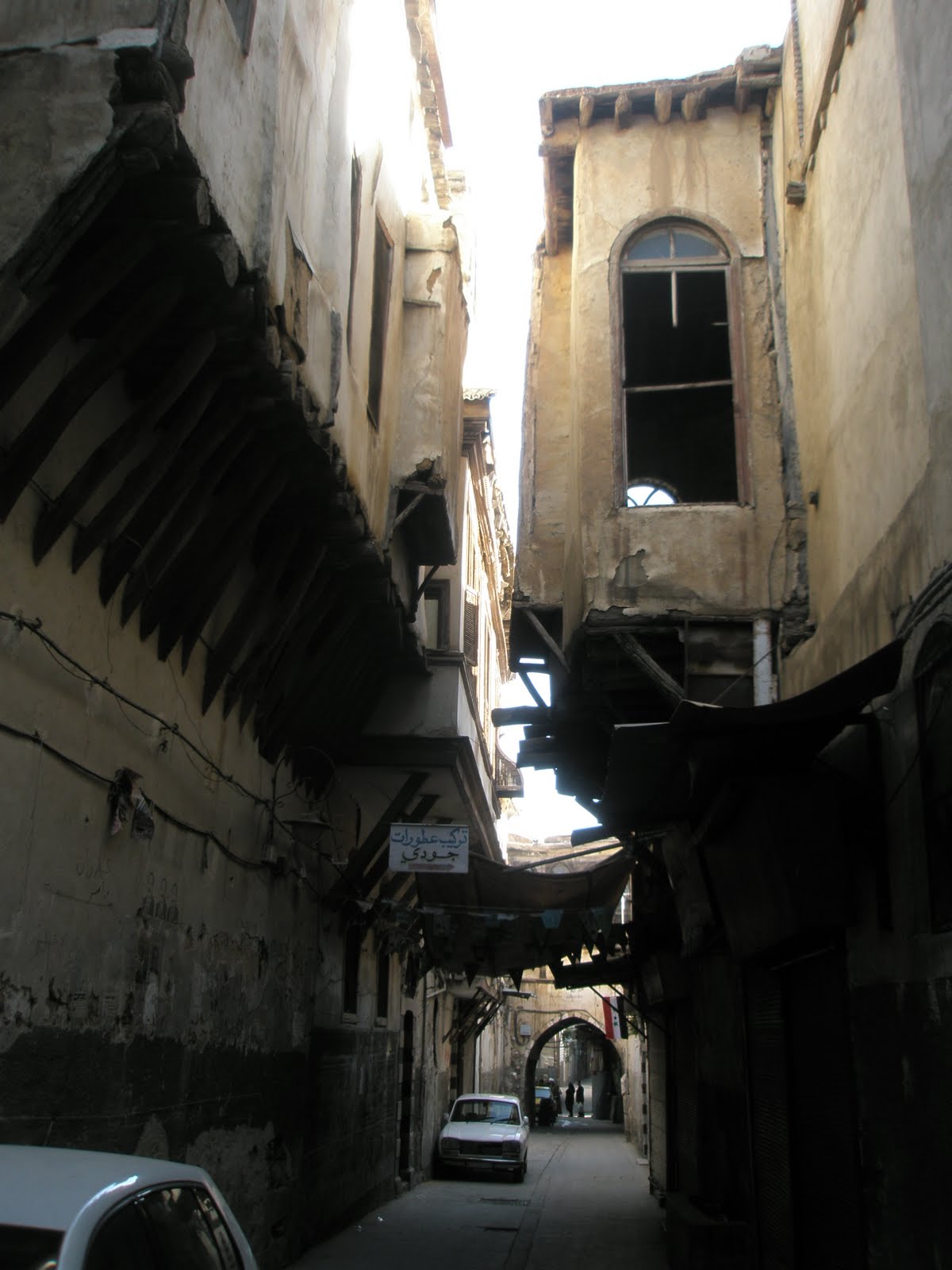
Another street scene.
Wednesday, December 15, 2010
On Vacation
I'm off on a trip for about four days, Qatar's national day is December 18 which created a nice long weekend so I'm taking advantage of it by taking a small vacation. I'll discuss the Qatar PISA results more when I return.
Tuesday, December 14, 2010
OECD PISA test -- looking again at the Shanghai controversy
My posts skeptical of Shanghai scores on the PISA test has generated a bit of interest, including some input from Chinese commentators. A couple of hypotheses have been floated: IQ scores, the longer hours Chinese students spend on school work and studying, work ethic, impressive results by China at Mathematics Olympiads etc.. The general assertion is that the Shangahi scores are reasonable and not somehow overinflated as I asserted based on a statistical “Freakonomics” proposal given the large pool of students taking the test.
[update: at least an anonymous someone did post a lengthy comment regarding the Chinese scores, IQ, testing, etc but I can't find the comment now?! For the record I didn't delete it!]
Like any good critical thinker you have to be willing to revisit issues if new information comes up. Unfortunately I'm in Qatar and do not have access to the granular Shanghai PISA data so the best I can do is look around the Internet and see what the media has uncovered. Most of the articles that I looked at just accepted the results at face value without much digging into the underlying reasons for the good scores. There were also some veiled assertions of fixing the scores but without any elaboration, which is also of little value.
So here's some of the items I could find:
Let's start with support for my assertion. A blog post by a writer working for The Atlantic quotes a scientist who pretty much came up with the same rationales that I did, statistical anomalies etc. and suggested that Shanghai officials were “gaming the exam”:
http://www.theatlantic.com/national/archive/2010/12/on-those-stunning-shanghai-test-scores/67654/
Downside: this scientist is not named so I cannot figure out the source for the (rather lengthy) analysis. I tried looking on the Internet but could not find anything other than another article that was referencing The Atlantic article. The article seems comprehensive though so I gain some comfort that it is for real. However, the article is actually critical of almost any type of standardized testing to compare groups and points out that there are other significant differences between countries that seem unexplained so questions the overall validity.
Overall opinion I get from the article -- Shanghai scores are probably overinflated, despite that Shanghai students are still probably way better than (almost?) everyone at these things due do their educational system focusing on standardized testing, and everyone is overanalyzing the PISA results and needs to chill out.
Solidly against my assertion: the New York Times. They had a few articles about the PISA test but unlike many other newspapers did some level of work looking at what Shanghai did:
http://www.nytimes.com/2010/12/07/education/07education.html?ref=europe
Much of their work focused on interviews with education professionals who are familiar with Chinese system. Such as . . .
“Mark Schneider, a commissioner of the Department of Education’s research arm in the George W. Bush administration, who returned from an educational research visit to China on Friday, said he had been skeptical about some PISA results in the past. But Mr. Schneider said he considered the accuracy of these results to be unassailable.
“The technical side of this was well regulated, the sampling was O.K., and there was no evidence of cheating,” he said.
How about . . .
Secretary of Education Arne Duncan said in an interview on Monday.
“I know skeptics will want to argue with the results, but we consider them to be accurate and reliable, and we have to see them as a challenge to get better,” he added.
(though I'm not clear whether he was referring to the Shanghai scores or the US scores)
Also NYT asserts . . .
“The testing in Shanghai was carried out by an international contractor, working with Chinese authorities, and overseen by the Australian Council for Educational Research, a nonprofit testing group, said Andreas Schleicher, who directs the Organization for Economic Cooperation and Development’s international educational testing program. “
So it appears that there was some independence in administering the test, so controls may have been tighter than I had assumed.
The Christian Science Monitor also took a look at Shanghai and spoke to two American professors with some experience with the Chinese educational system. Both provided rationales for how the results could have happened, and discussed issues regarding the possible strengths with the current Chinese educational system, including attention spans, focus on education, and recent changes to education in Shanghai. Neither of them dismissed the results or alluded that they may have been overinflated:
http://www.csmonitor.com/World/Asia-Pacific/2010/1209/Shanghai-test-scores-have-everyone-asking-How-did-students-do-it
The Telegraph had an article that did not challenge the results but instead looked at some of the factors as to why Shanghai students would do so well. Long hours of class and studying with a focus on specific subjects that are tested appears to be their conclusion. They even quote a Chinese critic of the educational system that states that the singular focus on test preparation is actually a problem as it goes too far:
http://www.telegraph.co.uk/news/worldnews/asia/china/8187967/Shanghai-students-ranked-best-in-the-world-at-maths-and-science.html
So far the evidence is definitely stronger for the “Shanghai did not inflate the results” camp. I'll keep monitoring to see if anything else comes up in the media but it would need to be pretty strong to offset what has been reported in some of the articles. I would be interested in finding some articles from other East Asian countries to see what they have to say given that those countries also have very strong focuses on education.
[update: at least an anonymous someone did post a lengthy comment regarding the Chinese scores, IQ, testing, etc but I can't find the comment now?! For the record I didn't delete it!]
Like any good critical thinker you have to be willing to revisit issues if new information comes up. Unfortunately I'm in Qatar and do not have access to the granular Shanghai PISA data so the best I can do is look around the Internet and see what the media has uncovered. Most of the articles that I looked at just accepted the results at face value without much digging into the underlying reasons for the good scores. There were also some veiled assertions of fixing the scores but without any elaboration, which is also of little value.
So here's some of the items I could find:
Let's start with support for my assertion. A blog post by a writer working for The Atlantic quotes a scientist who pretty much came up with the same rationales that I did, statistical anomalies etc. and suggested that Shanghai officials were “gaming the exam”:
http://www.theatlantic.com/national/archive/2010/12/on-those-stunning-shanghai-test-scores/67654/
Downside: this scientist is not named so I cannot figure out the source for the (rather lengthy) analysis. I tried looking on the Internet but could not find anything other than another article that was referencing The Atlantic article. The article seems comprehensive though so I gain some comfort that it is for real. However, the article is actually critical of almost any type of standardized testing to compare groups and points out that there are other significant differences between countries that seem unexplained so questions the overall validity.
Overall opinion I get from the article -- Shanghai scores are probably overinflated, despite that Shanghai students are still probably way better than (almost?) everyone at these things due do their educational system focusing on standardized testing, and everyone is overanalyzing the PISA results and needs to chill out.
Solidly against my assertion: the New York Times. They had a few articles about the PISA test but unlike many other newspapers did some level of work looking at what Shanghai did:
http://www.nytimes.com/2010/12/07/education/07education.html?ref=europe
Much of their work focused on interviews with education professionals who are familiar with Chinese system. Such as . . .
“Mark Schneider, a commissioner of the Department of Education’s research arm in the George W. Bush administration, who returned from an educational research visit to China on Friday, said he had been skeptical about some PISA results in the past. But Mr. Schneider said he considered the accuracy of these results to be unassailable.
“The technical side of this was well regulated, the sampling was O.K., and there was no evidence of cheating,” he said.
How about . . .
Secretary of Education Arne Duncan said in an interview on Monday.
“I know skeptics will want to argue with the results, but we consider them to be accurate and reliable, and we have to see them as a challenge to get better,” he added.
(though I'm not clear whether he was referring to the Shanghai scores or the US scores)
Also NYT asserts . . .
“The testing in Shanghai was carried out by an international contractor, working with Chinese authorities, and overseen by the Australian Council for Educational Research, a nonprofit testing group, said Andreas Schleicher, who directs the Organization for Economic Cooperation and Development’s international educational testing program. “
So it appears that there was some independence in administering the test, so controls may have been tighter than I had assumed.
The Christian Science Monitor also took a look at Shanghai and spoke to two American professors with some experience with the Chinese educational system. Both provided rationales for how the results could have happened, and discussed issues regarding the possible strengths with the current Chinese educational system, including attention spans, focus on education, and recent changes to education in Shanghai. Neither of them dismissed the results or alluded that they may have been overinflated:
http://www.csmonitor.com/World/Asia-Pacific/2010/1209/Shanghai-test-scores-have-everyone-asking-How-did-students-do-it
The Telegraph had an article that did not challenge the results but instead looked at some of the factors as to why Shanghai students would do so well. Long hours of class and studying with a focus on specific subjects that are tested appears to be their conclusion. They even quote a Chinese critic of the educational system that states that the singular focus on test preparation is actually a problem as it goes too far:
http://www.telegraph.co.uk/news/worldnews/asia/china/8187967/Shanghai-students-ranked-best-in-the-world-at-maths-and-science.html
So far the evidence is definitely stronger for the “Shanghai did not inflate the results” camp. I'll keep monitoring to see if anything else comes up in the media but it would need to be pretty strong to offset what has been reported in some of the articles. I would be interested in finding some articles from other East Asian countries to see what they have to say given that those countries also have very strong focuses on education.
Friday, December 10, 2010
OCED PISA test - back to Qatar
The release of the PISA results tied in well with the 2010 World Innovation Summit for Education (WISE), which was being held in Doha at the same time.
I was wondering if the results were going to be discussed at the summit because in the first couple of days the local English-media were silent about Qatar’s test results. One newspaper had mentioned the results of the test were out and that Shanghai had done so well but didn't mention how Qatar had scored, which led me to wonder if there is a bit of reluctance to discuss the issue. My fears were unfounded -- there was a special session at WISE to discuss the results and after the session one of the three English-language papers noted Qatar’s score and had a brief interview with one of the delegates about the results.
I was also encouraged to hear the following...
In Qatar, the Supreme Education Council decided to join PISA 2012 where the major domain will be mathematics. In PISA 2012, the field trial of which will be administered in March 2011, 1300 students enrolled in Private Arabic, Independent, Community and International schools will be assessed
It is good to see that Qatar is clearly not shying away from the PISA tests and are willing to have their students undergo such scrutiny even though the results may reflect poorly on the country's educational system. This in my mind shows that the Supreme Education Council is more concerned with reform than hiding problems.
As I've noted before reforms in education will take a long time to bear fruit and it is important that those reforms include the earliest school years as that will impact the education of students in the later years. But what are the issues in Qatar's educational system? If you search my blog for PISA you'll find a few posts from last year that discuss the issue, one of which noting in detail some of the things I heard from both teachers and Qataris about how schooling works in the public sector, and it is definitely an eye-opener. That can't be the full story though. It was not only Qataris that were tested, students in the various private schools were also tested and Qatar has a large number of private schools: Indian curriculum, British curriculum, Pakistani curriculum American curriculum, French curriculum, even a Canadian school. I also don't think Qataris make up the majority of students in the country anymore given that Qataris only make up about 15% of the population, I speculate they are around 30% of the students due to the high birthrates amongst Qataris as well is the fact that many of the ex-pat workers do not have their families here. PISA likely tested students from all backgrounds.
Yet Qatar scored far lower than all of the OECD countries, and scored lower than other Arab nations such as Jordan and Tunisia. But if many of these kids went to private schools on Western curriculums one would have thought that at least a portion of the students would've scored around the levels of their home countries (unfortunately India, Pakistan, and major Arab countries like Egypt didn't participate in the PISA study so we have no idea how well those curriculums would do). This would imply that the public school students would've on average scored even lower than the Qatar average would suggest. While I have no data to back it up I can't believe that would be true -- Qatar public schools would have to be some of the worst on the planet for that to be right! The schools may have a number of issues based on what I've been told but I have met many Qataris and their education is certainly not that bad.
So what are the possible issues? I don't have the data, hopefully the Supreme Education Council has data on individual schools or additional supplementary statistics they can use to get to the heart of the matter. I will speculate on some possible problems:
1. Learning multiple languages at once
Qataris generally know both Arabic and English. Much of the ex-pat population are from non-Arabic speaking countries so it can be difficult sometimes to get by without English. Most Qataris, including children, know English to some degree. Same would be true with many of the other curriculums. If the educational system is geared to teaching two languages then kids are definitely going to suffer on the PISA reading scores went up to countries who focus on one language.
2. Cultural focus on education
Do parents involve themselves in a child's education to the extent they do in places like East Asia? Are parents monitoring that homework is being done, and studying is taking place? Is getting good grades important to parents? Do parents put pressure on the school to not fail their child even though they're not performing well? I really don't know the answer to these questions, this is a cultural issue that I have not explored.
3. Wealth
Qatar has been blessed with wealth but sometimes wealth is a double-edged sword, in poorer countries students can be very motivated to do well in their studies because education is seen as a ticket out of poverty. But what if your family is already financially well-off? Are students really motivated to do well if they think that Daddy will get them a job when they get out of high school anyway?
4. Cultural focus on reading
The Qataris I have spoken to are not avid readers and the PISA results show that children who enjoy reading and read recreationally for even a half hour a day score way better than their peers on the reading test. Is reading encouraged in Arab society? Is it a common pastime? I'm assuming it is encouraged to some extent if only for religious reasons -- reading the Qur'an and related religious writings, but perhaps for whatever reason recreational reading is not a big thing in local culture. Again, I don't know if this is true or not.
5. School curriculums not testing on a comprehensive basis
If what I've heard about public schools is true it appears that in many courses tests only cover the most recent chapter of the textbook and then you are never tested on that material again -- there is no comprehensive final at the end of the course. This means that long-term retention of concepts is of less importance than it would be in a comprehensive test curriculum. It also encourages cramming for the test which is also never a good thing for long-term retention of the material.
Qatar might want to consider some form of nation-wide standardized testing to at least ensure that minimum standards are being met.
6. Too much emphasis on "participation"
Again if what one of the Qataris has told me about the public school system is true then in some classes up to 50% of your mark is based on attendance. So technically you can pass the class by simply showing up. Even if the 50% is not true I don't care if it's 25% that is still way too much just for attendance or participation, especially if it is something like math or science. The Supreme Council deathly needs to take a look at this to make sure that schools are putting too much weight on participation.
Hopefully there will be some announcements over the next few months from the Council of Education about the reforms that have been undertaken and what further steps will be initiated to help solve some of the issues in schools.
I was wondering if the results were going to be discussed at the summit because in the first couple of days the local English-media were silent about Qatar’s test results. One newspaper had mentioned the results of the test were out and that Shanghai had done so well but didn't mention how Qatar had scored, which led me to wonder if there is a bit of reluctance to discuss the issue. My fears were unfounded -- there was a special session at WISE to discuss the results and after the session one of the three English-language papers noted Qatar’s score and had a brief interview with one of the delegates about the results.
I was also encouraged to hear the following...
In Qatar, the Supreme Education Council decided to join PISA 2012 where the major domain will be mathematics. In PISA 2012, the field trial of which will be administered in March 2011, 1300 students enrolled in Private Arabic, Independent, Community and International schools will be assessed
It is good to see that Qatar is clearly not shying away from the PISA tests and are willing to have their students undergo such scrutiny even though the results may reflect poorly on the country's educational system. This in my mind shows that the Supreme Education Council is more concerned with reform than hiding problems.
As I've noted before reforms in education will take a long time to bear fruit and it is important that those reforms include the earliest school years as that will impact the education of students in the later years. But what are the issues in Qatar's educational system? If you search my blog for PISA you'll find a few posts from last year that discuss the issue, one of which noting in detail some of the things I heard from both teachers and Qataris about how schooling works in the public sector, and it is definitely an eye-opener. That can't be the full story though. It was not only Qataris that were tested, students in the various private schools were also tested and Qatar has a large number of private schools: Indian curriculum, British curriculum, Pakistani curriculum American curriculum, French curriculum, even a Canadian school. I also don't think Qataris make up the majority of students in the country anymore given that Qataris only make up about 15% of the population, I speculate they are around 30% of the students due to the high birthrates amongst Qataris as well is the fact that many of the ex-pat workers do not have their families here. PISA likely tested students from all backgrounds.
Yet Qatar scored far lower than all of the OECD countries, and scored lower than other Arab nations such as Jordan and Tunisia. But if many of these kids went to private schools on Western curriculums one would have thought that at least a portion of the students would've scored around the levels of their home countries (unfortunately India, Pakistan, and major Arab countries like Egypt didn't participate in the PISA study so we have no idea how well those curriculums would do). This would imply that the public school students would've on average scored even lower than the Qatar average would suggest. While I have no data to back it up I can't believe that would be true -- Qatar public schools would have to be some of the worst on the planet for that to be right! The schools may have a number of issues based on what I've been told but I have met many Qataris and their education is certainly not that bad.
So what are the possible issues? I don't have the data, hopefully the Supreme Education Council has data on individual schools or additional supplementary statistics they can use to get to the heart of the matter. I will speculate on some possible problems:
1. Learning multiple languages at once
Qataris generally know both Arabic and English. Much of the ex-pat population are from non-Arabic speaking countries so it can be difficult sometimes to get by without English. Most Qataris, including children, know English to some degree. Same would be true with many of the other curriculums. If the educational system is geared to teaching two languages then kids are definitely going to suffer on the PISA reading scores went up to countries who focus on one language.
2. Cultural focus on education
Do parents involve themselves in a child's education to the extent they do in places like East Asia? Are parents monitoring that homework is being done, and studying is taking place? Is getting good grades important to parents? Do parents put pressure on the school to not fail their child even though they're not performing well? I really don't know the answer to these questions, this is a cultural issue that I have not explored.
3. Wealth
Qatar has been blessed with wealth but sometimes wealth is a double-edged sword, in poorer countries students can be very motivated to do well in their studies because education is seen as a ticket out of poverty. But what if your family is already financially well-off? Are students really motivated to do well if they think that Daddy will get them a job when they get out of high school anyway?
4. Cultural focus on reading
The Qataris I have spoken to are not avid readers and the PISA results show that children who enjoy reading and read recreationally for even a half hour a day score way better than their peers on the reading test. Is reading encouraged in Arab society? Is it a common pastime? I'm assuming it is encouraged to some extent if only for religious reasons -- reading the Qur'an and related religious writings, but perhaps for whatever reason recreational reading is not a big thing in local culture. Again, I don't know if this is true or not.
5. School curriculums not testing on a comprehensive basis
If what I've heard about public schools is true it appears that in many courses tests only cover the most recent chapter of the textbook and then you are never tested on that material again -- there is no comprehensive final at the end of the course. This means that long-term retention of concepts is of less importance than it would be in a comprehensive test curriculum. It also encourages cramming for the test which is also never a good thing for long-term retention of the material.
Qatar might want to consider some form of nation-wide standardized testing to at least ensure that minimum standards are being met.
6. Too much emphasis on "participation"
Again if what one of the Qataris has told me about the public school system is true then in some classes up to 50% of your mark is based on attendance. So technically you can pass the class by simply showing up. Even if the 50% is not true I don't care if it's 25% that is still way too much just for attendance or participation, especially if it is something like math or science. The Supreme Council deathly needs to take a look at this to make sure that schools are putting too much weight on participation.
Hopefully there will be some announcements over the next few months from the Council of Education about the reforms that have been undertaken and what further steps will be initiated to help solve some of the issues in schools.
Wednesday, December 08, 2010
OECD PISA test – Skeptical about Shanghai
A newcomer to the PISA tests went on to take top spot in all three categories – Shanghai. Not only did they take top spot but they did it by a huge margin. Let's take a look at the top 8 scores in each category, and the 32nd place country (i.e. in the middle of the 65 countries/regions whose scores were released):
Reading
556 Shanghai
539 Korea
536 Finland
533 Hong Kong
526 Singapore
524 Canada (yay!!)
521 New Zealand
520 Japan
. . . .
483 Greece (32nd)
Mathematics
600 Shanghai
562 Singapore
555 Hong Kong
546 Korea
543 Taiwan
541 Finland
536 Liechtenstein
534 Switzerland
. . . .
487 United States/Ireland/Portugal (tied for 32nd)
Science
575 Shanghai
554 Finland
549 Hong Kong
542 Singapore
539 Japan
538 Korea
532 New Zealand
. . . .
489 Italy (32nd)
Shanghai beat the second-place entrant by 17-38 points, yet the difference between 2nd to 3rd, 3rd to 4th etc, was a mere 1-9 points, with an average of 4.1, and a change of 56-73 points is enough to take you from 2nd all the way down to 32nd. No country was consistently 2nd or 3rd etc in all three categories. That is just to give you an idea of how wide a margin Shanghai did on the PISA test. It's a fantastic result, an incredible result.
It's too good of a result. Waaaaaaaay too good. Something doesn't quite add up here.
The sample size for these tests is huge. According to the PISA website, countries are required to test at least 5,000 students, or an entire cohort if the country is small and does not have that many students in the age category. What are the odds that a group of 5,000 students (or more) would be so dramatically better on average than other groups of a similar size? I'd say near-impossible odds. (quick, someone call the author of Freakonomics!). One cannot have such a large data pool of random students and yet have such a dramatic variance at the top end.
Now before I continue I just want to make one thing clear -- it is not unreasonable for Shanghai to have taken the top spot. East Asian countries have performed incredibly well on the PISA test every time it has been given, and countries like Japan, Korea, Hong Kong, and Singapore are regularly in the top five in all categories. Education is highly valued in these countries, expectations are high, and there is a lot of parental involvement and monitoring. Children in these countries are expected to study hard and do well in school and PISA results have consistently reflected that. And Shanghai is China's biggest and wealthiest city so I have no doubt that they have some of the best schools in China. There is no reason why Shanghai couldn't be leading the pack.
But no way by that much.
So what happened? Well, I'm not entirely sure. I'm not involved with PISA and I do not know what all of their processes are in administering the test. But let me speculate . . .
Perhaps the educational ministers or officials in Shanghai were under a lot of pressure to see good results.
Countries tend to see the PISA test as a way to see how their students are performing and try to see if there are weaknesses in the educational system for which a government can introduce initiatives to try to fix, or to identify good performing countries so that other countries can look to see what exactly those countries do and perhaps emulate it. It is a great learning tool for governments. If you take that approach to the PISA test then it is highly unlikely you are going to try to manipulate the results in order to look better than other countries. You need real, honest data about how your country is doing. Because of this I'm not sure if PISA’s controls are particularly strict to ensure countries don't manipulate the results. What would be the point of taking the test if you are not interested in honest results, right? Well, if you were worried that your career was at stake maybe you'd be more inclined to provide the results you think your boss wants.
So it is possible that officials in Shanghai were very worried about repercussions from the Central Government if results were less than stellar, which would give them an incentive to improve the results. This is not uncommon with one-party centralized governments, officials who fear repercussions give the story that their superiors want to hear. Since this is an outside test perhaps some officials, worried that the students would show poor results compared to countries in their region, tweaked things a little somehow, and tweaked things a bit too much.
How? Here are some possible ways:
1) Have students older than the required age take the test.
2) Select only specialized schools or top-end schools
3) Review the test before handing them in and correct a few mistakes (I believe Freakonomics had a tale on this regarding standardized testing in the US)
4) Review the test beforehand and inform students of some of the answers, or make sure that material is covered in classes before the exam is given.
5) Pretest the students on a similar exam (perhaps PISA 2003 or PISA 2006) and only have the higher-performing students take the 2009 exam.
6) Some or all of the above
Now maybe PISA has some strong controls or prevent many of these, but they would not be able to prevent all of them (number 1 or 5 for example). Anyway, if a country or an education Ministry really wanted to manipulate the results they could.
I would love if someone could get a good statistician and run the odds that Shanghai would pull so far ahead in all three categories given the size of the student pool. If anyone does this let me know. Until such time I will always be skeptical about the results posted for Shanghai.
Reading
556 Shanghai
539 Korea
536 Finland
533 Hong Kong
526 Singapore
524 Canada (yay!!)
521 New Zealand
520 Japan
. . . .
483 Greece (32nd)
Mathematics
600 Shanghai
562 Singapore
555 Hong Kong
546 Korea
543 Taiwan
541 Finland
536 Liechtenstein
534 Switzerland
. . . .
487 United States/Ireland/Portugal (tied for 32nd)
Science
575 Shanghai
554 Finland
549 Hong Kong
542 Singapore
539 Japan
538 Korea
532 New Zealand
. . . .
489 Italy (32nd)
Shanghai beat the second-place entrant by 17-38 points, yet the difference between 2nd to 3rd, 3rd to 4th etc, was a mere 1-9 points, with an average of 4.1, and a change of 56-73 points is enough to take you from 2nd all the way down to 32nd. No country was consistently 2nd or 3rd etc in all three categories. That is just to give you an idea of how wide a margin Shanghai did on the PISA test. It's a fantastic result, an incredible result.
It's too good of a result. Waaaaaaaay too good. Something doesn't quite add up here.
The sample size for these tests is huge. According to the PISA website, countries are required to test at least 5,000 students, or an entire cohort if the country is small and does not have that many students in the age category. What are the odds that a group of 5,000 students (or more) would be so dramatically better on average than other groups of a similar size? I'd say near-impossible odds. (quick, someone call the author of Freakonomics!). One cannot have such a large data pool of random students and yet have such a dramatic variance at the top end.
Now before I continue I just want to make one thing clear -- it is not unreasonable for Shanghai to have taken the top spot. East Asian countries have performed incredibly well on the PISA test every time it has been given, and countries like Japan, Korea, Hong Kong, and Singapore are regularly in the top five in all categories. Education is highly valued in these countries, expectations are high, and there is a lot of parental involvement and monitoring. Children in these countries are expected to study hard and do well in school and PISA results have consistently reflected that. And Shanghai is China's biggest and wealthiest city so I have no doubt that they have some of the best schools in China. There is no reason why Shanghai couldn't be leading the pack.
But no way by that much.
So what happened? Well, I'm not entirely sure. I'm not involved with PISA and I do not know what all of their processes are in administering the test. But let me speculate . . .
Perhaps the educational ministers or officials in Shanghai were under a lot of pressure to see good results.
Countries tend to see the PISA test as a way to see how their students are performing and try to see if there are weaknesses in the educational system for which a government can introduce initiatives to try to fix, or to identify good performing countries so that other countries can look to see what exactly those countries do and perhaps emulate it. It is a great learning tool for governments. If you take that approach to the PISA test then it is highly unlikely you are going to try to manipulate the results in order to look better than other countries. You need real, honest data about how your country is doing. Because of this I'm not sure if PISA’s controls are particularly strict to ensure countries don't manipulate the results. What would be the point of taking the test if you are not interested in honest results, right? Well, if you were worried that your career was at stake maybe you'd be more inclined to provide the results you think your boss wants.
So it is possible that officials in Shanghai were very worried about repercussions from the Central Government if results were less than stellar, which would give them an incentive to improve the results. This is not uncommon with one-party centralized governments, officials who fear repercussions give the story that their superiors want to hear. Since this is an outside test perhaps some officials, worried that the students would show poor results compared to countries in their region, tweaked things a little somehow, and tweaked things a bit too much.
How? Here are some possible ways:
1) Have students older than the required age take the test.
2) Select only specialized schools or top-end schools
3) Review the test before handing them in and correct a few mistakes (I believe Freakonomics had a tale on this regarding standardized testing in the US)
4) Review the test beforehand and inform students of some of the answers, or make sure that material is covered in classes before the exam is given.
5) Pretest the students on a similar exam (perhaps PISA 2003 or PISA 2006) and only have the higher-performing students take the 2009 exam.
6) Some or all of the above
Now maybe PISA has some strong controls or prevent many of these, but they would not be able to prevent all of them (number 1 or 5 for example). Anyway, if a country or an education Ministry really wanted to manipulate the results they could.
I would love if someone could get a good statistician and run the odds that Shanghai would pull so far ahead in all three categories given the size of the student pool. If anyone does this let me know. Until such time I will always be skeptical about the results posted for Shanghai.
Tuesday, December 07, 2010
Qatar education results -- OECD's PISA test
I've mentioned other times in this blog about the PISA test, a test conducted by the OECD every three years which tests 15-year-old students in various countries on reading, science, and math, with a special focus on one of the three categories each time the test is run. It has done this since 2000 and the results always create a lot of media frenzy in the West when countries figure out that their students scored worse than other countries. I expect a lot of education ministers to be fielding tough questions this week.
A lot of non-OECD countries also signed up for the test and Qatar signed up for the 2006 test, where they placed second last out of 57 countries in all three categories (beating out Kyrgyzstan in all three categories). The test continues to grow membership and for the 2009 test there were 65 countries or regions who signed up, including Qatar.
Well the results for the 2009 test were released today, this time focusing on reading but of course testing all three categories. How did Qatar do?
Reading: 61st (higher then Peru, Panama, Azerbaijan, and Kyrgyzstan)
Science: 61st (beating the same countries listed above)
Mathematics: 62nd (Azerbaijan pulled ahead in this category)
Now I was not expecting significant improvement from the 2006 test because educational reform takes a long time to see results. The kids who wrote this test would've been 12 years old back in 2006 so would already have been well through the educational system. But is Qatar making significant changes to its educational system? This is one of the wealthiest countries in the world and yet its students are clearly underperforming. Poorer Arab-speaking nations such as Jordan or Tunisia outperformed Qatar, and four South American countries also did better.
It does go to show that money does not necessarily buy a good educational system, many high-performing countries spent less per capita on education than high-spending countries such as Qatar or the United States. Thankfully the OECD also does a lot more analysis than just a simple score. Here are some highlights from the executive summary:
• students in urban schools perform better than students in rural schools, even if you factor in their social economic background
• children from single-parent households will score slightly lower on average than children from two-parent households (we are talking about 1% less)
• looks like your Mom was right, children who primarily read comic books do little better than children who don't do a lot of recreational reading at all. However, kids who do a lot of online research and reading do score better. Recreational reading from a wide variety of materials seems to be the best way to have a high reading score.
• Girls like to read more than boys and not surprisingly girls scored better than boys in all OECD countries -- and the gender gap is widening.
• Students tended to perform better on the test in schools that had greater autonomy over their curriculum and how students are tested
• higher teacher salaries, but not smaller class sizes, correlates with better performance on the test
• students tend to perform better in schools with a better disciplinary climate
Cool stuff. Keep an eye out for discussions on this test, and how well or poorly your country did, in your local papers.
(By the way, for some reason South Asian countries like India and Pakistan have not signed up for the test. I wish they would, if you're living in one of those countries, see if you can ask your education Minister why they are not signing up for the OECD test)
A lot of non-OECD countries also signed up for the test and Qatar signed up for the 2006 test, where they placed second last out of 57 countries in all three categories (beating out Kyrgyzstan in all three categories). The test continues to grow membership and for the 2009 test there were 65 countries or regions who signed up, including Qatar.
Well the results for the 2009 test were released today, this time focusing on reading but of course testing all three categories. How did Qatar do?
Reading: 61st (higher then Peru, Panama, Azerbaijan, and Kyrgyzstan)
Science: 61st (beating the same countries listed above)
Mathematics: 62nd (Azerbaijan pulled ahead in this category)
Now I was not expecting significant improvement from the 2006 test because educational reform takes a long time to see results. The kids who wrote this test would've been 12 years old back in 2006 so would already have been well through the educational system. But is Qatar making significant changes to its educational system? This is one of the wealthiest countries in the world and yet its students are clearly underperforming. Poorer Arab-speaking nations such as Jordan or Tunisia outperformed Qatar, and four South American countries also did better.
It does go to show that money does not necessarily buy a good educational system, many high-performing countries spent less per capita on education than high-spending countries such as Qatar or the United States. Thankfully the OECD also does a lot more analysis than just a simple score. Here are some highlights from the executive summary:
• students in urban schools perform better than students in rural schools, even if you factor in their social economic background
• children from single-parent households will score slightly lower on average than children from two-parent households (we are talking about 1% less)
• looks like your Mom was right, children who primarily read comic books do little better than children who don't do a lot of recreational reading at all. However, kids who do a lot of online research and reading do score better. Recreational reading from a wide variety of materials seems to be the best way to have a high reading score.
• Girls like to read more than boys and not surprisingly girls scored better than boys in all OECD countries -- and the gender gap is widening.
• Students tended to perform better on the test in schools that had greater autonomy over their curriculum and how students are tested
• higher teacher salaries, but not smaller class sizes, correlates with better performance on the test
• students tend to perform better in schools with a better disciplinary climate
Cool stuff. Keep an eye out for discussions on this test, and how well or poorly your country did, in your local papers.
(By the way, for some reason South Asian countries like India and Pakistan have not signed up for the test. I wish they would, if you're living in one of those countries, see if you can ask your education Minister why they are not signing up for the OECD test)
Saturday, December 04, 2010
Qatar will host the 2022 World Cup!
Qatar has won the 2022 World Cup!!
Unbelievable achievement, congratulations Qatar!
Now before I continue describing the mayhem of happiness and joy that erupted throughout the country in the wake of the announcement I would just like to come clean and say for the record: when Qatar first announced its intention to bid for the 2022 World Cup a couple of years ago I said “not a chance”. You need at least nine stadiums that hold 40,000+ people, it has never been held in such a small country before, there aren't enough hotel rooms or infrastructure for 400,000 fans, and the tournament has to be held in June and July in open air stadiums (that's a FIFA requirement). In June it's already hitting 40° with humidity and if the stadiums are open air than how could you cool them? With all that in mind I thought this bid was a no-go right from the beginning.
I changed my mind after seeing the initial bid that they made, which dealt with all of the above issues in detail. Looks like everyone else changed their mind too. They even built a smaller version of a stadium (500-seater) with a revolutionary air-conditioning system to demonstrate how they could keep it cool (apparently the pitch was 27° while outside it was 44°).
I just wanted to get that out of the way -- I'm not going to jump on the bandwagon and pretend that I was a staunch supporter right from day one.
Now when the announcement was made I was in Arabic class and left shortly thereafter to pick up a friend and his colleague who were in Qatar for just one evening on business to take them to the souq. I then realized that since Qatar won the bid the streets near the Corniche would be absolute chaos with celebrations and it would probably take us forever to get to the souq. Our friend wondered if that meant we should have dinner at the hotel and I said “Are you kidding? Now we definitely have to go! This will be the biggest celebration since the country gained independence!”
Sure enough the streets were a madhouse of cars, almost all of them with Qatari flags, and horns honking. Qatari men in dishdasha were everywhere, in the streets, waving from car windows, on top of vehicles, yelling, waving flags and jumping up and down. But it wasn't just Qataris, Arabs of all nationalities were out in the streets as well. Lebanese, Egyptians, Moroccan, Omanis, all were absolutely jubilant. Traffic was going almost nowhere but no one cared because they weren’t down there to go anywhere -- just to move around slowly, honk their horns and celebrate. I even saw some policeman in their car waving flags. Some people had painted “2022”and similar slogans on their vehicles. I even received a celebratory text from my Qatari friend who got married the night before!
The world needs to understand that Qataris took this bid seriously and were truly hoping they would get it. There is no chance that celebrations in the USA would've been like this. The two Americans I was with didn't even know that the USA was bidding for it.
After about an hour we got to the souq and had dinner, wandered around a while, then took an hour to get as even at 1130 the traffic and celebrations were as big as when we first left. I eventually got home around 1am, and in the main road in front of my apartment building traffic was still clogged in both directions with celebrating Qataris and other Arabs. So I stood on the sidewalk in front my apartment building and watched it all go by. The party went on into the wee hours.
The next night there was a parade starting from the Corniche and going to Khalifa Stadium. I missed the parade because I was at a friends place but sure enough that evening the streets were again packed with cars full of jubilant Arabs.
Even now I still can't quite come to terms with what has happened. Qatar, which 15 years ago was a country of maybe 200,000 people and didn't even have a mall, had accomplished so much in so little time that they won the right to hold the biggest tournament in the world.
The impact this will have on the nation will be unreal. Prior to this the construction was for various purposes: developing infrastructure, try to diversify the economy, develop ways to invest its oil wealth, but there was no real end point or overarching rationale that put all the various projects together. For the next 12 years the country will have a real sense of purpose, a goal for which all of the construction and changes will be geared to. The World Cup will now be foremost on the minds of Qataris and much of the country’s development will be in support of that goal.
It will be an exciting time, a wild time, and the country will change faster than the momentous amount of change that had gone before. Hopefully it citizens will be able to cope with that change as the tiny country of Qatar becomes the focus of the world.
But they have a while to sort all that out, for now there is celebration, I expect the jubilant mood to continue for at least the next two weeks. Qatar's National Day is December 18 and I expect it will be quite the party.
Congratulations Qatar!
Unbelievable achievement, congratulations Qatar!
Now before I continue describing the mayhem of happiness and joy that erupted throughout the country in the wake of the announcement I would just like to come clean and say for the record: when Qatar first announced its intention to bid for the 2022 World Cup a couple of years ago I said “not a chance”. You need at least nine stadiums that hold 40,000+ people, it has never been held in such a small country before, there aren't enough hotel rooms or infrastructure for 400,000 fans, and the tournament has to be held in June and July in open air stadiums (that's a FIFA requirement). In June it's already hitting 40° with humidity and if the stadiums are open air than how could you cool them? With all that in mind I thought this bid was a no-go right from the beginning.
I changed my mind after seeing the initial bid that they made, which dealt with all of the above issues in detail. Looks like everyone else changed their mind too. They even built a smaller version of a stadium (500-seater) with a revolutionary air-conditioning system to demonstrate how they could keep it cool (apparently the pitch was 27° while outside it was 44°).
I just wanted to get that out of the way -- I'm not going to jump on the bandwagon and pretend that I was a staunch supporter right from day one.
Now when the announcement was made I was in Arabic class and left shortly thereafter to pick up a friend and his colleague who were in Qatar for just one evening on business to take them to the souq. I then realized that since Qatar won the bid the streets near the Corniche would be absolute chaos with celebrations and it would probably take us forever to get to the souq. Our friend wondered if that meant we should have dinner at the hotel and I said “Are you kidding? Now we definitely have to go! This will be the biggest celebration since the country gained independence!”
Sure enough the streets were a madhouse of cars, almost all of them with Qatari flags, and horns honking. Qatari men in dishdasha were everywhere, in the streets, waving from car windows, on top of vehicles, yelling, waving flags and jumping up and down. But it wasn't just Qataris, Arabs of all nationalities were out in the streets as well. Lebanese, Egyptians, Moroccan, Omanis, all were absolutely jubilant. Traffic was going almost nowhere but no one cared because they weren’t down there to go anywhere -- just to move around slowly, honk their horns and celebrate. I even saw some policeman in their car waving flags. Some people had painted “2022”and similar slogans on their vehicles. I even received a celebratory text from my Qatari friend who got married the night before!
The world needs to understand that Qataris took this bid seriously and were truly hoping they would get it. There is no chance that celebrations in the USA would've been like this. The two Americans I was with didn't even know that the USA was bidding for it.
After about an hour we got to the souq and had dinner, wandered around a while, then took an hour to get as even at 1130 the traffic and celebrations were as big as when we first left. I eventually got home around 1am, and in the main road in front of my apartment building traffic was still clogged in both directions with celebrating Qataris and other Arabs. So I stood on the sidewalk in front my apartment building and watched it all go by. The party went on into the wee hours.
The next night there was a parade starting from the Corniche and going to Khalifa Stadium. I missed the parade because I was at a friends place but sure enough that evening the streets were again packed with cars full of jubilant Arabs.
Even now I still can't quite come to terms with what has happened. Qatar, which 15 years ago was a country of maybe 200,000 people and didn't even have a mall, had accomplished so much in so little time that they won the right to hold the biggest tournament in the world.
The impact this will have on the nation will be unreal. Prior to this the construction was for various purposes: developing infrastructure, try to diversify the economy, develop ways to invest its oil wealth, but there was no real end point or overarching rationale that put all the various projects together. For the next 12 years the country will have a real sense of purpose, a goal for which all of the construction and changes will be geared to. The World Cup will now be foremost on the minds of Qataris and much of the country’s development will be in support of that goal.
It will be an exciting time, a wild time, and the country will change faster than the momentous amount of change that had gone before. Hopefully it citizens will be able to cope with that change as the tiny country of Qatar becomes the focus of the world.
But they have a while to sort all that out, for now there is celebration, I expect the jubilant mood to continue for at least the next two weeks. Qatar's National Day is December 18 and I expect it will be quite the party.
Congratulations Qatar!
Monday, November 29, 2010
Another Qatari wedding (Arab wedding)
So I've done the occasional post about a Qatari friend of mine who was getting married -- well the time has come! He is getting married this week. Naturally, I'm invited, as is almost every other man he knows.
Much like the previous wedding I went to you do not have a lot of build-up, I got the invitation two days ago. That's okay though because unlike the West there are no gifts, no place settings at the table, nor many of the other planning details that go into a Western wedding. In Qatari society it's perfectly acceptable to even just show up, congratulate him, and walk back out the door. No pressure on guests.
Unlike the previous Qatari wedding I went to that took place in a large tent this one is taking place at a prominent hotel. He is the oldest child and his father is a VIP in the government so apparently the celebration has to be a bit more upscale. Qatar society does place some level of expectation on people for how grand the wedding must be, it is something that the government is trying to dissuade people from doing because of the cost, but so far to no avail.
My friend has been very gracious in answering my numerous questions about wedding customs, and knows that I will be posting about it on my blog, but the actual cost of the wedding is something I haven't asked because I feel that's getting a little too nosy. I do know that for a typical wedding (remember there are separate men's and women's functions) you should expect to splash out at least $100,000, not including the gifts and jewelry that go to the bride. My friend's family is probably spending more than that.
Now if you recall technically he's already married; months ago a judge visited the couple and their families and accepted the contract of marriage, but under Qatari culture they are not considered married until they have had this celebration. There is both the men and ladies party where congratulations are excepted, food is eaten, and likely some dancing occurs -- moreso at the women's party I've heard. There is no exchanging vows, an imam overseeing a ceremony, or any other kind of formal ceremony as we know it from a Western wedding. I have asked my friend if there is any specific preparations or ceremonies that he does earlier in the day (the wedding party I'm attending starts after the evening prayer). He said no, there is no other private ceremony he does. After the men's party, which will end 10-ish, he will go to the women's party and leave with the bride. At that point they are considered married by all and sundry.
After that there will be a honeymoon. As of a few days ago my friend still wasn't sure where they were going to go!? Apparently his wife-to-be didn't have any particular preference. I'm guessing the concept of honeymoons is a pretty recent thing, possibly a Western influence. I base this on the fact that he seems somewhat laissez-faire about where their honeymoon will be.
You bet I'll post an update once the party has finished.
Much like the previous wedding I went to you do not have a lot of build-up, I got the invitation two days ago. That's okay though because unlike the West there are no gifts, no place settings at the table, nor many of the other planning details that go into a Western wedding. In Qatari society it's perfectly acceptable to even just show up, congratulate him, and walk back out the door. No pressure on guests.
Unlike the previous Qatari wedding I went to that took place in a large tent this one is taking place at a prominent hotel. He is the oldest child and his father is a VIP in the government so apparently the celebration has to be a bit more upscale. Qatar society does place some level of expectation on people for how grand the wedding must be, it is something that the government is trying to dissuade people from doing because of the cost, but so far to no avail.
My friend has been very gracious in answering my numerous questions about wedding customs, and knows that I will be posting about it on my blog, but the actual cost of the wedding is something I haven't asked because I feel that's getting a little too nosy. I do know that for a typical wedding (remember there are separate men's and women's functions) you should expect to splash out at least $100,000, not including the gifts and jewelry that go to the bride. My friend's family is probably spending more than that.
Now if you recall technically he's already married; months ago a judge visited the couple and their families and accepted the contract of marriage, but under Qatari culture they are not considered married until they have had this celebration. There is both the men and ladies party where congratulations are excepted, food is eaten, and likely some dancing occurs -- moreso at the women's party I've heard. There is no exchanging vows, an imam overseeing a ceremony, or any other kind of formal ceremony as we know it from a Western wedding. I have asked my friend if there is any specific preparations or ceremonies that he does earlier in the day (the wedding party I'm attending starts after the evening prayer). He said no, there is no other private ceremony he does. After the men's party, which will end 10-ish, he will go to the women's party and leave with the bride. At that point they are considered married by all and sundry.
After that there will be a honeymoon. As of a few days ago my friend still wasn't sure where they were going to go!? Apparently his wife-to-be didn't have any particular preference. I'm guessing the concept of honeymoons is a pretty recent thing, possibly a Western influence. I base this on the fact that he seems somewhat laissez-faire about where their honeymoon will be.
You bet I'll post an update once the party has finished.
Subscribe to:
Posts (Atom)