In 2006 I moved to Qatar and things are not what many people in North America would expect - it is not like how the Middle East is portrayed in the media. I'm also a fan of skepticism and science so wondered how this works here in Qatar. Since I'm here for a while I figured I'd use the time to get to know this country better and with this blog you can learn along with me. - - - - - - - - - - - - - - - - - - - - - - - So what posts have been popular recently . . .
Thursday, May 31, 2012
City Centre Mall
I work in West Bay close to the City Centre Mall and since I didn't have anything pressing to do this evening I decided to go over there after work to see how crowded it would be given that the most popular mall (Villaggio) is now closed. There's only three major malls in Qatar so the closure of one is likely to make the crowds even worse at the others. Not that any of them were suffering for business, City Centre was always notorious for not having enough parking on the weekends. I figured I may as well get an idea of how crowded it's going to be for the next few months so I'm not tempted some weekend evening to go there.
Turns out that while it was crowded, wandering around at 8:00pm I didn't think it was any more crowded than usual. The traffic outside wasn't any worse than usual. The number of people in the mall hadn't significantly increased. Guess people found something else to do.
As I was leaving I noticed that the Traffic Police were wandering around taking photos of any illegally parked cars to issue them tickets, including across the street from the mall and around the nearby skyscrapers. I know the parking situation there is terrible but don't park on the sidewalks people!
Tuesday, May 29, 2012
Tragedy in Doha -- What Next?
As I stood at the vigil thinking about the tragedy I couldn't help but recall what I said about the mall last weekend:
Friday there was a dust storm so no wandering around outdoors. I did some errands and then decided for exercise to wander around Villaggio Mall. I know, I know, Villaggio Mall on a weekend night is a nightmare of crowds and no parking. Not sure what I was thinking, maybe because it was five o'clock I figured I would get there before most of the crowd. Wrong!
The Villaggio fire was an awful, terrible tragedy -- but it also could have been even worse. Had it been the weekend, or later in the day when the amusement park would have been operating, it’s possible that dozens could have died.
A couple of months ago there was an electrical fire at City Centre Mall that even now has kept one of its food courts closed. Today there have been reports of two small fires at some schools. What next? Do we wait until there is a fire at a 40-storey skyscraper in West Bay!? Or at a hotel? Or a hospital?
His Highness the Emir has ordered an investigation into the Villaggio fire and wants a report within a week. It is my sincerest hope that the report looks beyond the direct causes or issues to uncover the broader problems. It is not enough to just conclude that fire alarms or some wiring or sprinkler systems or whatever didn’t work. How did it get that way? Why did mall management or government inspectors not spot the problems? If the fire was caused by wiring what expertise did the people have who installed it? Were any laws circumvented? Who gave approval for a nursery that apparently didn't have an independent emergency exit?
And how much do these same issues affect every other building here?
I do have faith that His Highness will enact significant changes. Some people in Qatar may scoff, noting their belief about how Qataris with influence and power don't have to follow the rules, but I honestly do not think that is usually the case. The inspectors who review grocery stores and restaurants have temporarily shut down offenders, including sections of large supermarkets. You can't tell me that a supermarket does not have a powerful and influential Qatari owner, yet the inspectors will close it all the same. That same determination can be brought to bear to deal with whatever issues the Villaggio report uncovers.
Something does need to change. If it doesn't I fear I will be attending another vigil someday.
Vigil for the victims of the Villaggio Fire
I was at the vigil today at Aspire Park.
For updates about the fire and the aftermath I recommend following http://dohanews.co/ if you aren't already.
Monday, May 28, 2012
Tragedy at Villaggio
Man, is it ever tragic. One day I'm blogging about the crazy crowds at Villaggio Mall and the next there was a huge fire at the mall.
A spokesman for the Government announced at a news conference tonight that the fire started near the nursery in the center of the mall. 19 people are confirmed dead so far -- including 13 children!
A number of vigils and church services will be held tomorrow. I will going to one of them.
I don't know what else I can say. :(
Saturday, May 26, 2012
A Weekend in Doha
This weekend I got up to a bunch of little things here and there. I decided to check out the Cityscape-Doha exhibition to see what was up and coming in the world the Doha construction. Cityscape is a construction/developer exhibition that takes place in major Arabian cities throughout the year (I think Cityscape Dubai is the biggest one).
I went hoping to see proposals for new projects but instead saw projects that I knew about and that were already under construction: Barwa City, Al Waab City(pic 1), the Pearl, Doha Festival City(pic 2), and the Al Gharaffa Mall(pic 3).
Nothing really new, there wasn't even a display on the Lusail project or the Metro. A bit disappointing. There were of course other developers selling property in other countries like Oman, the UK, or Jordan but I didn't stop to look at any of those.
Since I wasn't there as long as I thought I would be I went from Cityscape to nearby Katara to have a quick wander around and see how it was coming along.
I walked along the shore and around the nearby buildings and happened to wander by a photography exhibition so I popped in to take a look. There were some fantastic photos of the Hajj pilgrimage that I really liked. Afterwards I stopped for a chapatti and karak before heading home.
Friday there was a dust storm so no wandering around outdoors. I did some errands and then decided for exercise to wander around Villagio Mall. I know, I know, Villagio Mall on a weekend night is a nightmare of crowds and no parking. Not sure what I was thinking, maybe because it was five o'clock I figured I would get there before most of the crowd. Wrong! Luckily just as I got in the parking lot a car left so I got a parking spot right away. I did three laps of the mall and had a coffee, as well as a low-cal dinner, before heading back.
I don't know what I'm going to do for exercise in the summer. Walking on a treadmill is really boring but trying to get to a mall is a real pain now. Qatar's population has almost doubled since I arrived here six years ago so parking is a nightmare and the malls are always heaving with people.
Saturday I wandered around trying to find a battery for my camera. Thanks to directions from a guy working the from the camera section of the department store I finally found the service center only to find it was closed for the weekend. It wasn't a total loss because my favorite breakfast place, J&G Sandwich Cellar, wasn't too far away so I went there for poached eggs on toast. Read in the newspaper there was Saluki racing the other day. Wish I'd known about that beforehand -- I'd have definitely gone.
Met up with a couple of buddies later and spent the evening at Souq Waqif. I'm pretty much a regular there now. Some of the waiters who stand out in front of the restaurants wave to me as I walk by.
Unfortunately it's so hot out now so it becomes a bit draining to wander around. Guess it'll be like this for the next five months so just got to put up with it.
Friday, May 25, 2012
Qatari Etiquette – random encounters
As you know Arab culture tends to segregate men and women, especially in the Arabian Peninsula. I have a few Qatari friends who are married and to date I have never seen their wives, not even a picture of them. In Qatari culture men simply do not try to interact with ladies (except relatives and spouses of course) and it is considered a bit impolite for a man to even ask about someone's wife. I've always known this so I’ve never been bothered about it.
The other day some of us were out at lunch. We were talking about summer and how everyone would be going to the malls to escape the heat and I realized that there would be a good chance I would randomly encounter my friends with their families at the mall.
So I asked, what is acceptable practice when by chance I see you at the mall and you are with your wife?
Responses were mixed but all agreed you leave them alone -- never go up to the guy and say “hi” like you would in the West.
The disagreement came in whether you even briefly wave “hi” or give some other kind of acknowledgment as you pass. Some said that would be okay but others said don't even do that! Just ignore them and walk on.
One Qatari told me about a time he saw a friend at a mall and went up to say hi, not realizing that the man's wife was a bit further down the aisle. As soon as he noticed he immediately said goodbye and left. I think the conversation went something like this, “Hi, how are you doing .... well, see you later.” Going up to chat with a friend of yours when he is with his wife is a faux pas in Qatari society.
Besides, as someone pointed out, nowadays with phone technology you can just send a text rather than acknowledging him. He can send a text back later if he wishes. Fair enough I suppose.
[May 31 update: I spoke to two Qatari ladies who work in the office and it turns out that the rule only applies to men. If you're a woman and at the mall and you see a Qatari lady you know with her husband it's fine for you to go up and say hi to her.]
Sunday, May 20, 2012
A Brief History of Qur'an Calligraphy
On Wednesday I attended a lecture at the Museum of Islamic Art on calligraphy in early Qur’ans. It turned out to be very good lecture and enlightened me as to the background of some of the calligraphic styles in the Qur'an pages on display in the Museum.
In order to share it with you I decided on Friday to go to the Museum to take some photos of the exhibits for this blog post -- it won't make much sense without pictures!
The earliest writings were a hajiri script, essentially handwriting:
This was followed shortly thereafter by a formalized style, a block text called “kufic”.
Kufic represented the first Qur’an calligraphy to start to have a formalized artistic style, where the writing became art in-and-of itself. Kufic would dominate the calligraphy of the Qur’an for the next 300 years, becoming more and more artistic, to the point where in some cases a page would only contain about a dozen or so words.
This made for some very big Qur’ans. Which meant reading them became more difficult. The largest of these Qur'ans was in Samarkand. Check out the size of the stone lecturn:
Anyway, compare kufic with the style typically used in a modern Qur’an:
Does something seem to be missing in the kufic text? A lot of dots and slash marks and little symbols around the words.
Apparently in kufic script the scribes only used the dots if it would be ambiguous what letter it was, if it was clear from the sentence what word it must be than they did not bother putting dots with the letters. This must've been confusing, for example the difference between the letters ‘h’, ‘j’ and ‘kh’ is whether there is a dot and its position (if there is no dot then it's an ‘h’)
The other slashes and symbols are used to indicate the short vowels, but writing out those vowels was not used until later. The speaker said it developed around the 10th century during the Abbassid Caliphate but another wiki article says it occurred earlier, with the development of the first Arabic dictionary.
Kufic was likely used in the first Qur’ans but it is difficult to determine. The Prophet Mohammed died in 632 A.D. and the first “official” Qur’ans, the Uthman Qur’ans, were compiled by the third caliph Uthman during his reign from 644-656 A.D. and copies were distributed to major cities throughout the Islamic empire. There's some debate as to whether any of the original Uthman Qur’ans survive. The oldest Qur’ans are believed to be the Topkapi Qur’an and the Samarkand Qur’an. Both claim to be from the original compilation of Uthman, and are in kufic script, but there is some debate as to whether or not they were written shortly afterward. Unfortunately Caliph Uthman ordered all previous writings of the Qur’an destroyed (so that there would be no textual conflicts with the one he compiled), and carbon dating will give an error of +/- 30 to 40 years, so there is no easy way to determine if kufic was definitely used in the first Uthman Qur’ans.
It is known that a large kufic inscription was included in the Dome of the Rock, which was built from 688-691 A.D., so kufic was definitely used before that.
But then in the 10th century Abbasids decided to use a script called Muhaqqaq, which quickly became the standard in the East
As you can see it has curve and flow to it similar to modern Arabic. Calligraphy quickly moved away from the “blockiness” of kufic into calligraphy styles with flowing lines. From there other styles developed:
Rayhani
Maghribi, used in Morocco and Spain by the Ummayyeds
Eventually developing into a more modern style, such as from this 17th century Chinese Qur’an:
I believe that over the centuries there have been over a dozen different styles of Qur’an calligraphy, though the lecture mostly touched on the earliest.
All-in-all one of the more interesting lectures I’d been to at the Museum.
[July 2013 update: I went to another museum exhibit on Qur'an Calligraphy, click here to read more.]
Saturday, May 19, 2012
A Strange Ad
I was flipping through the local paper this morning and spotted this ad in the classifieds:
A Businessman is in need of a Russian or Ukrainian Female Secretary or Personal Assistant, 25 to 33 years old. Fluent in English, willing to be based in Malaysia and travel in different Asian countries. Send your resume with photo to: . . . . .
Must be female, late 20s, and provide a photo with your resume? *shakes head* Could you even get away with an ad like this in North America anymore?
Maybe I'm being too Politically Correct.
Thursday, May 17, 2012
Immigration Policy and Economic Migration
As most of you know Qatar has a strict immigration policy. Only citizens from a few countries, such as the GCC, can enter Qatar without a visa. And citizens of another 33 countries (pretty much the Western nations), can get a tourist visa on arrival. Everyone else needs to apply for a visa in advance and to get a work-visa/residence-permit you have to be sponsored by an employer. For a married couple the family can be sponsored by the person who has the residence permit but only if they earn above a certain level of income every month (I think QAR 10000 but I'm not 100% on that). If you lose your residence permit because you’ve lost your job you and everyone you're sponsoring have to leave the country. Also, there is pretty much no chance you'll ever become a citizen, no matter how long you've lived here.
It seems pretty strict but I'm not sure what choice Qatar has. It has the highest GDP per capita in the world and is close to India, Pakistan, Yemen, Iraq and a number of other countries with large populations and issues with poverty. If Qatar wasn't so strict then hundreds of thousands of economic migrants would flood the country.
This got me thinking about poverty in other parts of the world and the rationales people come up with to explain it. Everyone points to Africa wondering why it continues to be mired in poverty despite its natural resources and aid from other countries. Similar things tend to be discussed about Central and South America, and some parts of Asia. People mention things like the possible after-effects of colonialism, or whether it's due to "cultural differences" compared to more successful countries, and a smattering of others have more racist views (“those” people will always have problems, they tend not to work hard, etc.). I remember an article a long time ago that pointed out that in the 1950s Kenya had a higher GDP per capita than South Korea, and now people ask why South Korea went on to be more successful than Kenya, implying cultural differences or work ethic may have been the key factor.
So when I looked at the countries we see as successful (i.e. “the West”, even though countries like Japan and South Korea are usually placed in this group) I noticed a trend that may also help explain part of their success -- isolation from massive economic migration when they were developing.
Part of the problem with aid to poor nations is that population growth and economic migration might swamp the initial benefit, essentially a macro version of "tragedy of the commons”. For example (on a small scale), if an aid group builds a well for a village of 500 people, but other nearby villages don't have clean water, then it is likely that people from the outlying villages, or migrants from farther away going to the area, will stay at the village with the well instead of the other villages. In a short period of time a well for 500 people might now be used by thousands of people. 10 years after the well was dug there is another appeal from the aid group for money to dig more wells because there's not enough clean water supplied by the first well for everyone. The initial improvement gained by the original 500 villagers is now depleted by the increase in people and so everyone is no better off than they were before.
On a macro-scale when a nation starts to become more prosperous it becomes a magnet for those who are less fortunate, who migrate to the country to try to improve their lives. We see this all the time now as illegal immigrants try to access Europe and North America. But when the “developed” nations were starting to grow and prosper it happened to coincide with circumstances that blocked being swamped by economic migration:
United States [early 20th century] – only one border for land migration by illegal immigrants (Mexico), a level of geographic isolation because of the desert between Mexico and the US, and the US was easily vast enough to absorb the migrants that did come.
Canada [anytime] -- surrounded by the United States, easier to reach the US and illegal migrants stopped in the US once they got there.
Australia and New Zealand [early 20th century] -- geographically isolated so difficult to reach
Japan [late 20th century] -- unique language, neighboring countries had tightly controlled borders preventing people from leaving (China, North Korea, Russia)
South Korea [late 20th century] -- neighboring countries had tightly controlled borders preventing people from leaving (China, North Korea, Russia)
South Africa [20th century] -- strict controls against economic migrants (the apartheid system)
Europe [19th century] -- fast modes of transportation from non-European countries had not really been developed. Prejudice against non-whites and geographically a challenge for an economic migrant to reach a country where he knows the language (if you think about it, with perhaps the exceptions of Algeria/Tunisia, countries in Africa close to Europe don't speak the language of the European country at the other side of the Mediterranean. England would've been too far for someone in Africa trekking by land.) The Sahara Desert also prevented a lot of migration.
Even within Europe I think language and cultural differences prevented a lot of cross-country migration. While the educated elite may have traveled around a lot I don't think poor farmers in Prussia were emigrating in droves to Paris or London, or thousands of Danes were sneaking into Italy for work.
Europe [post WWII] -- the Iron Curtain prevented migrants reaching Western Europe, with the exception of Africans, and for Africans the issues of prejudice, language and the Sahara Desert were still there (again I think Algeria/Tunisia were exceptions but France was large enough to absorb migration from there).
Hong Kong [20th century] – only one neighboring country, which had tightly controlled borders preventing people from leaving (China).
Now compare that to other countries that maybe 50 or 60 years ago had been highly regarded as eventually becoming wealthy, such as Kenya, Ivory Coast or Argentina. Easier to reach geographically for migrants and in many cases little to no challenge with language. Millions of economic migrants could pour into these countries the moment these countries started to be prosperous, causing a macro-scale tragedy of the commons and impeding the development (though it was less so with Argentina, perhaps due to its size and being on the southern edge of the continent). This will make it difficult for countries in these areas to be able to develop and improve without getting swamped by migrants seeking a better life as well. If Columbia opens a new mine, thousands of Peruvians will probably head over looking for work. Nigeria has lots of oil -- but also more than 100 million people, including lots of migration from nearby countries. Bolivians continue to go into Argentina and Brazil for work, and if things settle in South Sudan how long before people from Ethiopia or Chad head in to find opportunity amongst the oilfields? How many would head to Qatar if they could?
Now I find some aspects of this hypothesis disturbing as it would be supportive of a country implementing very strict border controls and immigration laws in order to allow the country to grow economically. Would South Africa have maintained its level of prosperity without the apartheid regime? Could Western Europe have maintained growth without the protection of the Iron Curtain? What if it'd been easier in the early 20th century for people in Central America to reach the US? It's an interesting thought experiment. I don't think Qatar has any choice but to continue with its strict policy.
Now strict immigration laws or border controls are of course not the only factor to becoming “developed” but I definitely see some correlation. It would be interesting to see how extensively this has been studied by sociologists or other academics.
Saturday, May 12, 2012
Marriage tips from FANAR
So I received this text that FANAR was having a lecture Thursday night on “How to Be Happily Married”. I figured it would be interesting enough and since FANAR is close to Souq Waqif it will be easy to make an evening of it. My friend Murat decided to come along, he is a married Muslim so figured it might be of interest to him as well. We went to the souq and had dinner at Damasca before moseying over to the lecture.
The lecture took place in the main auditorium and there was around 100 men there (ladies sat on the level above so I've no idea how many were there). The speaker was a petroleum engineer for one of the oil companies who in his spare time gives lectures on Islamic topics or holds classes on Islam for children. He was not an Islamic scholar though, which became a bit of a problem during the Q&A as he could not provide comments on matters of religious fatwas, those can only be given by an imam.
Anyway I found out that this was first in a series of four lectures, spending 45 minutes on the types of things one should look for in a marriage partner. Not surprisingly Islamic devoutness was a key consideration and was the focus of much of the discussion.
During the Q&A one lady had a question about whether a man could have a secret second marriage (i.e. marry a second wife but not tell the first one). The speaker was unable to give a response on this as it was more an issue of fatwa but two people in the crowd had their opinion and so when it was their turn to ask a question instead tried to answer the lady’s question. Both believed the answer was no, you can't keep that secret. One even said that you need the permission of the first wife to marry again but something in the back of my mind was telling me that's not correct. A bit of Googling later and the general consensus is that you do not need her permission to marry again:
I also found a video by a scholar I met previously, Dr. Zakir Naik, who states that while it would be preferable permission from the first wife is not a requirement, however informing the first wife is a requirement. (For my meeting with Dr. Naik: Part 1, Part 2)
Finally, there was a question from a Qatari gentleman about how one should assess someone's devoutness to Islam. Apparently there was a potential suitor for his sister and he wanted views on how thorough of an assessment one needs to make. The speaker was of the view that one needs to go a little deeper than simply determining whether the man prays five times a day and goes to the mosque on Friday. Having discussions with his associates or other family members should help determine whether he is a good Muslim. I know this type of "due diligence" is typical in Qatar when Qataris are assessing potential spouses.
The lecture ended and Murat & I went back to the souq to get a juice and chat. Murat joked that his wife said she would accept him having another wife if their two friends A & B got married again. The joke was that they both knew if either of those guys got a second wife their first wife would probably kill them. ;-)
Overall the lecture was okay but I didn't learn a lot. If I'm around for any of the other lectures I'll probably stop by. One of the topics will be how to be a good husband in Islam, which may have some of that detail that us Westerners are always interested in when we wonder about how Islamic marriages work.
Monday, May 07, 2012
Qatar Schools – Ministry Report Cards
I was nosing around the website of the Supreme Education Council of Qatar looking at what updates they had and I noticed something. Apparently the SEC do reviews of all the individual schools and publish a summary of each school on their website, a "report card" for each school.
Most of the information appears to be survey-based, asking students and parents about level of homework, satisfaction with the school etc. but if you go down to near the bottom of the report card you will see how the school did on international assessment tests such as TIMMS and PISA. That made for some interesting information. When the PISA results came out in 2009 and 2012 I was always surprised at the low scores that Qatar got in general, and was worried that if international schools on a Western curriculum were scoring above average than local schools must be scoring VERY low. Imagine my surprise when I looked up some of the test scores in the report cards for some of these international schools -- way lower than the average for the country the curriculum came from (at least for PISA). How did that happen??
Want to see how your child's school did? Go here. and click on the school you want to review. Then go to the TIMMS or PISA website and compare the scores.
Saturday, May 05, 2012
AutoCorrect
AutoCorrect can be one of the worst (and funniest) features on a phone. If you’re not careful when you're texting sometimes the feature will completely change the word. The other day I texted a friend asking him if you wanted to play squash this weekend and his reply text was meant to say...
“Let me get back to you later about playing squash.”
But when he was texting the word “get” he accidentally hit an ‘h’ instead of a ‘g’, “het”. If you think about it there aren't a lot of words that start with 'het' but AutoCorrect took it from there:
“Let me heterosexual back to you later about playing squash.”
LoL! My friends and I had a good laugh about that one. :-)
If you want to see more funny AutoCorrect errors naturally there is a website dedicated to this: http://www.damnyouautocorrect.com (warning: contains bad language – that’s why the corrections are so funny)
I have AutoCorrect turned off on my phone, and now my friend does to.
Tuesday, May 01, 2012
Bishts
I happened to see a picture the other day in the newspaper and it served as a great example of a piece of Arab clothing called a bisht. A bisht is a robe that is normally worn over a thobe. It is usually worn only on special occasions. For example a Qatari groom and his father will always wear one at his wedding though the guests won’t.
So let's see some pictures to get the general rules for Qataris wearing bishts. I combed the internet for portraits of His Highness the Father Emir (Sheikh Hamad, not to be confused with his son Sheikh Tamim who is the current Emir) since he frequently wears them -- he attends a lot of special occasions.
1) you can wear lighter colored bishts during the day but should generally wear a black one at night.
Here is His Highness the Father Emir in a recent meeting with the president of Lithuania [source: the Gulf Times]. As you can see from the lighting in the room it is daytime and His Highness is wearing a light-colored bisht over his thobe. A black bisht is acceptable to wear in the daytime as well, as evidenced by the Qatari gentleman in the background.
I discussed this with a Qatari friend and traditionally you should only wear lighter-colored bishts during the day but the rule is not strictly adhered to by many Qataris. He did note that His Highness follows the rule and wears light colors during the day and a black bisht in the evenings.
2) wearing one is not as easy as it appears. Your right arm should be in the sleeve but the left side should be draping over your shoulder in a specific way.
In this photo His Highness the Father Emir is giving a speech at the United Nations (at least I'm pretty sure it is at the United Nations). It must be daytime because he's wearing a light-colored bisht. Notice how the left side drapes over his shoulder and his left arm is not in the sleeve. If you look closely at the previous photo you will notice that his left arm is also not in the sleeve. It must take a bit of practice to ensure the bisht doesn't slip off the shoulder.
I'm not sure why the left arm is not put through a sleeve, I even did an Internet search and the only answer I was able to find was, “that's just the way it is". Okay then.
There is a specific style and etiquette to wearing a bisht properly. One of my Qatari friends lamented that many young Qatari men do not know how to properly wear a bisht. He blames negligence by the men of the family for not teaching the younger generation properly.
3) a bisht is typically made of a thin fabric . . .
This picture of His Highness in a black bisht (standing next to one of his wives Sheika Mozah), is an excellent example showing how thin the fabric of a bisht can be. I'm going to speculate that bishts are typically made of a thin fabric because wearing an extra layer of a thicker fabric would not work well in the heat of the Arabian Desert. The dark color of the bisht also clearly shows that it is draping over his left shoulder.
I was told that because the fabric is so thin it likely means that the bisht was made in Najaf, Iraq, where the finest-quality (and most expensive) handwoven bishts are made.
4) . . . but sometimes the fabric is thicker.
It's not always hot in the desert so a bisht can also help against cool weather. In this picture His Highness is at a meeting in Europe. As you can see the gentleman on his left is wearing a coat so it is cold out. The bisht is not black so it must be daytime and it is clearly made of a much thicker fabric than the black bisht in the previous picture.
I also like this picture because it shows His Highness wearing a black thobe. I've noted previously in my blog that Qataris may wear non-white thobes in the winter, also made of a thicker fabric to help against the cold. If you see a picture of a Qatari wearing a non-white thobe then it means that the picture was taken in winter.
(Note: I have been told that Emiratis might wear coloured thobes at any time of the year so if you see an Arab wearing a coloured thobe in hot weather he could be an Emirati.)
For more pictures of Qataris wearing bishts, click on the "Qatari Wedding" label in the right-side column of the blog. I have numerous wedding photos showing Qatari grooms wearing bishts.
Sunday, April 22, 2012
Qatar and Obesity
Well a study has come out recently that notes Qatar as one of the most overweight nations in the world, with its citizens having very high obesity rates and cases of diabetes.
Unfortunately I can't say I'm too surprised. Exercise can be easily put off for relaxing with friends over food, and the heat and dust of summer makes exercising outdoors a real problem. Combine that with extensive wealth resulting in an abundance of servants, the popularity of Western fast food, and a culture where everyone drives, and it should not be surprising that there are weight problems.
When I first arrived in Doha I noticed that pretty much anyone arriving here gained weight. My colleagues and I called it the "Doha Two Inches", referring to the growth around your waistline in the first month of settling in to Qatar. Since then I have always tried to be mindful of my weight and while I have made some progress I still must admit I am overweight. Too much great food options I guess.
Being from North America (which has significant problems with obesity), then moving to Bermuda (in my opinion even worse problems with obesity), I didn't notice it as much moving to Qatar. Nowadays though I see so many obese children it is alarming. A lot of kids maybe 5 to 10 years old practically look like the Michelin Man.
A recent forum in Qatar called for the Government to put the calories on restaurant menus, especially fast food outlets. Coincidence that this happened around the time the study came out?
Thankfully His Highness the Emir is leading the way. His Highness has lost a lot of weight over the last year or so -- it's really noticeable. He's lost so much weight that I was worried at first he might be very ill but a Qatari friend reassured me that he is not ill, he is just losing weight. Hopefully others follow the Emir’s example (including me).
(I guess this is a bad time to let everyone know that I've updated my post about "Where to Eat in Doha" with the new Thai restaurant and a new café in Souq Waqif but . . . tough luck, eat the food and exercise some more.)
Friday, April 20, 2012
Bahrain
I was in Bahrain for a couple of days on business. It had been a couple of years since my last visit so I was curious to see if all the trouble caused a lot of changes.
It started off annoyingly when my colleague (also a Westerner) and I got stuck at passport control for over an hour. We walked up to passport control, give them our passports, then were told to go back and wait while they did checks. What they were looking for I wasn't sure but all in all we were there about an hour waiting. There was no one left in the customs hall when they finally give us back our passports. No explanation was given for what they were doing that took so long. While some people I met in Bahrain speculated about what was going on there is no way to know for sure so there's no point in repeating it here.
I did not see much of Bahrain and what I did see did not seem out of the ordinary. People there told us that in certain neighborhoods there was still a bit of trouble, mostly youths burning the occasional tire. Sure enough twice during our visit we could see small columns of black smoke a few kilometers away from the office tower. The people around us were pretty blasé about it, guess it was a common occurrence.
The F1 race is this weekend so the country likely has a lot of security out to make sure nothing happens. It would be a real public relations blow to the government if things got out of hand at the biggest event of the year. Guess we will find out next couple of days.
Saturday, April 14, 2012
Qatari Marriage Statistics
The newspaper reported some interesting statistics the other day from a new study, "Marriages & Divorces, State of Qatar, 2010 (Review and Analysis)" by the Qatar Statistics Authority.
Apparently the marriage rate has dropped significantly in the last decade, from 34.9 to 24.1 for men (per 1,000 men) and 32.2 to 23.4 for women. Essentially decreases of around 25-35%! Nothing to be too alarmed about though - for comparison this recent article notes the UK rate is 8.7, this website has the US rate at 6.8, a government study shows Japan at 5.5, and in Canada it's gotten to the point where the government is not going to bother tracking it anymore (I can see why - an internet search showed in 2004 the rate was a mere 4.6! Still above the EU average though). The study attributes the decline in Qatar to the “high level of women's education and their strong access to the labor market, as well as high cost of marriage”.
Now there are some slight differences between the numbers, for example the Qatari numbers includes people aged 15 and above where other countries tend to use anywhere from 16-18, but even if you adjusted for that the differences between Qatar and the West are huge.
I'm not surprised there is such a large difference. If you recall marriages in Qatar are arranged and it is expected that a man will get married anywhere around age 22 to 27. I believe it is rare to find a Qatari man over the age of 30 who has never been married. Compare that to the West where lots of people never get married.
I find it interesting that the study feels the marriage rate is declining due to the expense of getting married (I believe it, click on my “Qatari Weddings” category to get an idea how much weddings cost) and because women were delaying marriage due to university and work. End result -- she wants to delay marriage because of education and he wants to delay marriage so he can save up for it (in Qatar the groom is supposed to pay for the wedding). I think there might be another factor as well, declining birth rates. Most of my Qatari friends come from families of around five children whereas I think not so long ago the average family size was even bigger than that. If birthrates have been declining over the last 30 years or so then there will be fewer people in their 20s then there were 10 years ago.
Now for my favorite statistic -- how many Qatari men who got married in 2010 already had one or more wives? Muslim men are allowed to have up to four wives, but how many in Qatar actually do? (Make a guess and then scroll down)
It turns out that 93.9% of men who got married in 2010 had no other wives. 5.5% already had one wife, and 0.5% already had two or three wives. So only about 6% of Qatari men have more than one wife.
So was it close to your guess? I thought polygamy would be a more common than that. Clearly even when allowed to have multiple wives most men are fine with one. I think Westerners just assume that it is a lot more common. Maybe in the past it was.
The study also tracked how many marriages were between first cousins, as well as between second cousins. Cousin marriage is acceptable in Islam and in many Muslim countries quite common (I believe in some areas of Central Asia it can be greater than 50%). This of course can create genetic problems, not so much from one first cousin marriage, but if the cousins were more closely related because parents or grandparents were also first cousins then the chance for genetic problems increases dramatically. In Qatar genetic screening is done if the couple is even distantly related.
It turns out that 26% of the Qatari marriages in 2010 were between first cousins, and an additional 21% was between second cousins. Unfortunately the statistics do not tell us whether the rate has changed over time. I suspect the rate has gone down a bit but that is only from anecdotal evidence based on discussions with my Qatari friends, many of whom told their families they do not want to marry a first cousin.
The Qatar Statistics Authority does publish some interesting stuff, I suggest that anyone really wanting to learn a lot about Qatar look at some of the studies they have done. You can learn a lot about the population this way.
Friday, April 13, 2012
Titanic Rumours
Since all the papers have been covering the 100th anniversary of the Titanic, I figured I would take a moment to point out that the story that a cursed mummy was on the Titanic is not true.
Snopes.com is a fantastic website and I usually have to refer someone to it at least once a month. They try their best to investigate rumors and legends that sprout up across the Internet. Bookmark it!
From there I started doing some surfing on mummies, which led me to websites about the Valley of the Kings. Did you know that excavation of KV5 is still going on? Apparently it's got over 130 rooms! Check it out.
Man, Rameses II had a lot of children . . .
Saturday, April 07, 2012
A Day at the Museum of Islamic Art
Today they were having a bazaar at the Museum of Islamic Art (MIA) park and I figured that was a good enough reason to spend the afternoon at the Museum. Not that I was really interested in buying anything at the bazaar but I did want to go back and see the Gifts of the Sultan again and wander around the park.
When I got there it was pretty busy, looks like the bazaar was drawing a good crowd.
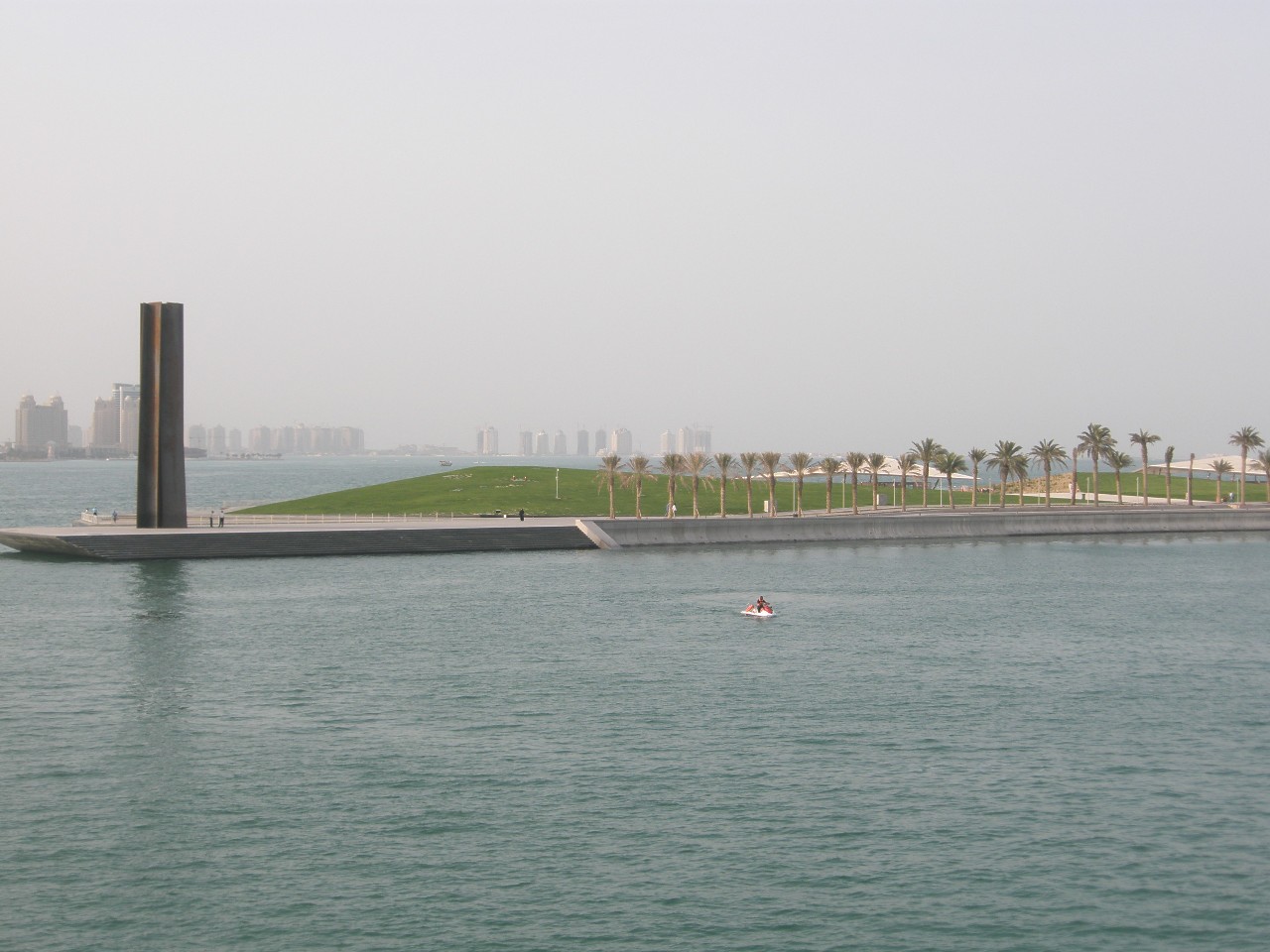
After wandering around the bazaar for a while I went along the park to a special modern art exhibit the MIA had nearby.
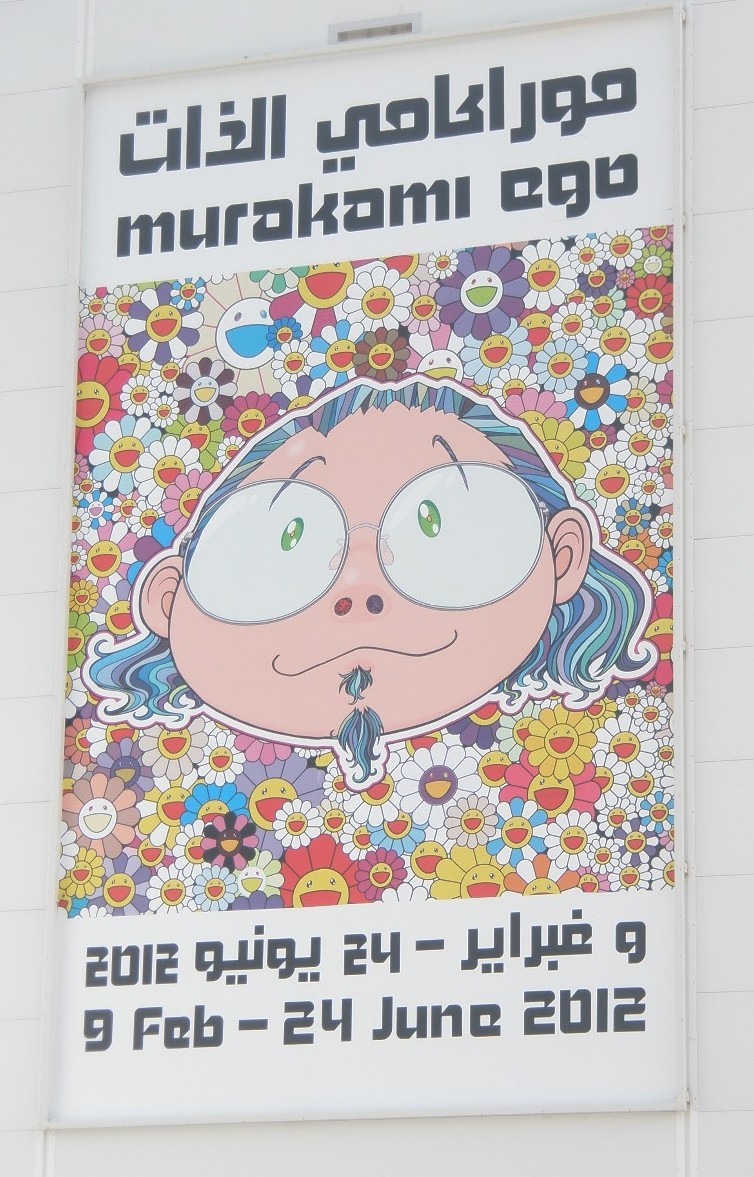
Japanese modern-artist Takashi Murakami had an exhibition in Doha and while I'm not a big modern art fan I figured I'd check it out since I was told much of his work was similar to manga (Japanese comic books), which I like.
You weren't allowed to take pictures inside the galleries so here's my quick summary:
• Murakami’s art is said to be a combination of Andy Warhol (who was weird)
• and manga (which is weird)
• resulting in art that is . . . weird.
That said it was worth seeing, his work is bright and colorful and there was certainly moments where I would turn a corner and go, “Whoa” so at least it was interesting. I think children would like it as well.
I was able to take pictures in the gift shop, this couch . . .
. . . can be yours for the low, low price of QAR 285,000 (~$78,000). Matching chair sold separately!
I then went back to the Museum to visit the Gifts of the Sultan exhibit. You weren't allowed to take pictures but luckily I was only told that after I managed to get a picture of what is likely the most valuable piece in the collection, the Ardabil Carpet (even has its own wiki page).
After that I hung out in the new café that just opened there and had a latte. It's a really nice café. I was told that it was incredibly expensive but I found that the coffee was about the same price as other cafés (latte was a good size and QAR 18). Maybe the food is pricey? Anyway they served the coffee in these special insulated mugs that weren't hot to the touch which I thought was definitely a plus. Between the coffee, the mugs, the location, and the view, it's probably one of the nicest cafés in Doha. Worth meeting your friends there even if you're not planning to see the museum exhibits.
They had some books off to the side for customers to read while they have their coffee so I grabbed a photography book called “Visions of Yemen” by Sheikh Hassan Al-Thani. Amazing pictures, Yemen looks like a really beautiful country. I've been debating going to Yemen for the last four years or so but the instability there has always put me off. Mentioning my desire to travel to Yemen typically gets raised eyebrows and words like, “isn’t that dangerous?” from friends. I don't consider it too big of a deal when Westerners say that (I was getting the same reactions when I mentioned going to Syria [before all the recent violence] and I didn't have any problems at all and had a great time) but when my Qatari friends say the same thing about Yemen I tend to take their concerns seriously. When Gulf Arabs say going to Yemen is dangerous one should probably believe them! I do hope things settle down there soon because I really do want to go see Yemen one day.
Anyway after finishing my coffee I wandered around the park, which by this time was crowded with families enjoying the park and the playground. The outdoor cafés were packed with people and others were having picnics. One Western lady was even hiding some Easter Eggs and chocolate rabbits in some bushes for her children to find.
All-in-all a pleasant day. Have to enjoy them while you can -- summer is fast approaching.
Wednesday, April 04, 2012
Walking places
It appears my last post created a small flutter of activity as my comments regarding Doha becoming a city was noted on dohanews. One of the comments from the website caught my interest:
“Where do you live so you can walk places? I'm curious & envious.”
I live in the older parts of the city, in the labyrinths of apartment buildings where narrow roads are clogged with parked cars, faintly-lit cheap restaurants, corner stores, smoky shisha cafes and 15-riyal barbers. Neighborhoods like Mansoura, Najma, and Musherib. Where most Westerners don't live.
When I first arrived in Doha I, like other Westerners, lived in a nice walled compound with manicured lawns and a clubhouse with a pool, tennis court and other facilities. It was out near Salwa road and if I wanted to go out for a walk there was little to see. Strip malls full of furniture stores or neighborhoods of homes and compounds with high walls surrounding them. The only life was the constant traffic on the roads, resulting in long commutes to and from work. Living there certainly was not unpleasant but not very interesting.
Tired of the commute I moved to an apartment in West Bay, thinking that life amongst the skyscrapers would be better.
It wasn't much better. Aside from City Centre Mall there wasn’t much to see except tall skyscrapers surrounded by parking lots. With the exception of people walking in and out of the mall there were few people walking around and little to do in the neighborhood itself. It was sterile.
I decided to move away from glamorous towers and compounds to the older parts of the city. Here there are always people wandering around and while the area is a bit run-down and the stores are not fancy here at least there is life. When a friend helped me move from West Bay and remarked how, for the first time since he’d been in Doha, he saw children playing in the street I knew I had made the right decision to move. The old city is the area with soul.
Turn left and I can visit the tailor for a shirt or the barber for a shave; go straight and I’m at a park, turn right and there's one of many corner stores, or a cheap Indian restaurant where I get some dhosas. Go down an alleyway to get a karak, or maybe further down the street to get a fresh juice. Sit with a coffee and watch as dozens of men gather at the mosque when the call to prayer is announced, or mingle with the throngs of South Asian workers in the streets behind Souq Waqif. Go a little further and you're at the Corniche, or Souq Waqif, or the old souqs near FANAR. Go a bit further and you're at the Museum with its nice new park. No sterile skyscapers and parking lots, no deserted streets lined with walled compounds. Life. I go for a walk everyday around the neighborhood and every time see something different.
Westerners tend to gravitate to the walled compounds of Al Waab or the Lagoon, villas near Landmark or in Gharrafa, or apartments in West Bay or the Pearl. Those places are luxurious, clean, and exude safety, unlike the pockmarked streets, crowded shops, and shabby-looking buildings of the old city. But there's not much to walk around and see in those neighbourhoods. The Pearl is an exception but even then would you consider all the five-star stores and pristine walkways to be a city? More like a resort.
I don't begrudge people for wanting to live in the luxurious areas of town but I won't be moving back. I like it here.
“Where do you live so you can walk places? I'm curious & envious.”
I live in the older parts of the city, in the labyrinths of apartment buildings where narrow roads are clogged with parked cars, faintly-lit cheap restaurants, corner stores, smoky shisha cafes and 15-riyal barbers. Neighborhoods like Mansoura, Najma, and Musherib. Where most Westerners don't live.
When I first arrived in Doha I, like other Westerners, lived in a nice walled compound with manicured lawns and a clubhouse with a pool, tennis court and other facilities. It was out near Salwa road and if I wanted to go out for a walk there was little to see. Strip malls full of furniture stores or neighborhoods of homes and compounds with high walls surrounding them. The only life was the constant traffic on the roads, resulting in long commutes to and from work. Living there certainly was not unpleasant but not very interesting.
Tired of the commute I moved to an apartment in West Bay, thinking that life amongst the skyscrapers would be better.
It wasn't much better. Aside from City Centre Mall there wasn’t much to see except tall skyscrapers surrounded by parking lots. With the exception of people walking in and out of the mall there were few people walking around and little to do in the neighborhood itself. It was sterile.
I decided to move away from glamorous towers and compounds to the older parts of the city. Here there are always people wandering around and while the area is a bit run-down and the stores are not fancy here at least there is life. When a friend helped me move from West Bay and remarked how, for the first time since he’d been in Doha, he saw children playing in the street I knew I had made the right decision to move. The old city is the area with soul.
Turn left and I can visit the tailor for a shirt or the barber for a shave; go straight and I’m at a park, turn right and there's one of many corner stores, or a cheap Indian restaurant where I get some dhosas. Go down an alleyway to get a karak, or maybe further down the street to get a fresh juice. Sit with a coffee and watch as dozens of men gather at the mosque when the call to prayer is announced, or mingle with the throngs of South Asian workers in the streets behind Souq Waqif. Go a little further and you're at the Corniche, or Souq Waqif, or the old souqs near FANAR. Go a bit further and you're at the Museum with its nice new park. No sterile skyscapers and parking lots, no deserted streets lined with walled compounds. Life. I go for a walk everyday around the neighborhood and every time see something different.
Westerners tend to gravitate to the walled compounds of Al Waab or the Lagoon, villas near Landmark or in Gharrafa, or apartments in West Bay or the Pearl. Those places are luxurious, clean, and exude safety, unlike the pockmarked streets, crowded shops, and shabby-looking buildings of the old city. But there's not much to walk around and see in those neighbourhoods. The Pearl is an exception but even then would you consider all the five-star stores and pristine walkways to be a city? More like a resort.
I don't begrudge people for wanting to live in the luxurious areas of town but I won't be moving back. I like it here.
Friday, March 30, 2012
The Park at the Museum of Islamic Art
It’s Friday morning, when almost everything is closed, so I decided to go for a long walk to get some exercise. It was cloudy today, unusual for this time of year, and to pass the time I figured I would take advantage of the lack of Sun and go to the park that recently opened at the Museum of Islamic Art. I remember reading about it opening in the newspaper a while ago but I hadn't visited it yet.
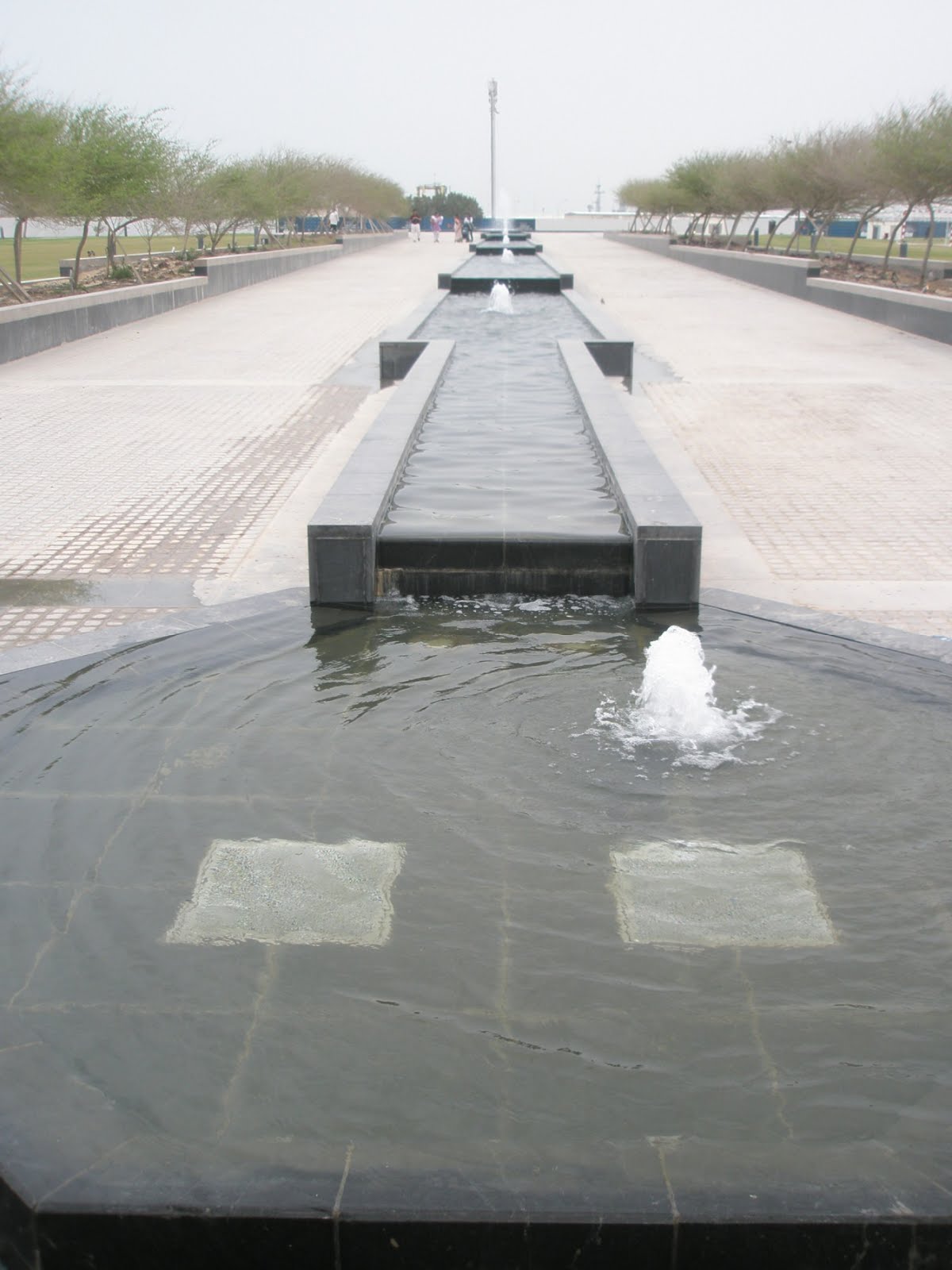
I walked down to the Corniche and headed toward the Museum. There were plenty of people along the Corniche either jogging, walking around, or sitting on the grass enjoying the day. When I reached the park I was pretty impressed with what they had set up:
Large grassy areas
Fountains
A big playground (families only please)
A cool trampoline for kids
Even some artwork
I eventually came across a couple of buildings embedded in some hills, one was a café and the other was for waffles and ice cream. I chilled out with a cappuccino and enjoyed the view.
Y’know, Qatar has really developed in the six years I've been here. Before there wasn't a lot: no Pearl, Katara, Souq Waqif, Museum, Aspire Zone, 2/3 of the hotels, ½ the parks, even ½ of the city itself. A buddy of mine who worked here for a few months about five years ago stopped by for a few days and couldn't believe how much had changed. Sometimes I can't believe it either -- and the changes keep coming. Now I have a nice park nearby, an even nicer one about a 20 minute walk away, and Souq Waqif within an easy stroll of my apartment. Streets are crowded (sometimes too crowded) and people now seem to be doing things instead of wondering what to do.
It's taken time but I think Doha is really starting to feel like a city.
Subscribe to:
Posts (Atom)